India, Bahamas explore orange, green and blue economy ties
Synopsis
India's High Commissioner met the Bahamas Prime Minister to advance cooperation in the orange, green, and blue economies — part of a broader Caribbean push that has already yielded a major diplomatic win: CARICOM's formal backing for India's UNSC bid for the 2028–29 term.
Key Takeaways
High Commissioner Mayank Joshi met Bahamas Prime Minister Philip Edward Davis on 24 October to discuss expanding bilateral ties.
Talks focused on the orange, green, and blue economies , reflecting shared priorities for sustainable and inclusive growth.
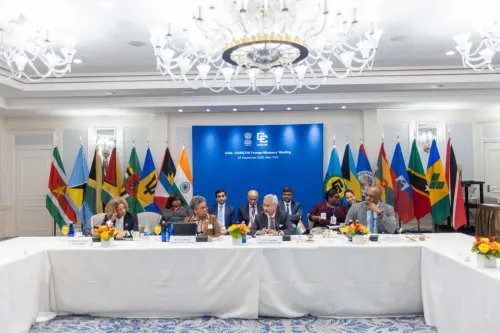
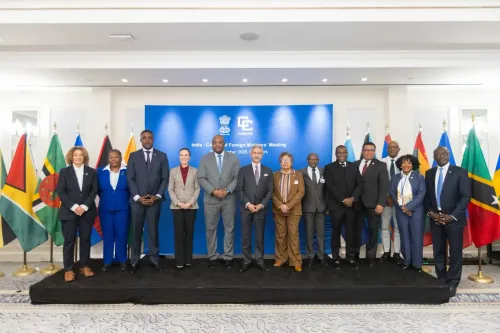
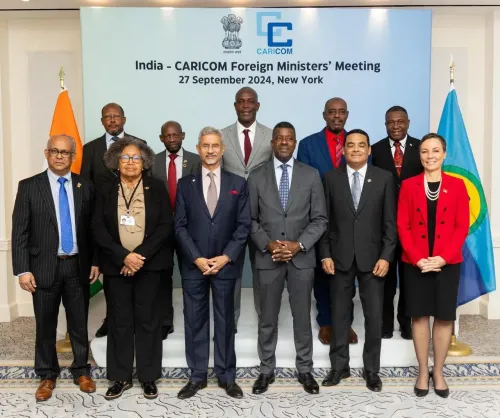
The engagement follows the India-CARICOM Foreign Ministers' Meeting held on the sidelines of the 81st UNGA in September in New York .
The 15-member CARICOM bloc has backed India's UNSC candidature for 2028–29 .
Key cooperation areas include agriculture, food security, digital governance, climate resilience , and energy .
India and the Bahamas are actively exploring expanded cooperation across the orange, green, and blue economies, the High Commission of India in Kingston said on Saturday, 24 October. The discussions reflect both nations' shared commitment to sustainable and inclusive growth, and come amid a broader push by New Delhi to deepen engagement with Caribbean states.
High Commissioner's Courtesy Call
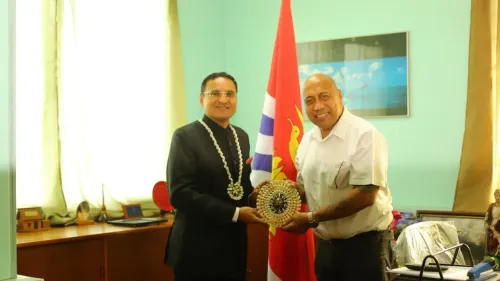
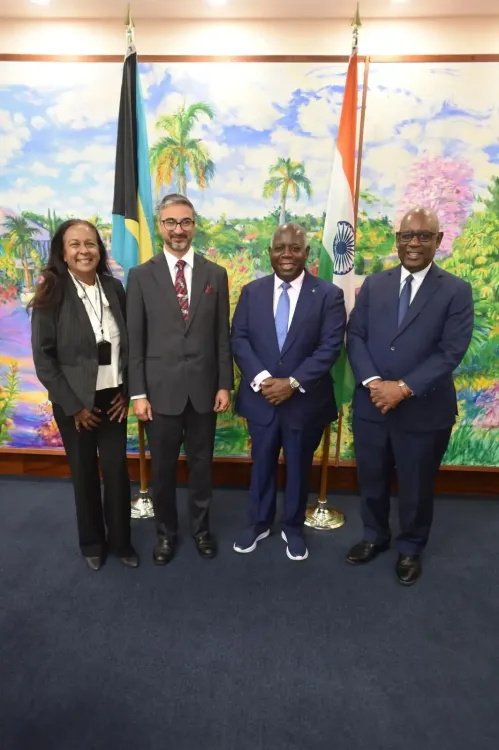
High Commissioner Mayank Joshi, who is concurrently accredited to the Bahamas, paid a courtesy call on Prime Minister Philip Edward Davis of the Commonwealth of the Bahamas. The meeting reaffirmed the bilateral relationship, rooted in shared democratic values, Commonwealth bonds, and a mutual commitment to multilateralism and the Global South.
According to a post by the High Commission on X, HC Joshi and Prime Minister Davis 'exchanged perspectives on expanding cooperation between India and Bahamas in the Orange, Green and Blue economies, reflecting shared priorities for sustainable and inclusive growth.'
What the Three Economies Mean
The orange economy broadly refers to the creative and cultural industries; the green economy encompasses climate resilience, clean energy, and sustainable development; and the blue economy covers ocean-based industries including fisheries, maritime trade, and coastal tourism. For a small island state like the Bahamas, all three carry significant strategic weight.
India-CARICOM Backdrop
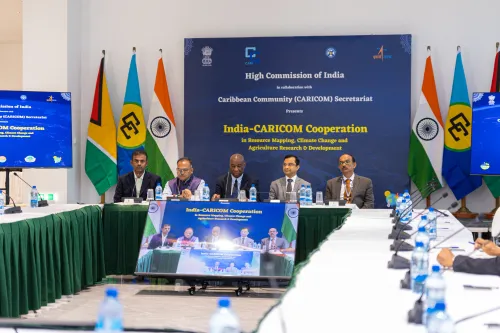
The bilateral engagement sits within a wider regional framework. In September, the India-CARICOM Foreign Ministers' Meeting (FMM), held on the sidelines of the 81st United Nations General Assembly (UNGA) in New York, underscored both sides' intent to deepen relations bilaterally and in multilateral forums.
External Affairs Minister S. Jaishankar co-chaired the meeting alongside Suriname's Minister of Foreign Affairs, International Business and Cooperation, Melvin W. J. Bouva. Notably, the 15-member CARICOM bloc conveyed its decision to back India's candidature for a United Nations Security Council (UNSC) term in 2028–29 — a significant diplomatic gain for New Delhi.
The FMM was attended by foreign ministers from Barbados, Dominica, the Bahamas, Guyana, Jamaica, St. Vincent and the Grenadines, Trinidad and Tobago, Suriname, Haiti, St. Lucia, St. Kitts and Nevis, and Antigua and Barbuda, along with the Finance Minister of Grenada, a senior official from Belize, and CARICOM Secretary General Carla Natalie Barnett.
Areas of Deepening Cooperation
According to a statement issued by the Ministry of External Affairs (MEA), both sides expressed satisfaction at the steady progress in India-CARICOM cooperation. Key areas of discussion included deepening political engagement, increasing trade and investment, and collaboration on agriculture and food security, digital governance, climate resilience, and energy cooperation.
What Comes Next
The Bahamas engagement is part of a sustained Indian diplomatic outreach to the Caribbean, which has gained momentum through the CARICOM framework. With UNSC support now secured from the bloc and sectoral dialogues underway, New Delhi is expected to formalise cooperation roadmaps with individual CARICOM members in the months ahead.
Point of View
But it is a tile in a larger diplomatic mosaic. CARICOM's endorsement of India's UNSC bid for 2028–29 is the real headline — it signals that New Delhi's Global South outreach is yielding concrete multilateral returns, not just goodwill. The orange-green-blue economy framing is also strategically savvy: it gives small island states a development vocabulary that aligns with their existential climate concerns, making India a more compelling partner than transactional alternatives. The test will be whether these conversations translate into funded projects and trade flows, or remain at the level of ministerial communiqués.
NationPress
24 Oct 2026
Frequently Asked Questions
What are the orange, green, and blue economies discussed between India and the Bahamas?
The orange economy refers to creative and cultural industries, the green economy covers climate resilience and clean energy, and the blue economy encompasses ocean-based sectors such as fisheries and maritime trade. India and the Bahamas are exploring cooperation across all three as part of their shared sustainable development agenda.
Who represented India in the meeting with the Bahamas Prime Minister?
High Commissioner Mayank Joshi, who is concurrently accredited to the Bahamas, met Prime Minister Philip Edward Davis on 24 October. The High Commission of India in Kingston announced the courtesy call and its outcomes.
What was the India-CARICOM Foreign Ministers' Meeting about?
The India-CARICOM Foreign Ministers' Meeting was held in September on the sidelines of the 81st UNGA in New York. It focused on deepening political engagement, trade, agriculture, digital governance, climate resilience, and energy cooperation between India and the 15-member Caribbean bloc.
Has CARICOM supported India's UNSC bid?
Yes. The CARICOM group formally conveyed its decision to support India's candidature for a United Nations Security Council non-permanent seat for the term 2028–29 at the India-CARICOM Foreign Ministers' Meeting in September.
Why is India deepening ties with small Caribbean nations like the Bahamas?
India's engagement with CARICOM states is part of its broader Global South diplomacy, which seeks to build multilateral coalitions on issues such as climate change, digital governance, and UN reform. The CARICOM bloc's UNSC endorsement illustrates the diplomatic dividends this outreach can yield.