India at UN backs sovereign AI models, warns against tech monopoly
Synopsis
At the UN General Assembly, India's Jaishankar made a pointed case for AI sovereignty — every country's right to build its own models — as voices from Malaysia, Germany, Belize, and Singapore converged on the same alarm: AI's transformative power is dangerously concentrated, and the rules being written now will determine whether the Global South is a partner in innovation or merely its market.
Key Takeaways
External Affairs Minister S.
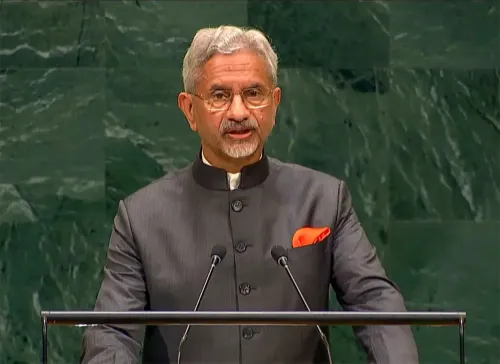
Jaishankar told the UN General Assembly on 27 September 2026 that every nation has the right to develop sovereign AI models aligned with national priorities.
Jaishankar described AI as a potential 'transformational driver' of human empowerment, but warned its misuse was sharpening bias and eroding mutual respect.
Malaysian Foreign Minister Mohamad Haji Hasan warned the Global South must not become a mere destination for data centres while AI decisions are made elsewhere.
German Foreign Minister Johann Wadephul noted most global AI patents are held by companies in only two major countries , calling for shared global responsibility.
The UN Global Digital Compact , adopted in 2024 , provides a framework for AI cooperation, but enforceable rules remain under negotiation.
Leaders from Belize , Singapore , Laos , Saudi Arabia , and Cameroon also called for equitable AI governance and local capacity-building.
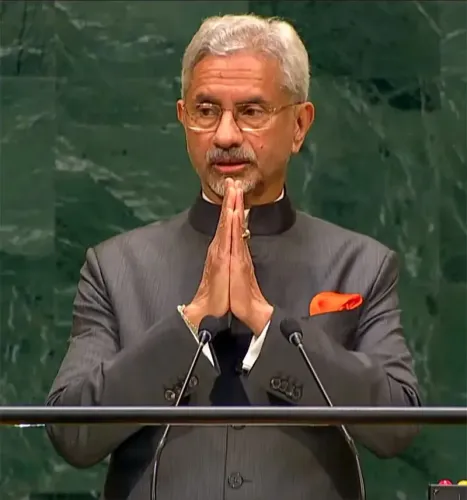
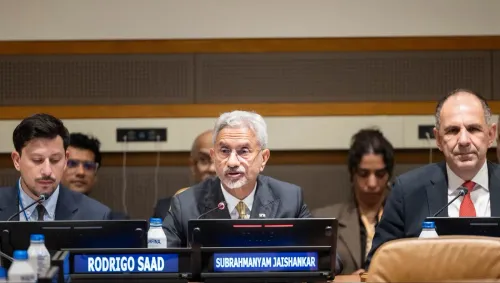
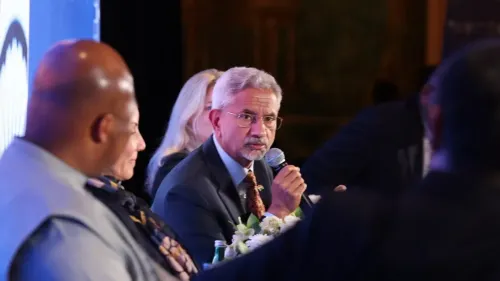
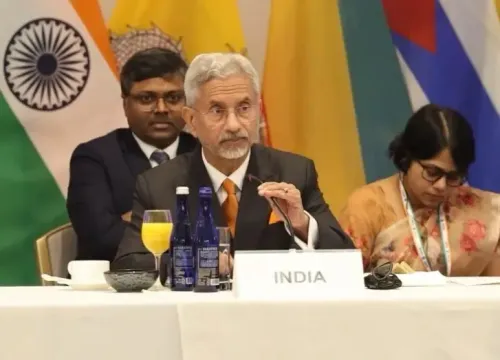
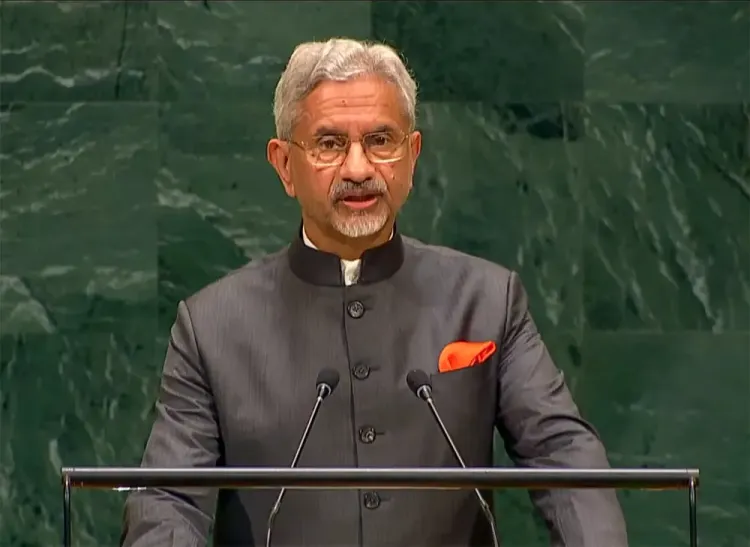
External Affairs Minister S. Jaishankar told the UN General Assembly on 27 September 2026 that every nation has the right to develop its own artificial intelligence models, pushing back against the growing concentration of AI power in the hands of a few governments and corporations. Speaking during the General Debate in New York, Jaishankar described AI as capable of becoming 'a transformational driver' of human empowerment and economic prosperity — but warned that its misuse was already sharpening bias and eroding mutual respect.
India's Position on AI Sovereignty
Jaishankar argued that countries must remain free to build AI systems aligned with their own national priorities, framing this as a question of digital self-determination. His remarks positioned India as a voice for the developing world in a debate that cuts to the heart of 21st-century geopolitics: who writes the rules of transformative technology, and who benefits from it. This comes amid India's own push to scale domestic AI capabilities through government-backed initiatives, lending particular weight to New Delhi's stance on the world stage.
Global South Raises Alarm Over Digital Colonialism
Malaysian Foreign Minister Mohamad Haji Hasan put the sharpest edge on the debate, warning that nations in the Global South risked being reduced to passive hosts of digital infrastructure while core decisions remained elsewhere. 'The Global South cannot simply become a destination for data centres while decisions about AI are made elsewhere,' Hasan said. Developing countries must become 'partners in innovation, not merely customers and markets,' he added. Hasan also flagged the environmental and resource costs of data centres — water, energy, and land — arguing these burdens should not be borne by poorer nations while the primary economic gains flow to richer ones.
Western Powers Acknowledge Concentration Risk
German Foreign Minister Johann Wadephul raised a structurally similar concern, noting that most global AI patents were held by companies in only two major countries. 'Whenever power becomes global, responsibility must become global, too,' he said. Wadephul called for internationally agreed safety requirements for the most capable AI models, warning that the technology was advancing faster than multilateral institutions could respond. 'AI is not waiting for our institutions to catch up. Our institutions have to catch up with reality,' he said — a stark acknowledgement from a major Western economy that the regulatory gap is widening.
Broader Voices at the UN Debate
Belize Prime Minister John Briceño warned that poorly governed AI could deepen inequality, expose critical systems, displace workers, and leave developing nations dependent on 'technologies and rules designed elsewhere.' He noted that national legislation alone was insufficient for a technology that crosses every border. Singapore Foreign Minister Vivian Balakrishnan called AI 'the most urgent frontier,' urging investment in science, infrastructure, and skills alongside safeguards to keep people in control. Laos stressed that AI must build local technical capacity and respect national development priorities, while Saudi Arabia highlighted its work to establish an international network of AI capacity-building centres and an AI research and ethics centre in Riyadh.
Where Global AI Governance Stands
The UN adopted the Global Digital Compact in 2024 as a framework for international cooperation on AI, aimed at closing digital divides and promoting safe, human-centred technology. Governments are still negotiating how those broad principles should be translated into enforceable rules — a gap that the interventions at this year's General Debate underscored. Notably, the convergence of voices from Asia, Africa, Latin America, and Europe on concentration risk signals that AI governance is becoming one of the defining multilateral fault lines of the decade. How quickly the UN system can move from compact to concrete regulation will shape whether developing countries have a meaningful seat at the table.
Point of View
Which makes the sovereignty argument both principled and self-interested — in the best possible way. What the General Debate exposed is a rare moment of convergence between the Global South and parts of the West on concentration risk, yet there is still no enforcement mechanism on the table. The 2024 Global Digital Compact was a statement of intent, not a rulebook, and the gap between aspiration and binding governance is precisely where powerful incumbents thrive. If India genuinely wants to lead this agenda, the test will be whether it tables concrete proposals — on patent access, compute equity, or capacity-building funding — rather than stopping at rhetorical solidarity.
NationPress
27 Sept 2026
Frequently Asked Questions
What did India's Jaishankar say about AI at the UN General Assembly?
External Affairs Minister S. Jaishankar told the UN General Assembly on 27 September 2026 that every country has the right to develop its own AI models in line with national priorities. He described AI as a potential 'transformational driver' of human empowerment while warning that its misuse was deepening bias and eroding mutual respect.
Why is AI governance a major issue at the UN in 2026?
Control over artificial intelligence — who builds it, who owns its patents, and who writes its rules — has become a defining geopolitical question. Developing countries at the UN have warned they risk being reduced to consumers and data-centre hosts while a handful of governments and corporations in advanced economies set the terms of the technology.
What did Malaysia say about AI and the Global South?
Malaysian Foreign Minister Mohamad Haji Hasan warned that the Global South must not become merely a destination for data centres while AI decisions are made elsewhere. He called for developing countries to be 'partners in innovation, not merely customers and markets,' and flagged the environmental costs data infrastructure places on poorer nations.
What is the UN Global Digital Compact and does it solve the problem?
The UN Global Digital Compact, adopted in 2024, is a framework to encourage international cooperation on AI, close digital divides, and promote safe, human-centred technology. However, governments are still debating how its broad principles should be translated into enforceable rules, meaning the governance gap it was meant to address remains open.
Which other countries spoke on AI governance at the UN General Debate?
Germany, Belize, Singapore, Laos, Saudi Arabia, and Cameroon all addressed AI governance. Germany flagged patent concentration in two countries; Belize warned of inequality risks from poor governance; Singapore called AI 'the most urgent frontier'; and Saudi Arabia highlighted its plans for international AI capacity-building centres and a research and ethics centre in Riyadh.