Has India Captured UNSC's Attention on Pakistan's Drone Arms to Terrorists?
Synopsis
Discover how India has urged the United Nations Security Council to take a stand against Pakistan's use of drones for arming terrorists. This critical discussion emphasizes the importance of a zero-tolerance policy towards terrorism and the ongoing threat posed by illegal arms trafficking.
Key Takeaways
India seeks UNSC action against Pakistan's arms supply to terrorists.
Zero-tolerance policy is essential for combatting terrorism.
Concerns rise over 3D printing technology in weapon manufacturing.
Effective arms embargoes are necessary to control small arms proliferation.
Collaboration is key to addressing transnational threats .
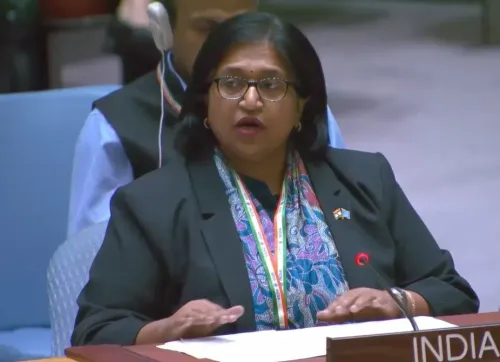
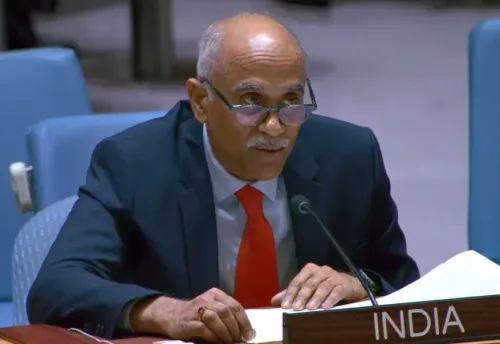
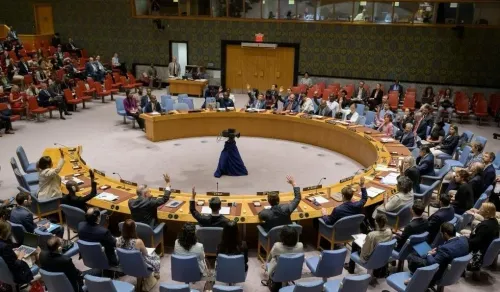
United Nations, Nov 11 (NationPress) India has highlighted the Security Council's focus on Pakistan supplying weapons to terrorists across the border, particularly through drones. India has called for the Security Council to maintain a zero-tolerance stance against terrorism and its backers.
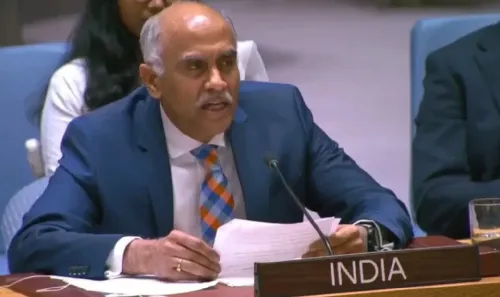
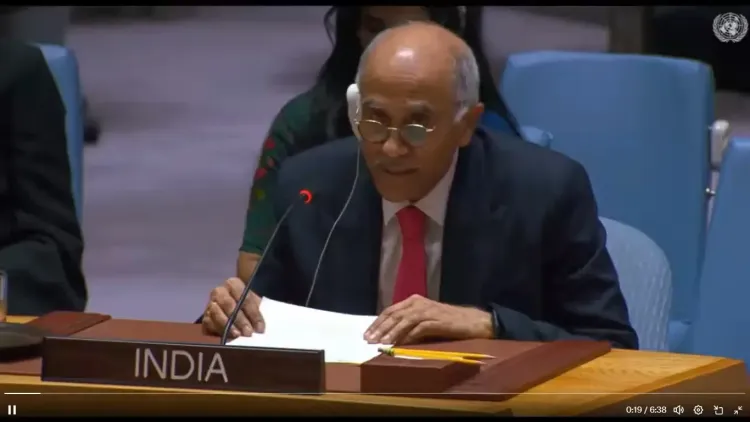
India's Permanent Representative P Harish stated on Monday, "India has been affected by cross-border terrorism facilitated by illegal arms traffic, including new methods such as drones."
He emphasized that the growing complexity and quantity of these arsenals illustrate that such groups depend on being enabled, financed, or supported.
While Harish did not explicitly name Pakistan during the Security Council Open Debate on Small Arms, the implication was evident.
"The Security Council must remain steadfast in practicing a zero-tolerance policy towards terrorism in all its manifestations and against those who aid, fund, or facilitate the distribution and movement of such weapons," he asserted.
Harish remarked, "India has battled the plague of terrorism for many decades and is acutely aware of the threats posed by the diversion and illegal transfer of small arms and ammunition to non-State actors and terrorist organizations."
Sierra Leone’s Foreign Minister Alhaji Musa Timothy Kabba, who chaired the session, urged for effective and consistently enforced arms embargoes to thwart the spread of small weapons.
He noted that with roughly 850 million small arms circulating globally—about 650 million in civilian possession—the small arms trade is frequently regarded as one of the least transparent weapon systems.
Kabba stressed the necessity of preventing terrorists from acquiring arms.
Beyond addressing the risks posed by the alliance of terrorists and transnational criminal networks exploiting porous borders and lax regulatory frameworks, attention must shift to "emerging threats like craft-produced and 3D-printed firearms."
Secretary-General Antonio Guterres, in his report to the Council, cautioned about the forthcoming dangers from terrorists utilizing 3D printing technology to manufacture weapons.
The Counter-Terrorism Committee's Executive Directorate has recognized the production of 3D-printed small arms and light weapons, components, and parts by terrorists as a growing concern, he stated.
"Member States are encouraged to implement regulations through national legislation to oversee digital blueprints and the electronic sharing of designs and construction data for the illegal manufacturing of firearms and components," he added.
Point of View
It's imperative to recognize the concerns raised by India regarding terrorism and arms trafficking. The international community must remain vigilant against the threats posed by such actions, ensuring a united front against terrorism.
NationPress
19 Sept 2026
Frequently Asked Questions
What specific concerns did India raise at the UNSC?
India raised concerns about Pakistan's supply of arms to terrorists, particularly through drones, and called for a zero-tolerance approach towards terrorism.
Why is the issue of small arms trafficking significant?
The trafficking of small arms poses a significant threat to global security, enabling terrorist activities and contributing to ongoing conflicts.
What actions did the Secretary-General suggest regarding 3D-printed firearms?
The Secretary-General suggested that member states regulate the digital blueprints and electronic sharing of firearm designs to prevent illicit manufacturing.