India, China hold eastern LAC commander talks: MEA
Synopsis
India and China have put their senior-most military commanders across the table again in the eastern sector, the MEA confirmed on Wednesday. The talks targeted LAC management and unresolved issues — even as New Delhi continues to flag Chinese patrol divergences as the trigger for periodic border disturbances.
Key Takeaways
The MEA said India and China recently held a meeting of their senior-most military commanders in the eastern sector.
Talks focused on improving border management and addressing outstanding issues along the LAC .
MEA spokesperson Randhir Jaiswal said such interactions aim to maintain peace and tranquillity and prevent escalations.
On 23 October , the MEA said the border situation is disturbed when Chinese forces diverge from established patrolling patterns.
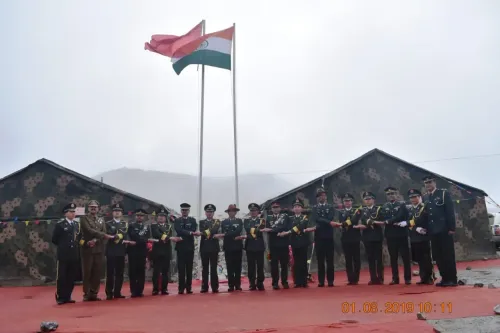
The first senior-most commander-level flag meeting was held at Wacha in Arunachal Pradesh on 6 September and at Damai on 7 September .
India and China recently held a meeting of their senior-most military commanders in the eastern sector, with talks focused on improving border management and addressing outstanding issues along the Line of Actual Control (LAC), the Ministry of External Affairs (MEA) said on Wednesday. Addressing the weekly media briefing in New Delhi, MEA spokesperson Randhir Jaiswal said the two countries engage regularly through diplomatic and military mechanisms, and that such interactions are aimed at maintaining peace and tranquillity in the border areas and preventing any escalations.
Key Developments
Jaiswal confirmed that a meeting of the senior-most military commanders was held in the eastern sector recently. He said the discussion between the two sides focused on improving border management and addressing outstanding issues along the LAC. The MEA framed the engagement as part of a standing architecture of diplomatic and military contacts rather than a one-off outreach.
Notably, this comes after New Delhi had already disclosed that commander-level flag meetings had taken place on both sides of the LAC in Arunachal Pradesh. The Wednesday briefing therefore updates that track, signalling that the eastern-sector military channel remains active even as several issues along the LAC are still described as outstanding.
What the MEA Said
Jaiswal told reporters: “India and China engage regularly through diplomatic and military mechanisms. A meeting of the senior-most military commanders was held in the eastern sector recently; discussion between the two sides focused on improving border management and addressing outstanding issues along the LAC. Such interactions are aimed at maintaining peace and tranquillity in the border areas and preventing any escalations.”
On 23 October, the MEA had said that India and China continue to use existing diplomatic and military mechanisms to resolve outstanding issues and avoid misunderstanding and miscalculation along the LAC, while emphasising that the situation in the India-China border areas gets disturbed when Chinese forces diverge from established patrolling patterns.
Jaiswal had then stated: “As we have noted in the past, the situation in the India-China border areas gets disturbed from time to time when Chinese forces diverge from established patrolling patterns. Both sides continue to use existing diplomatic and military mechanisms to resolve outstanding issues and avoid misunderstanding and miscalculation along the Line of Actual Control.”
He added that the two sides had also agreed to discuss ways to improve understanding of the LAC in appropriate areas for better border management. “I would also like to emphasise that the maintenance of peace and tranquillity in the border areas is essential for the overall development of bilateral relations,” he had said.
Earlier Flag Meetings in Arunachal Pradesh
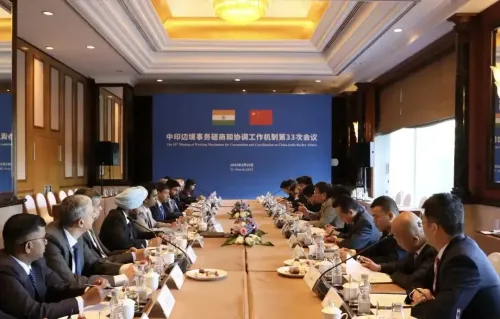
On 8 September, the MEA stated that the first senior-most military commander-level flag meeting was held along the LAC at Wacha on the Indian side in Arunachal Pradesh on 6 September and at Damai on the Chinese side on 7 September. Jaiswal had said the meetings were held following the understandings reached between the representatives of India and China and subsequent discussions at the Working Mechanisms for Consultation and Coordination (WMCC) meeting.
That September round was described as the first of its kind at that seniority for flag meetings on this stretch. The more recent eastern-sector commander meeting disclosed on Wednesday sits in the same sequence: military-to-military contact, WMCC follow-up, and an official emphasis on preventing escalation.
Why It Matters for the LAC
The MEA's formulation is consistent. Peace and tranquillity on the border are presented as a prerequisite for any broader improvement in India-China ties. At the same time, New Delhi continues to attribute periodic disturbances to Chinese forces moving away from established patrolling patterns. The commander-level talks, therefore, are both a confidence-building step and an admission that outstanding LAC issues have not been closed.
This is the latest in a sequence of military and diplomatic contacts, including the September flag meetings at Wacha and Damai and the October restatement of New Delhi's position on patrol divergences. Who is affected is not only the troops on the LAC but the wider bilateral relationship, which the MEA itself ties to calm on the frontier.
What's Next
Both sides, according to the MEA, will continue to use existing diplomatic and military mechanisms to resolve outstanding issues and to avoid misunderstanding and miscalculation along the LAC. No fresh timeline for a follow-up commander meeting was announced at the Wednesday briefing. How far the eastern-sector talks move the needle on ground-level patrolling will remain the test of whether these interactions stay procedural or begin to change behaviour on the Line of Actual Control.
Point of View
In the same breath, that the LAC is disturbed when Chinese forces leave established patrolling patterns. Dialogue without a change in those patterns is process, not progress. India has a legitimate interest in keeping military channels open; it also has a legitimate interest in not allowing talks to become a substitute for restoring and honouring agreed patrol behaviour.
NationPress
25 Nov 2026
Frequently Asked Questions
What did the MEA say about India-China talks in the eastern sector?
The MEA said India and China recently held a meeting of their senior-most military commanders in the eastern sector, focused on improving border management and outstanding LAC issues. Spokesperson Randhir Jaiswal said such interactions aim to maintain peace and tranquillity and prevent escalations.
Where was the recent India-China military commanders meeting held?
The recent meeting of the senior-most military commanders was held in the eastern sector of the India-China boundary, the MEA said. An earlier commander-level flag meeting took place at Wacha in Arunachal Pradesh on 6 September and at Damai on the Chinese side on 7 September.
Why does the MEA say the LAC situation gets disturbed?
The MEA has said the situation in India-China border areas gets disturbed from time to time when Chinese forces diverge from established patrolling patterns. Both sides continue to use existing diplomatic and military mechanisms to resolve outstanding issues.
What is the WMCC in India-China border talks?
The Working Mechanisms for Consultation and Coordination (WMCC) is a diplomatic mechanism through which India and China discuss border-related issues. The September flag meetings followed understandings between the two sides and subsequent WMCC discussions.
Why do the eastern sector LAC talks matter?
The MEA has emphasised that maintaining peace and tranquillity in the border areas is essential for the overall development of India-China bilateral relations. The talks also seek to prevent escalations and improve understanding of the LAC for better border management.