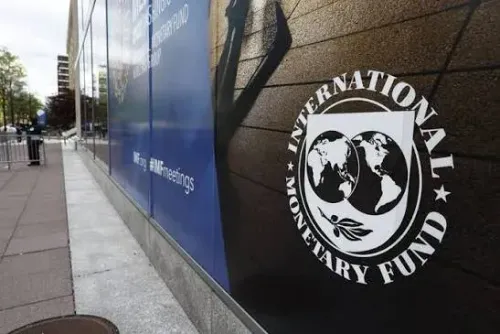
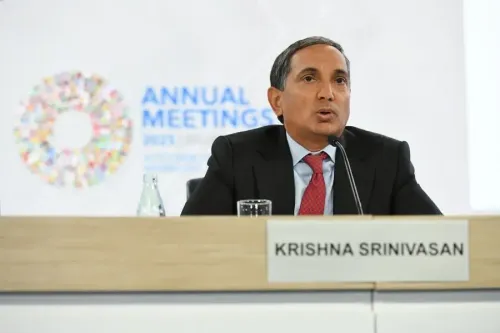
India GDP growth 2026: IMF raises forecast to 7% amid global slowdown
Synopsis
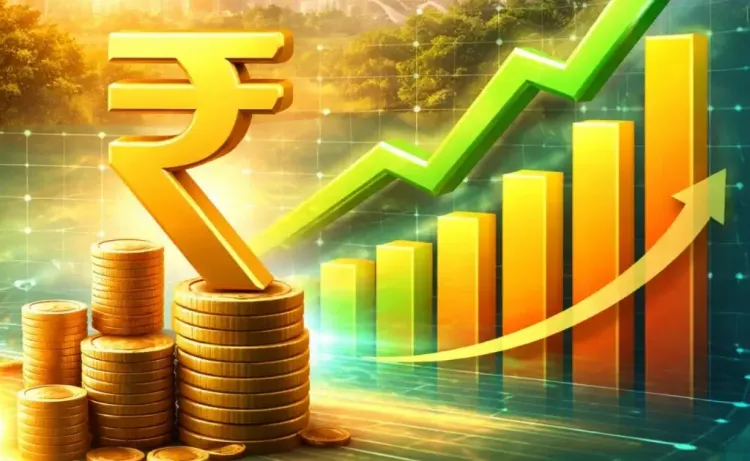
As the world slows to 3.1% growth in 2026, India is moving in the opposite direction — the IMF has raised its forecast to 7% for both 2026 and 2027, underpinned by a $1 trillion export target, 9.2% manufacturing growth in Q1 FY27, and a digital economy that is rewriting the rules of domestic market participation.
Key Takeaways
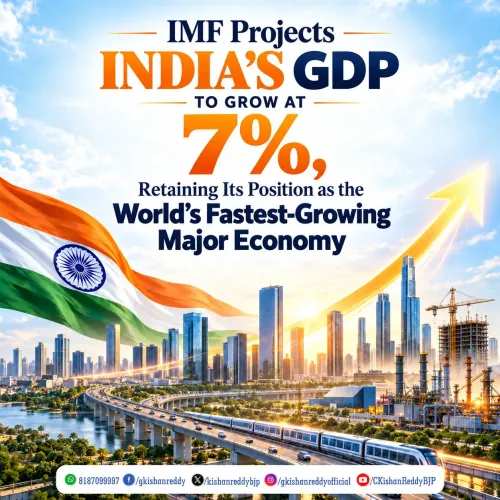
The IMF raised India's growth forecast to 7.0% for both 2026 and 2027 , making it the world's fastest-growing major economy.
Global growth is projected to slow from 3.5% in 2025 to 3.1% in 2026, widening India's outperformance gap.
India's exports are expected to hit an all-time high of $1 trillion in FY2026-27 , with a $2 trillion target by 2030.
The manufacturing sector grew by 9.2% in Q1 FY27 .
Strong domestic consumption, digital transformation, and infrastructure investment are identified as key growth pillars.
India's economy continues to demonstrate robust resilience even as global growth is projected to decelerate from 3.5% in 2025 to 3.1% in 2026, according to a new report published by Tanzania-based media organisation The Guardian (IPP Media). The report highlights how India is sustaining strong economic momentum despite compounding headwinds — geopolitical tensions, volatile energy markets, trade uncertainty, and tighter financial conditions globally.
IMF Raises India's Growth Forecast
The International Monetary Fund (IMF) recently revised India's growth forecast upward to 7.0% for both 2026 and 2027, cementing India's position as the fastest-growing major economy in the world. According to the report, this upward revision by major global institutions reflects India's strong domestic demand drivers and its demonstrated resilience to external shocks. This comes amid a period when most advanced and emerging economies are grappling with subdued growth trajectories.
Domestic Demand: India's Core Economic Anchor
'A principal source of India's economic strength is its large and diversified domestic market,' the report noted. It observed that household consumption, business investment, and public expenditure on infrastructure together create a broad base of economic activity — one that cushions the economy when external demand weakens or international markets turn volatile.
Private consumption is a key driver, spanning sectors from automobiles and housing to tourism, healthcare, and finance. Rising incomes, rapid urbanisation, expanding digital access, and improved connectivity are collectively widening demand and supporting business investment and innovation across the country.
Digital Transformation and Infrastructure as Growth Enablers
The rapid adoption of digital platforms has fundamentally reshaped domestic economic participation, the report said. Digital payments, online commerce, digital public infrastructure, and technology-enabled government services have reduced transaction costs and expanded market access significantly. 'Small businesses can reach customers beyond their immediate geographical areas, while digital financial services facilitate payments, credit assessment, and formalisation,' it noted.
Infrastructure investment — spanning transport, logistics, power, and digital connectivity — is also strengthening India's structural resilience by lowering operational costs and improving the movement of goods and services across the country.
Exports and Manufacturing on a Record Trajectory
India's exports are projected to reach $1 trillion — an all-time high — in FY2026-27, with a longer-term target of $2 trillion by 2030. The manufacturing sector recorded 9.2% growth in Q1 FY27, underlining the momentum in industrial output. The report underscored that export diversification, digital transformation, fiscal discipline, and energy security will together 'strengthen competitiveness and sustain long-term, inclusive economic growth.'
Outlook: Resilience Amid Uncertainty
India's economic landscape, according to the report, demonstrates 'remarkable adaptability,' having navigated global volatility through strong domestic fundamentals and proactive policy management. As global institutions continue to revise India's projections upward against a backdrop of slowing world growth, the country's dual reliance on domestic consumption and strategic export diversification is increasingly seen as a durable growth model. The trajectory of manufacturing expansion and the $2 trillion export target by 2030 will be the key milestones to watch in the years ahead.
Point of View
But the structural questions persist. Domestic consumption is a reliable buffer, yet its depth is uneven — urban demand vastly outpaces rural, and the formalisation gains from digital infrastructure are still concentrated. The $1 trillion export target, while historic, rests partly on services; manufacturing's 9.2% Q1 growth needs to be sustained through multiple quarters before it changes India's 17% GDP-share story. The real test of 'inclusive economic growth' — the phrase the report uses — is whether the gains in productivity and formalisation are translating into wage growth and employment quality at the bottom of the income ladder, data on which remains sparse.
NationPress
24 Oct 2026
Frequently Asked Questions
What is India's GDP growth forecast for 2026 according to the IMF?
The IMF has raised India's GDP growth forecast to 7.0% for both 2026 and 2027, making India the fastest-growing major economy in the world. This upward revision reflects strong domestic demand and resilience to global economic shocks.
Why is India growing faster than the global average?
India's growth is driven by a large diversified domestic market, rising private consumption, infrastructure investment, and rapid digital adoption. While global growth slows to 3.1% in 2026, India's domestic orientation cushions it from external volatility.
What is India's export target for FY2026-27?
India's exports are projected to reach $1 trillion in FY2026-27, which would be an all-time high. The country has also set a longer-term target of $2 trillion in exports by 2030.
How is India's manufacturing sector performing?
India's manufacturing sector grew by 9.2% in Q1 FY27, reflecting strong industrial momentum. Export diversification and proactive policy management are cited as key factors sustaining this growth.
How has digital transformation contributed to India's economic resilience?
Digital payments, online commerce, digital public infrastructure, and technology-enabled government services have reduced transaction costs and broadened market access for small businesses. Digital financial services have also accelerated formalisation of economic activity across the country.