Kishan Reddy: IMF projects India GDP growth at 7%
Synopsis
Union Coal and Mines Minister G. Kishan Reddy highlighted the IMF's 7% GDP growth projection for India, attributing the forecast to the Modi government's transformative reforms, macroeconomic stability, and inflation management amid global uncertainties.
Key Takeaways
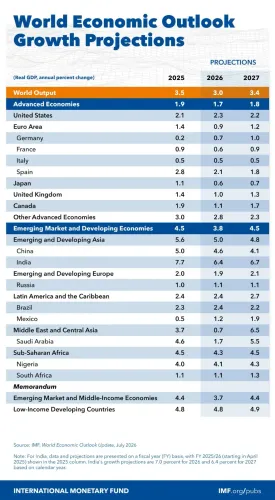
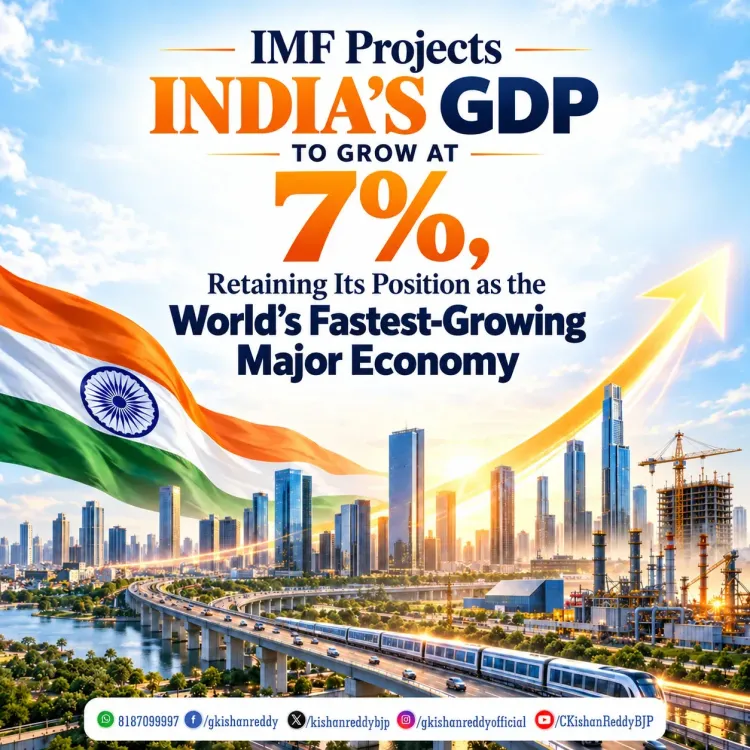
The IMF has projected India's GDP growth at 7% , one of the highest forecasts for any major economy globally.
Kishan Reddy cited the projection as evidence of confidence in India's 'economic fundamentals, transformative reforms, and policy stability.' The Modi government has committed to sustaining high growth while keeping inflation within target and maintaining macroeconomic stability.
Structural reforms including the GST (2017) and Insolvency and Bankruptcy Code (2016) form the policy backbone cited in IMF assessments.
The IMF has placed India among the fastest-growing major economies in successive World Economic Outlook updates since 2022 .
The next quarterly GDP data for FY 2026-27 and the upcoming IMF World Economic Outlook will be key tests of this projection.
Even as global markets wrestle with geopolitical turbulence and sticky inflation, India's growth trajectory is drawing a confident endorsement from the world's premier economic watchdog. Union Coal and Mines Minister G. Kishan Reddy on Tuesday, October 13, 2026, pointed to the International Monetary Fund's latest projection placing India's GDP growth at 7% — a figure that, if sustained, would cement the country's standing as the fastest-growing major economy on the planet.
The IMF number and what it signals
The 7% GDP growth projection is not just a statistic — it is a signal. The IMF has, since its 2022 World Economic Outlook cycles, consistently ranked India at the top of the major-economy growth table, with successive forecasts holding above 6% even as peers in Europe and North America have struggled with recessionary headwinds. A 7% projection reaffirms that gap is not narrowing.
Reddy framed the number explicitly as a verdict on fundamentals: 'Indian economy continues to shine amidst global uncertainties and turbulent geo-political situation,' he wrote, citing 'transformative reforms and policy stability' as the drivers behind the IMF's confidence.
Reform architecture the IMF is effectively endorsing
The structural scaffolding underpinning that forecast has been years in the making. The Goods and Services Tax (GST), unified across the country in 2017, and the Insolvency and Bankruptcy Code (IBC), enacted in 2016, were landmark attempts to formalise the economy, unclog stressed-asset resolution, and improve ease of doing business. Both reforms are part of the policy lineage successive IMF reviews have cited when calibrating India's medium-term growth potential.
Reddy linked the projection directly to the Narendra Modi government, stating it 'remains committed to sustaining high growth while ensuring macroeconomic stability and keeping inflation within target' — a formulation that signals the administration views inflation management and growth as complementary, not competing, priorities.
Global headwinds India is navigating
The qualifier matters. 'Amidst global uncertainties' is doing real work in that sentence. Geopolitical fault lines — from ongoing conflict zones to shifting trade blocs — have disrupted supply chains and capital flows worldwide. Yet India's domestic consumption base, its infrastructure push, and relatively contained current-account dynamics have offered a buffer that smaller or more export-dependent economies simply do not have.
For global investors scanning emerging markets for a growth anchor, a 7% IMF-backed projection in this climate is precisely the kind of signal that moves allocation decisions.
What to watch next
The next IMF World Economic Outlook release and India's official quarterly GDP data for FY 2026-27 will either validate or test the minister's confidence. If the domestic numbers align with the IMF's trajectory, the government will have a powerful data point heading into the next electoral and budget cycle. If they diverge, the gap between projection and reality will become a political flashpoint.
For now, the IMF's stamp on a 7% growth forecast gives the government — and India's economic narrative — formidable momentum. The real test is whether the numbers on the ground catch up to the headline.
Point of View
Reddy is effectively arguing that India's reform dividend is now visible in real-time international data, not just in government claims. The framing of 'macroeconomic stability plus high growth' signals the administration is trying to pre-empt criticism that it is choosing expansion over fiscal discipline. Whether that balance holds will depend on whether the next round of domestic GDP prints match the IMF's headline optimism.
NationPress
13 Oct 2026
Frequently Asked Questions
What is the IMF's GDP growth projection for India?
The IMF has projected India's GDP growth at 7% , which Union Minister G. Kishan Reddy cited as a reflection of confidence in India's economic fundamentals and policy stability.
Why is India considered the fastest-growing major economy?
India has consistently received above-6% growth projections from the IMF since 2022, supported by structural reforms like GST and IBC, strong domestic consumption, and infrastructure investment — even as many peer economies slowed.
What reforms did the Modi government introduce that the IMF recognises?
The Goods and Services Tax (GST) unified in 2017 and the Insolvency and Bankruptcy Code (IBC) enacted in 2016 are the landmark structural reforms associated with improving macroeconomic stability and ease of doing business.
What did Kishan Reddy say about India's economy?
Kishan Reddy stated that the Indian economy 'continues to shine amidst global uncertainties,' citing the IMF's 7% growth projection and affirming the Modi government's commitment to high growth with macroeconomic stability.
When will India's next GDP data be released?
India's official quarterly GDP data for FY 2026-27 and the next IMF World Economic Outlook release are the key upcoming indicators that will confirm or challenge the current growth projections.