IMF cuts India 2026 growth forecast to 6.4% on oil shock, sees rebound in 2027
Synopsis
The IMF has nudged India's 2026 growth forecast down to 6.4% — not because the domestic economy is faltering, but because global oil prices tied to the Middle East conflict are eating into gains. The Fund's 2027 upgrade signals confidence in India's fundamentals once the energy shock clears, but with over 80% of crude imported, the Strait of Hormuz remains India's most consequential economic chokepoint.
Key Takeaways
The IMF cut India's 2026 growth forecast by 0.1 percentage point to 6.4 per cent in its July World Economic Outlook Update .
The 2027 forecast was raised by 0.2 percentage point , with medium-term growth estimated at around 6.5 per cent as the energy shock eases.
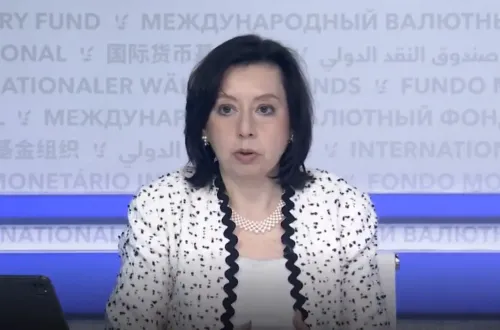
IMF Division Chief Deniz Igan cited stronger-than-expected domestic activity but said higher energy prices more than offset the upside for 2026.
India imports over 80 per cent of its crude oil, making it acutely sensitive to Middle East conflict -driven price spikes.
Global growth projections were held at 3 per cent for 2026 and 3.4 per cent for 2027 ; global headline inflation raised to 4.7 per cent for 2026 .
The IMF warned that a renewed escalation in the Middle East remains a key downside risk for global markets and oil-importing economies.
The International Monetary Fund (IMF) has trimmed India's 2026 growth forecast by 0.1 percentage point to 6.4 per cent, citing the drag from higher global oil prices linked to the Middle East conflict, even as it described the Indian economy as broadly resilient. The Fund simultaneously raised its 2027 forecast by 0.2 percentage point, projecting a recovery as the energy shock dissipates.
What the IMF Said
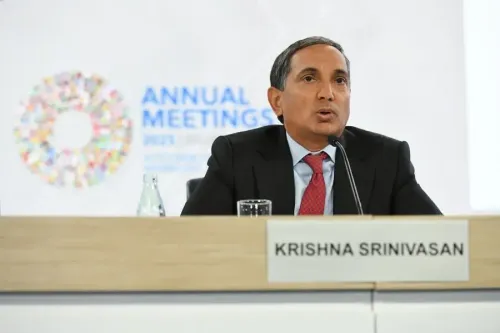
IMF Research Department Division Chief Deniz Igan told reporters at a press briefing on Wednesday, 9 July that two opposing forces were shaping India's outlook. 'On the upside, we have the better-than-expected outturn in the most recent data. But we also have high-frequency indicators through April showing quite a bit of resilience in overall economic activity,' she said.
However, Igan noted that this positive momentum had been more than offset by rising energy costs in the near term. 'These positive effects are then more than offset for 2026 by the higher energy prices we have in our baseline in the July Update, as well as the greater pass-through of those higher oil prices to prices at the pump in India,' she added.
Why India Remains Vulnerable to Oil Prices
India imports more than 80 per cent of its crude oil requirements, making global energy prices a critical variable for inflation, the current account balance, and overall growth. Any prolonged disruption to oil shipments through the Strait of Hormuz could sharply raise import costs and renew pressure on domestic fuel prices — a risk the IMF flagged as a downside scenario.
This structural dependence means that each escalation in the Middle East carries an outsized economic consequence for India, even when domestic demand indicators remain strong.
2027 Outlook and the Energy Shock Dissipating
The IMF expects the energy-related headwinds to ease through next year. 'Moving into 2027, we are expecting strengthening with the energy shock dissipating and medium-term growth being estimated at around 6.5 per cent,' Igan said. The Fund projects output closing and 'some pickup' in momentum as the global energy situation stabilises.
Notably, stronger-than-expected economic activity and resilient domestic demand were cited as the key factors underpinning India's medium-term outlook — suggesting the fundamental growth story remains intact.
Global Context: V-Shaped Recovery Projected
The IMF kept its global growth projections broadly unchanged at 3 per cent for 2026 and 3.4 per cent for 2027. IMF Deputy Research Director Petya Koeva Brooks described the global outlook as being shaped by 'two powerful forces pulling in opposite directions: the lingering effects of the energy shock from the war in the Middle East and a technology-driven investment boom.'
Brooks projected a 'V-shaped recovery' in the global economy — weaker growth this year followed by a rebound in 2027 — but cautioned that risks remained 'very much on the downside.' A renewed escalation of the Middle East conflict, she warned, could trigger higher oil prices, tighter financial conditions, and greater volatility in global markets.
The Fund also raised its global headline inflation forecast to 4.7 per cent for 2026, noting that the disinflation trend underway since early 2024 had stalled. It added that rapid investment in artificial intelligence was helping offset some economic damage from higher energy costs, particularly for countries integrated into global technology value chains.
What to Watch
With India's growth trajectory now directly tied to the trajectory of the Middle East conflict and global oil markets, any fresh escalation could force the IMF to revisit its 2027 upgrade. Domestically, the pass-through of oil prices to retail fuel and inflation will be closely watched by the Reserve Bank of India (RBI) as it calibrates monetary policy in the months ahead.
Point of View
But the reasoning is structurally significant: India's domestic engine is running well, yet an external variable — oil — is doing the damage. That asymmetry exposes a long-standing vulnerability that neither monetary nor fiscal policy can fully insulate against. The 2027 upgrade is contingent on the Middle East conflict not deepening, which is a geopolitical bet, not an economic one. For the RBI, the dilemma sharpens: domestic demand argues for easing, but oil-driven inflation argues for caution — and the IMF's own stalled disinflation warning adds to that pressure.
NationPress
7 Oct 2026
Frequently Asked Questions
What is the IMF's new growth forecast for India in 2026?
The IMF has revised India's 2026 growth forecast down by 0.1 percentage point to 6.4 per cent, citing higher global oil prices linked to the Middle East conflict. The revision was announced in the Fund's July 2026 World Economic Outlook Update.
Why did the IMF lower India's 2026 growth projection?
The IMF attributed the downward revision primarily to higher energy prices stemming from the Middle East conflict and greater pass-through of those oil price increases to retail fuel costs in India. Despite resilient domestic demand and strong high-frequency indicators, these energy-side headwinds more than offset the positive momentum.
What is the IMF's forecast for India's growth in 2027?
The IMF raised India's 2027 growth forecast by 0.2 percentage point, projecting medium-term growth of around 6.5 per cent as the energy shock is expected to dissipate. The Fund anticipates a pickup in output as global energy conditions stabilise.
How does India's oil import dependence affect its economy?
India imports more than 80 per cent of its crude oil requirements, making it highly sensitive to global energy price swings. Any prolonged disruption to oil shipments — particularly through the Strait of Hormuz — could raise import costs, widen the current account deficit, and push domestic fuel prices higher.
What is the IMF's outlook for the global economy in 2026 and 2027?
The IMF kept global growth projections broadly unchanged at 3 per cent for 2026 and 3.4 per cent for 2027, projecting a V-shaped recovery. It raised the global headline inflation forecast to 4.7 per cent for 2026, noting that the disinflation trend since early 2024 has stalled, while warning that a renewed Middle East escalation remains a significant downside risk.