India builds AI defence framework on reliability, safety and transparency
Synopsis
At the UN General Assembly's First Committee, India revealed it has built a domestic framework for evaluating the trustworthiness of AI in defence — anchored in reliability, safety and transparency. Combined with co-sponsorship of the first-ever UN informal talks on military AI and a record of fitting over 15,000 artificial limbs for war victims, India is staking out a position as both a responsible military moderniser and a humanitarian disarmament champion.
Key Takeaways
India has developed a domestic framework to evaluate the trustworthiness of AI in defence , centred on reliability, safety and transparency.
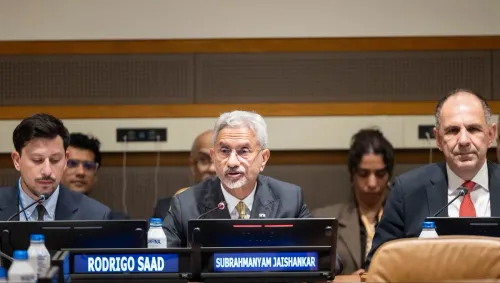
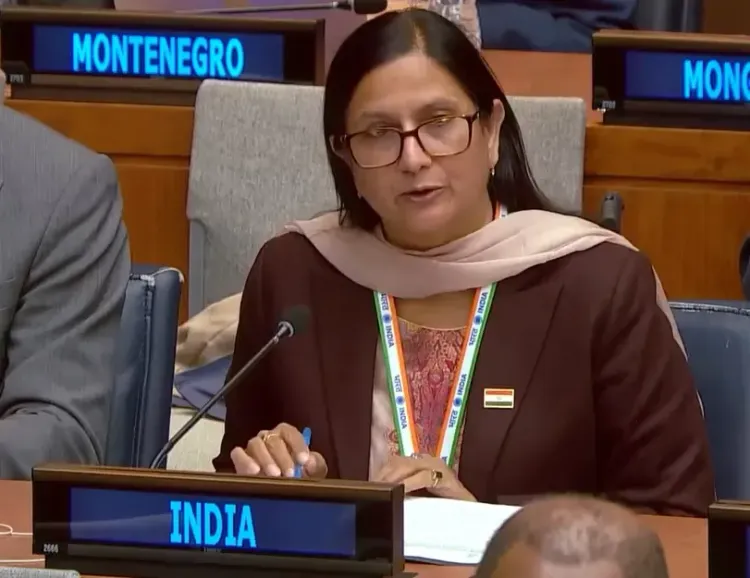
BJP MP Kamaljeet Sehrawat (West Delhi) disclosed this at the UN General Assembly First Committee on 22 October 2026 .
India was a co-sponsor of the first-ever UN informal exchanges on AI in the military domain , held in Geneva in June 2026 .
India has fulfilled all obligations under the CCW Second Protocol , including non-production of non-detectable mines and making anti-personnel mines detectable.
India has run over 30 limb fitment camps , fitting more than 15,000 artificial limbs across several countries for conflict victims.
India is developing a domestic framework to govern the use of artificial intelligence (AI) in its defence establishment, with safeguards built around the principles of reliability, safety and transparency, according to a statement delivered at the United Nations General Assembly in New York on 22 October 2026. The disclosure comes as militaries across the world accelerate AI adoption and international pressure mounts for binding norms.
India's AI Trustworthiness Framework
Bharatiya Janata Party (BJP) Lok Sabha member Kamaljeet Sehrawat, representing West Delhi, told the General Assembly's First Committee on disarmament that India has developed a domestic mechanism for evaluating the trustworthiness of AI systems deployed in defence. The framework, she said, rests on three pillars: reliability, safety, and transparency.
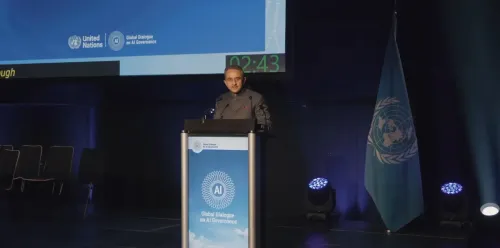
This positions India among a small group of countries that have moved beyond policy declarations toward structured institutional assessment of military AI. Notably, India was also a co-sponsor of the first-ever UN informal exchanges on AI in the military domain, held in June 2026 in Geneva. Those exchanges were convened pursuant to a UN General Assembly resolution passed in December 2025, which called for dialogue on 'artificial intelligence in the military domain and its implications for international peace and security.'
India's Commitments Under the CCW
Sehrawat also addressed India's obligations under the Convention on Certain Conventional Weapons (CCW), which governs armaments deemed to cause excessive injury or indiscriminate harm. India has acceded to all five protocols of the Convention.
Under the Second Protocol, which covers land mines and improvised explosive devices (IEDs), India has fulfilled its commitments, including the non-production of non-detectable mines and ensuring all anti-personnel mines are made detectable. India accords 'high priority' to IED threat mitigation and victim assistance under this protocol, Sehrawat said, noting that the protocol provides a framework for addressing IEDs 'often deployed by terrorists and illegal armed groups.'
Clearing War Remnants and Victim Assistance
India is a signatory to Protocol V of the CCW, which deals with clearing explosive remnants of war. Sehrawat described India as 'deeply conscious of the humanitarian harm caused by explosive remnants of war.'
In a tangible demonstration of that commitment, India has run over 30 limb fitment camps in recent years, fitting more than 15,000 artificial limbs across several countries for victims of conflict-related explosive remnants, she said. This record of outreach reinforces India's push to be seen as a responsible stakeholder in global humanitarian disarmament efforts.
The Broader Context
India's twin moves — building a domestic AI evaluation framework and engaging in multilateral disarmament forums — reflect a broader strategic calculus. As geopolitical rivals integrate AI into command-and-control, surveillance, and autonomous weapons systems, New Delhi is seeking to demonstrate both technological readiness and normative responsibility. This comes amid intensifying UN-level debate over whether voluntary guidelines or a binding treaty should govern lethal autonomous weapons.
With the First Committee's session ongoing and several major military powers resisting legally binding instruments, India's positioning as a co-sponsor of dialogue — rather than a blocker — could strengthen its voice in shaping any eventual international norms framework.
Point of View
Not just a policy intent. The real question is whether this framework is publicly auditable or remains an internal check with no external accountability. Globally, the race to define military AI norms is accelerating, and countries that demonstrate procedural rigour, not just diplomatic goodwill, will shape the eventual treaty architecture. India's co-sponsorship of Geneva dialogues signals ambition, but the credibility of its domestic framework will ultimately rest on transparency — the very principle it has cited.
NationPress
22 Oct 2026
Frequently Asked Questions
What is India's AI framework for defence?
India has developed a domestic framework for evaluating the trustworthiness of AI systems used in defence, built around the principles of reliability, safety and transparency. The framework was disclosed by BJP MP Kamaljeet Sehrawat at the UN General Assembly's First Committee on 22 October 2026.
What are the UN informal exchanges on AI in the military domain?
They are the first-ever multilateral discussions convened under a UN General Assembly resolution passed in December 2025, focused on the implications of AI in the military domain for international peace and security. The initial session was held in Geneva in June 2026, with India as a co-sponsor.
What is India's position on the Convention on Certain Conventional Weapons?
India has acceded to all five protocols of the CCW, which governs excessively injurious or indiscriminate weapons. It has met its obligations under the Second Protocol, including non-production of non-detectable mines, and is a signatory to Protocol V on clearing explosive remnants of war.
How has India contributed to IED victim assistance?
India accords high priority to IED threat mitigation and victim assistance under the CCW Second Protocol. It has run over 30 limb fitment camps, fitting more than 15,000 artificial limbs across several countries for victims of conflict-related explosive remnants in recent years.
Why does India's military AI framework matter globally?
As major militaries integrate AI into weapons and command systems, there is growing pressure at the UN for binding norms or a treaty on lethal autonomous weapons. India's domestic evaluation framework and active co-sponsorship of multilateral dialogue position it as a key voice in shaping any eventual international standards.