CM Dhami: Equal opportunity replaces appeasement in Uttarakhand schools
Synopsis
Chief Minister Pushkar Singh Dhami declared on 22 October 2026 that Uttarakhand is replacing what he termed appeasement-based education with equal opportunities for all children, framing the shift within the BJP's broader push for uniform access in public schooling.
Key Takeaways
CM Pushkar Singh Dhami stated on 22 October 2026 that Uttarakhand is moving away from 'appeasement-based education' toward equal opportunities for all school children.
The statement uses pointed political language consistent with BJP's national discourse against community-specific provisions in public institutions.
The policy framing aligns with India's National Education Policy 2020 , which mandates equitable and inclusive schooling regardless of background.
Uttarakhand has been under BJP governance since 2017 , with education access and standardised curricula among stated priorities.
The hill state's geographic challenges — remote Kumaon and Garhwal districts — make the promise of uniform school access particularly significant for children in underserved areas.
Concrete outcomes will depend on state budget allocations and curriculum reforms in government schools yet to be announced.
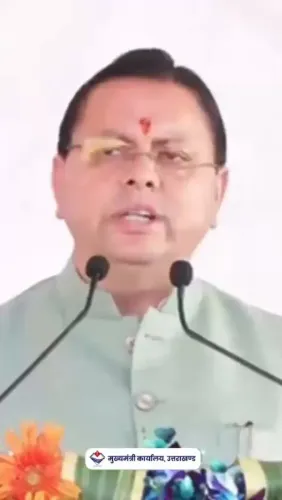
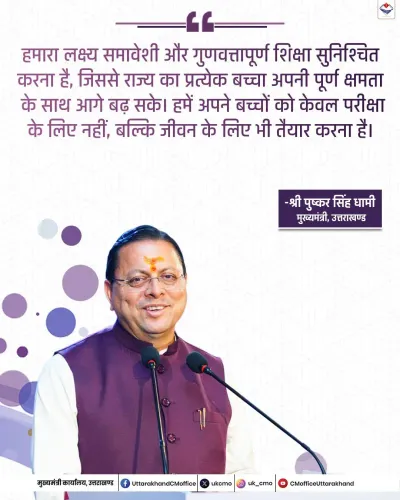
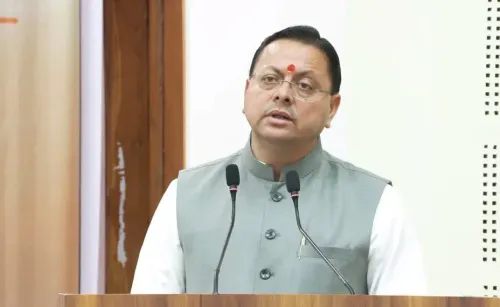
Every child in Uttarakhand deserves the same classroom, the same chance — not one shaped by community or political calculus. That was the sharp, unambiguous message from Chief Minister Pushkar Singh Dhami on Thursday, 22 October 2026, as the Chief Minister's Office of Uttarakhand declared a decisive shift in the state's education philosophy.
In a statement posted on X, CM Dhami said: 'Tushtikaran aadharit shiksha ki jagah bacchon ko de rahe saman avsar' — ('In place of appeasement-based education, we are providing equal opportunities to children'). The phrase 'appeasement-based education' is a pointed political formulation, signalling that the Dhami government is distancing itself from what it characterises as community-specific privileges or differentiated treatment in the public schooling system.
What 'equal opportunity' means in the Uttarakhand context
The broader policy backdrop here is India's National Education Policy 2020, which calls for equitable, inclusive schooling irrespective of a child's background. State governments across the country have been in varying stages of aligning their education frameworks with NEP 2020, and Uttarakhand's BJP-led government — in power since 2017 — has periodically anchored its education messaging around uniform access and standardised curricula.
The language of 'appeasement' places the Dhami administration's framing squarely within a national BJP discourse that has argued against community-specific provisions in public institutions — from school admissions to curricula that critics say favour certain groups. The flip side is 'samaan avsar' (equal opportunity): a promise that every government school child, regardless of caste, religion, or region, operates on the same level playing field.
Uttarakhand's schools and the stakes for children
Uttarakhand is a Himalayan state of roughly 10 million people, with a significant share of its population in remote hill districts where access to quality government schooling has historically been uneven. The state's terrain itself creates natural inequalities — children in Kumaon and Garhwal hills have long faced infrastructural gaps compared to those in the Dehradun valley. Any policy push for genuinely equal access, therefore, carries real stakes for hundreds of thousands of school-going children.
Watchers of Uttarakhand's education budget will now look closely at whether this political statement translates into concrete allocations — new school infrastructure, uniform learning materials, or revised admissions norms — in the next state budget cycle.
The rhetoric is bold; the test will be in the budget lines and the classrooms.
Point of View
Allowing the government to define its education agenda against an implicit opponent without naming one. The alignment with NEP 2020's equity language is shrewd: it gives the statement national policy legitimacy while the local political charge does electoral work in a state where BJP has governed for nearly a decade. The real test, analysts would note, is whether the rhetoric cascades into measurable outcomes — enrolment parity, infrastructure in hill districts, standardised learning materials — or remains a headline. In a state as geographically fractured as Uttarakhand, 'equal opportunity' is not a slogan that resolves itself; it requires sustained fiscal commitment.
NationPress
22 Oct 2026
Frequently Asked Questions
What did CM Dhami say about education in Uttarakhand on 22 October 2026?
CM Pushkar Singh Dhami stated that the Uttarakhand government is providing equal opportunities to all children in place of what he described as 'appeasement-based education,' signalling a move toward uniform access in public schooling.
What does 'appeasement-based education' mean in the Uttarakhand context?
The phrase refers to differentiated or community-specific provisions in public education that the BJP frames as favouring particular groups — the government is positioning equal, standardised access as the alternative.
How does Uttarakhand's education policy connect to the National Education Policy 2020?
NEP 2020 emphasises equitable, inclusive schooling for all children irrespective of background, and the Dhami government's 'equal opportunity' framing is broadly aligned with those national goals.
Which children in Uttarakhand are most affected by unequal education access?
Children in remote hill districts of Kumaon and Garhwal have historically faced infrastructure gaps compared to urban Dehradun, making them the primary beneficiaries of any credible equal-access push.
Is the Uttarakhand government BJP or Congress?
Uttarakhand has been governed by the BJP since 2017, with Pushkar Singh Dhami serving as Chief Minister since July 2021.