Elevating India-Greece Relations: A Strategic Shift in Defense Collaboration

Synopsis
The strengthening ties between India and Greece are crucial for regional stability, particularly in defense. As alliances shift, this partnership aims to enhance security across the Mediterranean and Indo-Pacific, highlighting the importance of military collaboration and strategic dialogues.
Key Takeaways
India and Greece are strengthening defense ties amidst shifting geopolitical landscapes.
Military relations are evolving with structured cooperation programs.
Joint naval and air exercises enhance operational readiness.
Collaboration is crucial for maintaining regional stability in the Mediterranean and Indo-Pacific .
Strategic alignment with Israel adds depth to their military partnership.
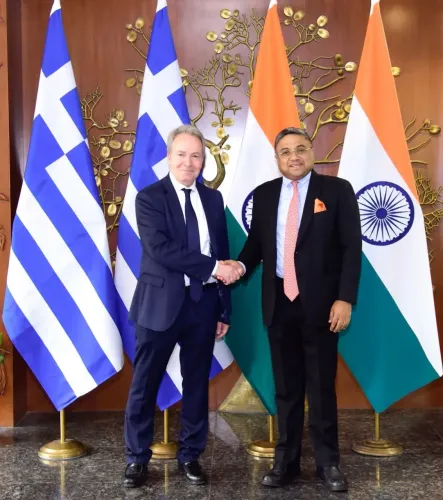
Athens, Feb 25 (NationPress) The relationship between India and Greece is gaining significant strategic relevance, particularly in the defense sector, in light of evolving regional geopolitical dynamics. The strengthening ties between India and Greece reflect not only mutual interests but also a wider strategic alignment aimed at ensuring balance and stability in both the Mediterranean and the Indo-Pacific regions, a recent report has indicated.
According to the 'Greek City Times', "The broader region is characterized by changing alliances, regional tensions, and new centers of influence, making select bilateral partnerships essential for stability and peace. In this context, Greece and India are notably enhancing their strategic discussions, with military relations progressing into a new phase."
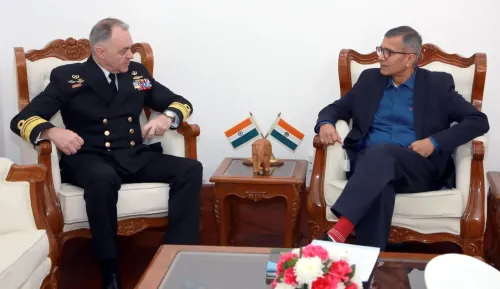
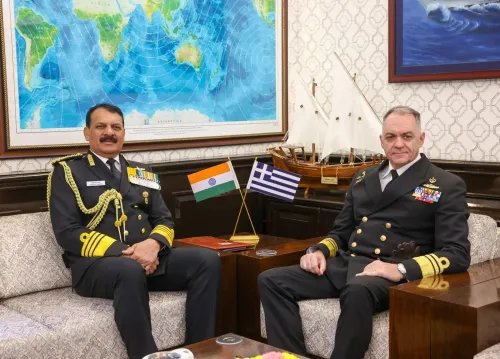
Furthermore, the report noted that the visit of Vice Admiral Eleftherios–Dimitrios Katara, the Chief of the Hellenic Navy General Staff, was integral to this process of strengthening ties. Informed sources suggest that both nations now view each other as military-level strategic partners within a rapidly changing international landscape, particularly concerning the Middle East and the Indo-Pacific.
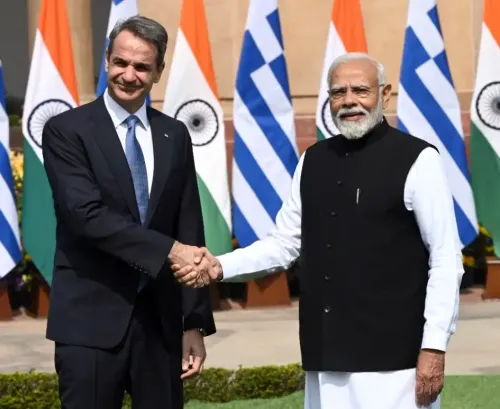
Analysts emphasize that the defense collaboration between India and Greece should be understood within the broader scope of trilateral cooperation involving Israel. This aspect was further solidified during Greek Prime Minister Kyriakos Mitsotakis's recent trip to New Delhi. The operational partnership between the two countries is progressing steadily, encompassing high-level official visits, the establishment of structured Military Cooperation Programs (MCPs), and joint operational exercises across land, air, and sea.
The naval forces of India and Greece have developed significant communication channels through joint exercises and coordinated training, underscoring the importance of maritime security, safeguarding sea lines of communication, and ensuring freedom of navigation. The Greek naval experience in the Mediterranean, combined with India's strategic role in the Indian Ocean, creates a natural domain of shared strategic interests.
Operational cooperation between the armed forces of India and Greece is ongoing, both bilaterally and at multinational levels. Aircraft from the air forces of both nations have participated in major exercises such as Tarang Shakti 24 in India and Exercise Iniochos 25 in Greece. Joint naval drills have been conducted in the Aegean Sea, the Eastern Mediterranean, the Arabian Sea, and the Indian Ocean, with Indian officers attending training programs in Greece.
Diplomatically, Athens and New Delhi are closely monitoring the strategic alignment between Turkey and Pakistan. Recent developments in the region suggest the formation of new geopolitical platforms, as Saudi Arabia, Turkey, and Pakistan are reportedly exploring trilateral coordination, sometimes referred to as an 'Islamic NATO.'
In addition, Israeli Prime Minister Benjamin Netanyahu has recently suggested that Greece, Israel, Cyprus, and potentially other regional entities could collaborate to create a strategic alliance framework in the Middle East to counterbalance Turkey’s ambitions.
In conclusion, the evolving relationship between Greece and India not only signifies bilateral interests but also represents a broader strategic alignment aimed at preserving balance and stability in the Mediterranean and the Indo-Pacific regions.
Point of View
The growing defense ties between India and Greece reflect a proactive approach to addressing shifting geopolitical realities. These developments underscore the importance of strategic partnerships in maintaining regional stability, especially amidst evolving threats and alliances. A nation-first approach is essential as these countries navigate complex international landscapes.
NationPress
7 Oct 2026
Frequently Asked Questions
What is the significance of the India-Greece defense relationship?
The India-Greece defense relationship signifies a strengthening of strategic ties aimed at maintaining regional stability, particularly in the Mediterranean and Indo-Pacific regions.
How are India and Greece enhancing their military collaboration?
India and Greece are enhancing their military collaboration through high-level official visits, joint operational exercises, and structured Military Cooperation Programs.
What role does Israel play in the India-Greece defense alignment?
Israel serves as a critical component in the trilateral cooperation involving India and Greece, further solidifying their defense alignment amid regional geopolitical shifts.
What recent developments have influenced India-Greece ties?
Recent developments include high-level visits, joint military exercises, and a shared concern over regional dynamics involving Turkey and Pakistan.
Why is maritime security important for India and Greece?
Maritime security is vital for both nations to protect their sea lines of communication and ensure freedom of navigation, given their strategic positions in the Mediterranean and Indian Ocean.