India offers Central Asia high-value partnership, counters China's BRI model
Synopsis
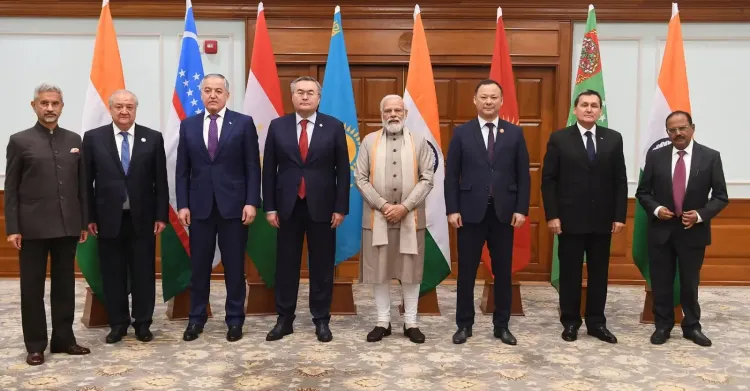
As Russia's influence wanes in Central Asia, India is stepping forward with a development model built on digital infrastructure, pharmaceuticals, and connectivity corridors — positioning itself as the sovereign-respecting alternative to China's BRI. A Mizzima News report argues that anti-China sentiment and India's deep historical ties give New Delhi a rare opening to reshape the region's strategic partnerships.
Key Takeaways
India is positioning itself as a high-value partner for the Central Asian Republics (CARs) , offering sustainable development, technology transfer, and trade diversification.
China 's Belt and Road Initiative (BRI) faces scepticism in the region due to sovereignty concerns and its treatment of ethnic minorities including Uyghurs and Kazakhs .
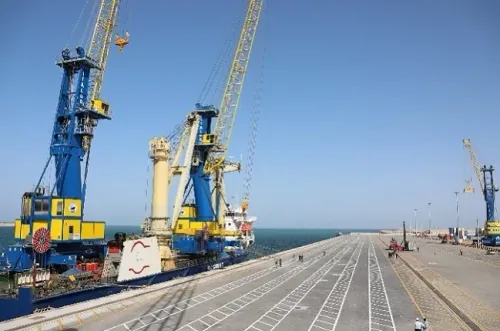
India's connectivity push centres on the International North-South Transport Corridor (INSTC) and Chabahar Port , core to its Connect Central Asia policy .
Since 2015 , India has treated Central Asia as a single geographical unit, signing multiple agreements on security, energy, trade, and culture.
The post-Moscow era has prompted CARs to diversify strategic partnerships, creating an opening for deeper Indian engagement.
India is positioning itself as a preferred strategic and economic partner for the Central Asian Republics (CARs), offering a sustainable development model rooted in technology transfer, trade diversification, and respect for national sovereignty — a stark contrast to China's resource-extractive engagement in the region, according to a report published by Myanmar-based media outlet Mizzima News.
India's Development Offer to Central Asia
According to the report, India's value proposition to the CARs centres on world-class pharmaceuticals, technical expertise, and digital infrastructure — including digital payment systems — alongside critical connectivity initiatives. These include the International North-South Transport Corridor (INSTC) and the Chabahar Port, both pivotal to India's Connect Central Asia policy. Together, these initiatives could help bridge developmental gaps and open Central Asian economies to broader global markets, the report noted.
Unlike China's approach, which the report characterises as viewing the region 'largely as a supplier of raw materials and a market for cheap manufactured goods,' India's engagement is described as issue-based, driven by concessional financing, sustainable infrastructure, and transparency — factors that directly address concerns over debt-trap diplomacy.
A Shifting Regional Order Post-Moscow
The report observes that the post-Moscow era has reshaped Central Asia's strategic calculus. With Russia's regional influence receding, Central Asian nations have broadened their partnerships, increasingly turning to both China and India. China, described as a 'seasoned regional player,' has leveraged the Belt and Road Initiative (BRI) for infrastructure investment across transport, energy, and digital sectors. India, by contrast, has pursued a thematic partnership model focused on rare earth metals, digital collaboration, and corridor connectivity.
The report notes that since 2015, India has begun treating Central Asia as a single geographical unit for cooperation, signing multiple agreements on security, energy, trade, and culture — a shift that reflects a strategic reorientation of the region in New Delhi's foreign policy thinking.
Why Central Asia May Favour India
The report identifies several reasons why CARs are increasingly inclined toward deeper engagement with India. First, it points to geostrategic unease over China's BRI, with regional governments viewing Chinese investments as potentially threatening to their sovereign autonomy. Second, it flags a deep well of public anti-China sentiment across the region — rooted in China's treatment of ethnic minorities including Uyghurs, Kazakhs, and Kyrgyz communities — alongside historical perceptions of Chinese expansionism.
'Central Asians are sceptical of Chinese investments, as these investments are considered risky and a threat to sovereignty,' the report stated, adding that India's image as a soft cultural power, backed by centuries of historical and socioeconomic ties with the region, gives it a distinct narrative advantage.
Strategic Implications for India
If realised, closer economic ties between India and the CARs could significantly expand New Delhi's geopolitical footprint in a region long dominated by Moscow and increasingly contested by Beijing. The report argues that this alignment could enable Central Asian nations to strengthen economic resilience while retaining sovereign autonomy — with development guided, as it put it, by 'mutual respect.' This comes amid India's broader push to diversify its strategic partnerships and reduce dependence on traditional supply chains. The full realisation of the INSTC and Chabahar connectivity arc will be a critical test of whether India's partnership promise translates into tangible regional outcomes.
Point of View
And the region knows it. But difference on paper is not influence on the ground — India's connectivity ambitions via INSTC and Chabahar remain works-in-progress, constrained by geopolitics, sanctions risk, and infrastructure gaps that Beijing has already begun filling. Anti-China sentiment is a real political current in Central Asia, but sentiment does not automatically translate into trade flows or signed deals. The harder test for India is whether it can convert goodwill into bankable commitments before China's infrastructure lock-in deepens. New Delhi's window is real, but it is not indefinite.
NationPress
23 Oct 2026
Frequently Asked Questions
What is India offering to Central Asian Republics?
India is offering the Central Asian Republics a high-value economic partnership focused on sustainable development, technology transfer, pharmaceuticals, digital infrastructure, and connectivity via the INSTC and Chabahar Port. This contrasts with China's approach, which critics describe as resource-extractive and sovereignty-threatening.
How does India's Central Asia engagement differ from China's BRI?
India's engagement is described as issue-based, prioritising concessional financing, transparency, and sustainable infrastructure — directly addressing debt-trap concerns associated with China's Belt and Road Initiative. China, by contrast, is characterised as viewing the region primarily as a raw material supplier and consumer market.
Why are Central Asian nations sceptical of China?
Central Asian scepticism of China stems from sovereignty concerns over BRI investments, historical perceptions of Chinese expansionism, and public anger over China's treatment of ethnic minorities including Uyghurs, Kazakhs, and Kyrgyz communities.
What is India's Connect Central Asia policy?
India's Connect Central Asia policy is a strategic framework under which New Delhi engages the five Central Asian republics as a single geographical unit since 2015. Its key pillars include the International North-South Transport Corridor (INSTC), Chabahar Port, and thematic partnerships on rare earth metals and digital infrastructure.
Why is the post-Moscow era significant for India-Central Asia relations?
Russia's reduced influence in Central Asia after its westward pivot has created a strategic vacuum, prompting Central Asian nations to diversify partnerships. This has opened space for both India and China to expand their regional footprint, with India seen as offering a sovereignty-respecting alternative.