India-Oman CEPA kicks in June 1: Zero duty on 99% of Indian exports
Synopsis
From 1 June 2026, Indian exporters in gems, textiles, pharma, and a dozen other labour-intensive sectors gain zero-duty access to Oman covering nearly all of India's export basket — the most comprehensive Gulf trade deal India has signed, and a signal of how fast New Delhi is rewiring its trade architecture amid global tariff disruption.
Key Takeaways
The India-Oman CEPA comes into force on 1 June 2026 following a Finance Ministry notification issued on 31 May 2026 .
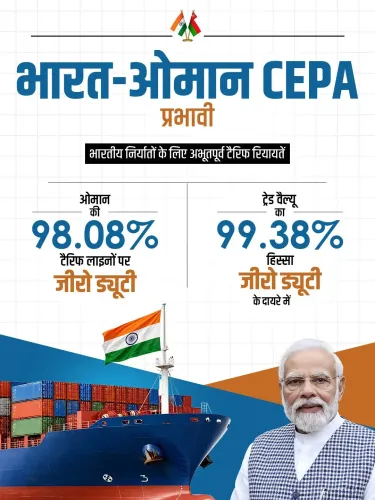
Oman offers zero duty on 98.08% of tariff lines, covering 99.38% of India's exports to Oman by value.
Beneficiary sectors include Gems and Jewellery , Textiles , Pharmaceuticals , Automobiles , Leather , and Medical Devices .
India excludes dairy, gold, silver bullion, tea, coffee, rubber, tobacco , and certain base metal scrap from concessions.
Oman raises the Intra-Corporate Transferee quota from 20% to 50% and extends stays for contractual service suppliers from 90 days to two years .
The pact was signed during PM Modi's visit to Muscat in December 2025 ; India has now signed or concluded similar deals with the UK , New Zealand , and the EU .
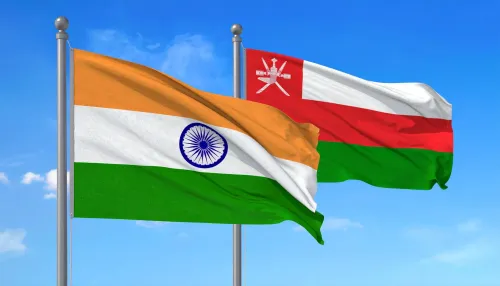
The India-Oman Comprehensive Economic Partnership Agreement (CEPA) comes into force on 1 June 2026, granting zero-duty access to a wide range of Indian labour-intensive exports in one of the Gulf region's most significant bilateral trade milestones. The Finance Ministry issued the formal notification on duty concessions on Sunday, 31 May, clearing the path for immediate implementation.
What the Agreement Covers
Oman has offered zero-duty access on 98.08 per cent of its tariff lines, covering 99.38 per cent of India's exports to Oman by value. All major labour-intensive sectors — including Gems and Jewellery, Textiles, Leather, Footwear, Sports Goods, Plastics, Furniture, Agricultural Products, Engineering Products, Pharmaceuticals, Medical Devices, and Automobiles — receive full tariff elimination under the pact.
India, in turn, is offering tariff liberalisation on 77.79 per cent of its total tariff lines, covering 94.81 per cent of India's imports from Oman by value. For goods of export interest to Oman that are sensitive for India, the offer is largely structured as a tariff-rate quota (TRQ)-based liberalisation rather than outright elimination.
India's Exclusion List
New Delhi has kept a set of sensitive products in the exclusion category, with no concessions offered. These include agricultural products such as dairy, tea, coffee, rubber, and tobacco; gold and silver bullion and jewellery; labour-intensive goods including footwear and sports goods; and scrap of several base metals. The Finance Ministry's notification specifies that duty exemptions will be available only when importers demonstrate to the satisfaction of the Deputy Commissioner of Customs or Assistant Commissioner of Customs that the goods originate from the Sultanate of Oman.
Services and Professional Mobility
The agreement extends well beyond goods trade. Oman's global services imports stand at $12.52 billion, with India's share currently at 5.31 per cent — a figure that signals considerable untapped potential. Oman has made substantial commitments across Computer Related Services, Business and Professional Services, Audio-Visual Services, Research and Development, and Education and Health Services.
A standout feature is the enhanced professional mobility framework under Mode 4. Oman has, for the first time, increased the quota for Intra-Corporate Transferees from 20 per cent to 50 per cent, and extended the permitted stay for Contractual Service Suppliers from 90 days to two years, with the possibility of a further two-year extension. Skilled professionals in accountancy, taxation, architecture, and medical and allied services will benefit from more liberal entry and stay conditions.
India's Broader Trade Push
The India-Oman CEPA is part of an accelerated bilateral trade agenda. India has already signed a similar agreement with the United Kingdom in July 2025 and with New Zealand in April 2026. Talks with the European Union — a 27-nation bloc — were concluded on 27 January 2026. These deals come amid a dramatic shift in the global economic landscape triggered by US tariff turbulence, prompting New Delhi to diversify its trade partnerships at pace.
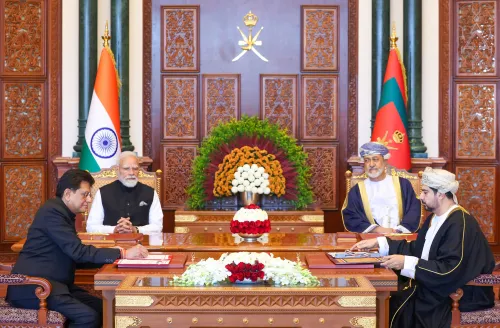
The India-Oman CEPA was originally signed in December 2025 during Prime Minister Narendra Modi's visit to Muscat. With its formal entry into force on 1 June 2026, Indian exporters in labour-intensive sectors stand to gain immediate and substantial market access advantages in the Gulf.
Point of View
But the real test is uptake — past trade agreements have underperformed because small and mid-sized exporters lack the compliance infrastructure to claim preferential duties. India's decision to shield dairy, gold, and agricultural products from concessions reflects domestic political sensitivities, but it also caps the reciprocal depth of the deal. More broadly, the pace at which India is closing trade agreements — UK, New Zealand, EU, and now Oman in quick succession — suggests a strategic recalibration driven less by long-term trade theory and more by the urgency of hedging against US tariff volatility. Whether these deals translate into durable export market share depends on execution, not just signing ceremonies.
NationPress
15 Oct 2026
Frequently Asked Questions
What is the India-Oman CEPA and when does it take effect?
The India-Oman Comprehensive Economic Partnership Agreement (CEPA) is a bilateral trade pact signed in December 2025 during Prime Minister Narendra Modi's visit to Muscat. It comes into force on 1 June 2026, following a Finance Ministry notification issued on 31 May 2026, granting zero-duty access to a broad range of Indian exports.
Which Indian export sectors benefit most from the Oman CEPA?
All major labour-intensive sectors receive full tariff elimination under the agreement. These include Gems and Jewellery, Textiles, Leather, Footwear, Sports Goods, Plastics, Furniture, Agricultural Products, Engineering Products, Pharmaceuticals, Medical Devices, and Automobiles. Oman's zero-duty offer covers 99.38% of India's exports to Oman by value.
What products has India excluded from the CEPA concessions?
India has kept sensitive products in an exclusion category with no concessions offered. These include dairy, tea, coffee, rubber, tobacco, gold and silver bullion, jewellery, footwear, sports goods, and scrap of several base metals. For other Omani goods of export interest, India has offered tariff-rate quota-based liberalisation rather than outright elimination.
How does the CEPA benefit Indian professionals working in Oman?
The agreement introduces an enhanced mobility framework under Mode 4 for the first time. Oman has raised the quota for Intra-Corporate Transferees from 20% to 50% and extended the permitted stay for Contractual Service Suppliers from 90 days to two years, with a possible further two-year extension. Skilled professionals in accountancy, taxation, architecture, and medical services also gain more liberal entry and stay conditions.
How does the India-Oman CEPA fit into India's broader trade strategy?
The Oman CEPA is part of India's accelerated bilateral trade agenda aimed at diversifying partnerships amid global tariff disruption. India has signed similar agreements with the UK in July 2025 and New Zealand in April 2026, and concluded EU free trade agreement talks on 27 January 2026. The deals collectively reflect a strategic push to reduce dependence on any single trade partner.