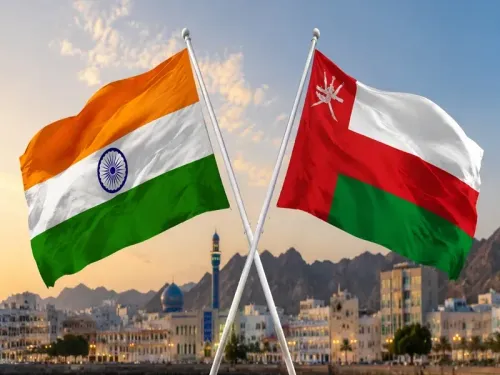
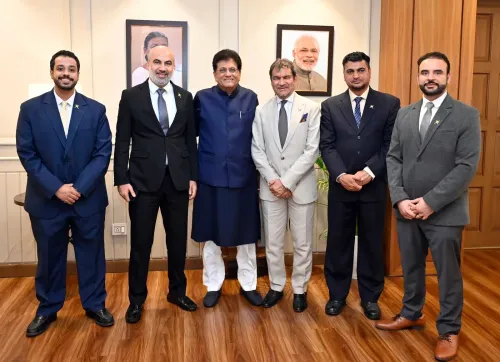
India-Oman CEPA kicks in: Merchandise exports set to jump 50% to $6 billion
Synopsis
India's CEPA with Oman went live on 1 June, handing Indian exporters zero-duty access on nearly all tariff lines — a deal signed during PM Modi's Muscat visit and now expected to push bilateral merchandise trade from $4 billion toward $10 billion. It is also the first time Oman has offered a 50% Intra-Corporate Transferee quota to India, opening a new mobility corridor for Indian professionals.
Key Takeaways
The India-Oman CEPA came into force on 1 June , targeting a 50% rise in merchandise exports over three years.
Oman offers zero-duty access on 98.08% of tariff lines, covering 99.38% of India's current exports.
Exports are projected to grow from $4.06 billion to $6 billion , with a medium-term goal of $10 billion .
India has excluded sensitive sectors — including dairy, tea, coffee, gold, and silver bullion — from any concessions.
Oman raises the Intra-Corporate Transferee quota for Indian professionals from 20% to 50% for the first time.
The deal is part of India's broader FTA push that also includes agreements with the UK , New Zealand , and the EU .
India's merchandise exports to Oman are officially targeted to grow by 50 per cent over the next three years, as the India-Oman Comprehensive Economic Partnership Agreement (CEPA) came into force on 1 June. The deal, which entered effect on Monday, is designed to push exports from a baseline of roughly $4.06 billion past the $6 billion mark, with a medium-term ambition of reaching $10 billion.
What Oman Has Offered India
Oman has extended zero-duty access on 98.08 per cent of its tariff lines, covering 99.38 per cent of India's current exports to the Gulf nation. The concessions span all major labour-intensive sectors: Gems and Jewellery, textiles, leather, footwear, sports goods, plastics, furniture, agricultural products, engineering goods, pharmaceuticals, medical devices, and automobiles — all receiving full tariff elimination.
India's Offer and Sensitive Exclusions
India, in turn, is liberalising tariffs on 77.79 per cent of its total tariff lines, covering 94.81 per cent of imports from Oman by value. For Omani goods that are sensitive to India, the concessions are structured largely as tariff-rate quotas (TRQ) rather than outright elimination.
New Delhi has kept a defined set of products in an exclusion category with no concessions: agricultural commodities including dairy, tea, coffee, rubber, and tobacco; gold and silver bullion and jewellery; labour-intensive goods such as footwear and sports goods; and scrap of several base metals. The Finance Ministry issued the formal notification on duty concessions on Sunday, a day before the agreement's entry into force.
Services and Professional Mobility
The CEPA extends well beyond goods. Oman's global services imports stand at $12.52 billion, yet India's share in that basket is only 5.31 per cent — signalling substantial untapped potential. The agreement opens Oman's market to Indian providers across Computer Related Services, Business and Professional Services, Audio-visual Services, Research and Development, and Education and Health Services.
A standout provision is the enhanced Mode 4 mobility framework for Indian professionals. For the first time, Oman has raised the quota for Intra-Corporate Transferees from 20 per cent to 50 per cent. The permitted duration of stay for Contractual Service Suppliers has been extended from 90 days to two years, with a further two-year extension possible. Skilled professionals in accountancy, taxation, architecture, and medical and allied services will also benefit from more liberal entry and stay conditions.
Broader Context: India's FTA Push
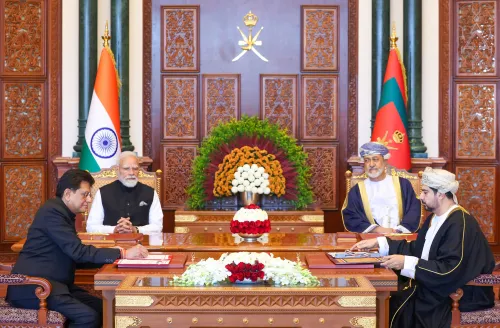
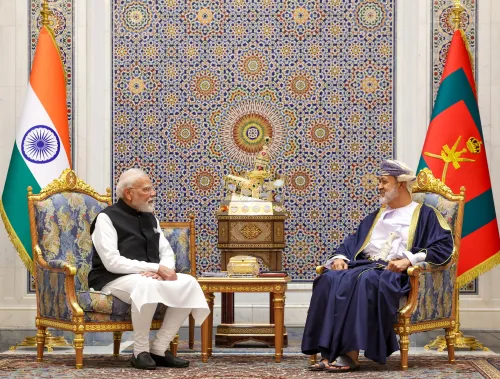
The India-Oman CEPA was signed in December last year during Prime Minister Narendra Modi's visit to Muscat. It forms part of a broader and accelerated trade diversification drive. India has signed a similar deal with the United Kingdom in July 2025 and with New Zealand in April 2026, and concluded negotiations for a free trade agreement with the European Union — a 27-nation bloc — on 27 January this year. This flurry of agreements reflects a deliberate pivot away from dependence on any single trade partner, notably as the global economic landscape has been reshaped by the ongoing US tariff turmoil.
With the CEPA now live, attention shifts to implementation — whether Indian exporters, particularly in gems, textiles, and pharma, can capitalise on the duty-free window before competitors from other FTA partners move in.
Point of View
Particularly mid-sized exporters in gems, textiles, and pharma, has the capacity to absorb a near-doubling of the Omani opportunity. The Mode 4 mobility upgrade is arguably the more structurally significant win: raising the Intra-Corporate Transferee quota from 20% to 50% creates a template India can now push in other Gulf negotiations. What this CEPA also reveals is New Delhi's deliberate sequencing — locking in Gulf, UK, New Zealand, and EU deals in quick succession to build negotiating leverage and reduce exposure to US tariff unpredictability. The exclusion of gold, silver, and agricultural staples signals that domestic political economy still constrains how far India will go, even in deals it is eager to close.
NationPress
26 Sept 2026
Frequently Asked Questions
What is the India-Oman CEPA and when did it come into effect?
The India-Oman Comprehensive Economic Partnership Agreement (CEPA) is a bilateral trade pact that came into force on 1 June. It was signed in December last year during Prime Minister Narendra Modi's visit to Muscat, and covers goods, services, and professional mobility.
By how much are India's exports to Oman expected to grow under the CEPA?
India's merchandise exports to Oman are targeted to grow by 50 per cent over three years, rising from a baseline of roughly $4.06 billion to over $6 billion. The medium-term goal is to reach $10 billion in bilateral merchandise trade.
Which Indian sectors benefit most from the India-Oman CEPA?
Gems and Jewellery, textiles, leather, footwear, pharmaceuticals, medical devices, engineering goods, and automobiles all receive full tariff elimination under Oman's offer. These are primarily labour-intensive sectors that stand to gain the most from zero-duty access.
What has India excluded from concessions under the CEPA?
India has placed agricultural products — including dairy, tea, coffee, rubber, and tobacco — as well as gold and silver bullion, jewellery, certain labour-intensive goods, and base metal scrap in an exclusion category, offering no tariff concessions on these items.
How does the CEPA benefit Indian professionals working in Oman?
For the first time, Oman has raised the Intra-Corporate Transferee quota for Indian professionals from 20% to 50%. The permitted stay for Contractual Service Suppliers has also been extended from 90 days to two years, with a possible further two-year extension, benefiting professionals in accountancy, architecture, and medical services.