India-Oman CEPA: 99% of exports get duty-free access, GCC ties deepen
Synopsis
India's CEPA with Oman hands duty-free access to nearly all of India's exports by value — from basmati rice and shrimp to semiconductors and pharma — while offering Indian IT professionals and service providers some of the broadest mobility commitments Oman has ever extended to a partner country. The GCC and East Africa connectivity angle makes this more than a bilateral deal.
Key Takeaways
The India–Oman CEPA grants duty-free market access to 99.38% of India's exports by value to Oman.
Benefiting sectors include agriculture , marine products , textiles , gems and jewellery , pharmaceuticals , engineering goods , electronics , automobiles , and footwear .
Coastal states Andhra Pradesh , Kerala , Tamil Nadu , and Gujarat are expected to be key seafood export winners.
Pharma products cleared by USFDA and EMA will receive accelerated marketing authorisation in Oman.
The agreement includes broad services market access covering IT, healthcare, engineering, education, and financial services, with improved mobility for Indian professionals.
MSMEs and manufacturing clusters in Surat , Jaipur , Mumbai , Kolkata , and Chennai are among the expected beneficiaries.
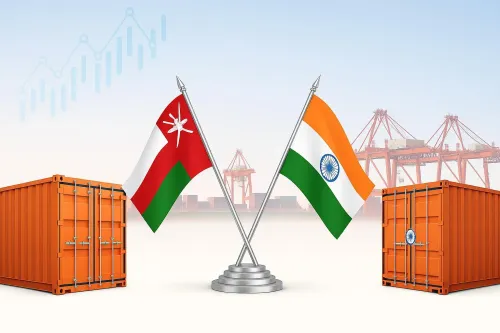
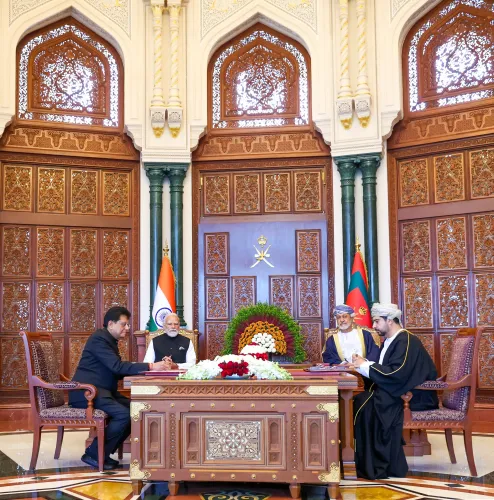
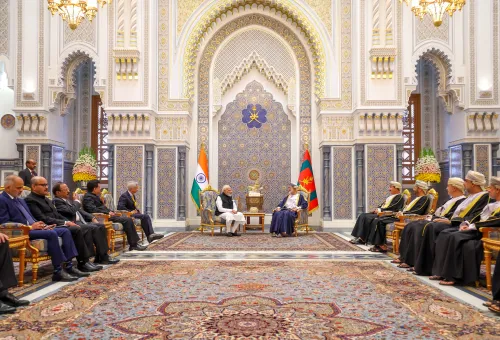
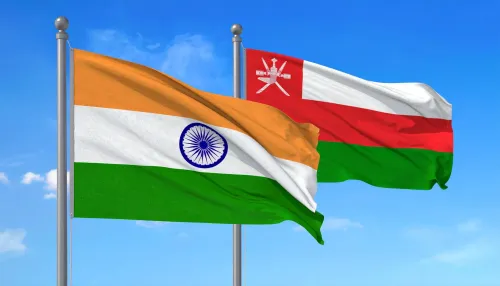
The India–Oman Comprehensive Economic Partnership Agreement (CEPA), welcomed by industry on Monday, 1 June, is set to grant duty-free access to 99.38% of India's exports by value to the Omani market, strengthening trade connectivity with the Gulf Cooperation Council (GCC) and East Africa through strategic logistics infrastructure. The agreement spans sectors from agriculture and pharmaceuticals to gems, jewellery, and information technology.
Key Sectors and Export Gains
Under the CEPA, Indian exporters across agriculture and processed food, marine products, textiles, gems and jewellery, pharmaceuticals, engineering goods, electronics, automobiles, and footwear will receive zero-duty entry into Oman. Agriculture products set to benefit include basmati rice, cashews, onions, potatoes, sweet biscuits, butter, and bovine meat products.
The marine products segment stands to gain from import duty waivers on shrimp, fish, and other seafood. Coastal states — Andhra Pradesh, Kerala, Tamil Nadu, and Gujarat — are expected to be among the clearest beneficiaries, according to Rajeev Juneja, President of the PHD Chamber of Commerce and Industry (PHDCCI).
Gems, Jewellery and Manufacturing Clusters
Tariff elimination in the gems and jewellery sector is expected to sharpen the competitive edge of Indian exporters, particularly those based in manufacturing clusters in Surat, Jaipur, Mumbai, Kolkata, and Chennai. This segment is labour-intensive and among the highest contributors to India's merchandise export basket.
Services, Pharma and Professional Mobility
The CEPA reportedly includes one of the most comprehensive services market access commitments Oman has offered any country. Indian professionals and businesses in information technology, engineering, healthcare, education, financial services, construction, and consultancy are expected to benefit from improved mobility provisions.
In pharmaceuticals, products already cleared by major international regulators — including the USFDA and the European Medicines Agency (EMA) — will qualify for accelerated marketing authorisation in Oman. Compliance burdens are also set to ease through mutual recognition of inspection and certification systems, reducing a longstanding friction point for exporters.
Dr. Ranjeet Mehta, Secretary General and CEO of PHDCCI, noted that faster regulatory approvals and enhanced investment cooperation would particularly benefit sectors such as IT, healthcare, engineering, and start-ups, where India holds strong competitive advantages.
MSME and Investor Impact
Reduced trade barriers are expected to open new avenues for micro, small and medium enterprises (MSMEs) and service providers. According to Juneja, India is well-positioned in key labour-intensive sectors — agriculture, food processing, pharmaceuticals, textiles, and gems — that stand to benefit substantially from the agreement's terms.
The CEPA is also expected to deepen economic integration between the two countries by improving market access and creating a more predictable environment for investors and professionals operating across both economies. With Oman's strategic position as a logistics hub, the agreement could amplify India's reach into the broader GCC and East African markets. Detailed implementation timelines and sector-specific guidelines are awaited.
Point of View
But the real value of the India-Oman CEPA lies in the services and professional mobility provisions — an area where India has repeatedly struggled to extract meaningful commitments from Gulf partners. If the accelerated pharma authorisation mechanism and IT mobility clauses are implemented as described, this could set a template for India's pending CEPA negotiations with the broader GCC bloc. The harder question is execution: past trade agreements have promised market access that exporters, particularly MSMEs, found difficult to operationalise due to non-tariff barriers. Whether Oman's recognition of USFDA and EMA approvals translates into faster shelf access — and not just a paper commitment — will determine whether the pharmaceutical and food processing sectors actually move the needle.
NationPress
20 Sept 2026
Frequently Asked Questions
What is the India-Oman CEPA?
The India–Oman Comprehensive Economic Partnership Agreement (CEPA) is a bilateral trade pact that grants duty-free access to 99.38% of India's exports by value to the Omani market. It covers goods sectors such as agriculture, pharmaceuticals, gems and jewellery, and electronics, as well as services including IT, healthcare, and financial services.
Which Indian export sectors benefit most from the India-Oman CEPA?
Agriculture and processed food, marine products, textiles, gems and jewellery, pharmaceuticals, engineering goods, electronics, automobiles, and footwear are the primary beneficiaries. Coastal states including Andhra Pradesh, Kerala, Tamil Nadu, and Gujarat stand to gain significantly from duty waivers on seafood exports.
How does the CEPA benefit Indian pharmaceutical companies?
Pharmaceutical products already approved by major regulators such as the USFDA and the European Medicines Agency (EMA) will qualify for accelerated marketing authorisation in Oman. Compliance burdens are also expected to ease through mutual recognition of inspection and certification systems.
What does the CEPA mean for Indian IT and services professionals?
The agreement includes broad services market access commitments — reportedly among the most comprehensive Oman has offered any country — covering IT, engineering, healthcare, education, financial services, construction, and consultancy. Indian professionals are expected to benefit from improved mobility provisions under the pact.
How does the India-Oman CEPA strengthen India's GCC and East Africa trade links?
Oman occupies a strategic position as a logistics hub connecting the Gulf Cooperation Council and East Africa. By deepening trade and investment ties with Oman, India gains improved access to these broader regional markets through Oman's logistics infrastructure, according to PHDCCI.