India votes for end to US Cuba embargo at UN, rejects extraterritorial laws
Synopsis
India backed the UN General Assembly's call to end the US embargo on Cuba, with envoy Soumya Nair citing shortages of 60% of essential medicines and a 50% fall in food production. The vote — passed 130 to 17 — was overshadowed by a rare floor confrontation between Cuba's foreign minister and the US envoy, ending in Washington expelling a Cuban diplomat.
Key Takeaways
India voted in favour of the UN General Assembly resolution on 28 October 2026 demanding an end to the US embargo on Cuba .
The resolution passed with 130 votes for, 17 against , and 25 abstentions .
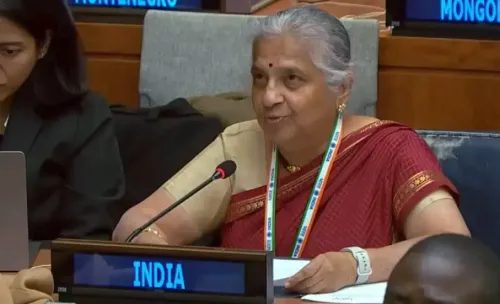
India's counsellor Soumya Nair cited Cuba's shortage of over 60% of essential medicines and a 50% decline in food production over five years.
Cuba's Foreign Minister Bruno Rodriguez Parrilla confronted US Permanent Representative Mike Waltz on the Assembly floor on Tuesday, prompting a brief suspension of proceedings.
The US subsequently expelled Cuban mission First Secretary Richard Tur de la Concepcion over the alleged physical confrontation.
India reaffirmed its commitment to multilateralism and the UN Charter , calling for the embargo to be lifted 'at the earliest.'
India on Wednesday, 28 October 2026, voted in favour of a United Nations General Assembly resolution demanding an end to the United States embargo on Cuba, reaffirming New Delhi's longstanding position that laws with extraterritorial reach that undermine the sovereignty of other nations must be repealed. The resolution passed with 130 votes in favour, 17 against, and 25 abstentions.
India's Position at the General Assembly
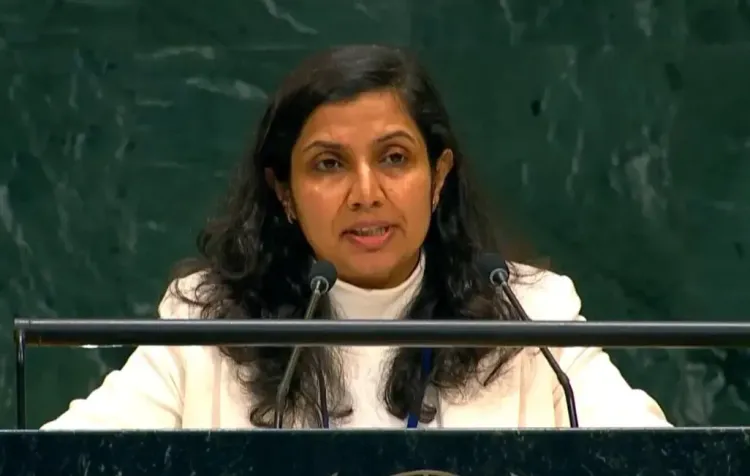
Soumya Nair, a counsellor at India's UN Mission, addressed the Assembly ahead of the vote, stating that New Delhi supports the body's call to all countries to reject 'laws and regulations with extraterritorial effects that adversely affect the sovereignty of other states and the progress and prosperity of their peoples.'
Nair further said, 'India reiterates the Assembly's call to all states to refrain from promulgating and applying, and to repeal and invalidate such laws and measures in conformity with their obligations under the Charter of the United Nations and International Law.' The statement underlines India's consistent advocacy for multilateralism and the primacy of the UN Charter.
Human Cost of the Embargo, As Cited by India
Nair highlighted the acute humanitarian impact of the decades-long US embargo on Cuba, noting that Cuba's health system faces shortages of over 60 per cent of essential medicines, while food production has declined by more than 50 per cent over the past five years. Recently tightened restrictions on fuel exports to Cuba have, she said, 'disrupted essential services, including healthcare, education, water supplies, food distribution and transportation.'
India expressed hope that the embargo would be lifted 'at the earliest, to help create an environment that would enable the people of Cuba to participate more fully in international cooperation and pursue their legitimate development aspirations.'
Dramatic Scenes on the Assembly Floor
The vote came after a series of tense confrontations inside the Assembly chamber. On Tuesday, Cuba's Foreign Minister Bruno Rodriguez Parrilla reportedly charged up to the dais to confront US Permanent Representative Mike Waltz while he was addressing the Assembly. Assembly President Khalilur Rahman briefly suspended proceedings to restore order.
The situation escalated further on Wednesday, when the US expelled the Cuban mission's First Secretary Richard Tur de la Concepcion, alleging that he had physically clashed with a US diplomat during the confrontation, according to Waltz. 'If you lay a hand on an American diplomat in this body, there will be consequences,' Waltz said. 'That so-called diplomat today will be put on a plane back to Havana,' he added, without initially naming the individual; Cuba subsequently identified its official.
The confrontation reportedly occurred as Waltz was speaking about alleged corruption by Cuba's leadership.
UN Reacts to the Conduct
UN Secretary-General Antonio Guterres' spokesperson, Stephane Dujarric, was critical of the behaviour inside the chamber. 'We expect every delegation to respect the decorum of the General Assembly's hall and to respect the rules and procedures of the General Assembly,' he said at his Wednesday briefing. He added that UN Safety and Security had deployed more personnel than usual and 'did a great job in ensuring that the situation did not get out of hand.'
What This Signals for India's Foreign Policy Posture
India's vote is consistent with its historical pattern at the UN, where New Delhi has repeatedly backed resolutions against the Cuba embargo while simultaneously maintaining strong bilateral ties with the United States. This dual positioning reflects India's broader 'strategic autonomy' doctrine — engaging Washington on defence and trade while refusing to endorse unilateral economic measures seen as undermining international law. Notably, this is the thirty-third consecutive year the General Assembly has adopted such a resolution, and the margin in favour has remained broad despite shifting geopolitical alignments. How the US-India partnership navigates such visible divergences at multilateral forums will remain a key diplomatic test in the months ahead.
Point of View
An expulsion, and a 130-17 margin all underscore that Washington is increasingly isolated on this issue. India's careful framing around 'extraterritorial laws' is also a signal with broader utility — it is language that applies equally to any future US secondary sanctions targeting India's trade with Russia or Iran. New Delhi is not just voting on Cuba; it is laying down a principled marker for its own strategic latitude.
NationPress
29 Oct 2026
Frequently Asked Questions
Why did India vote for the UN resolution on the US Cuba embargo?
India voted in favour of the resolution on 28 October 2026, citing its opposition to laws with extraterritorial effects that undermine the sovereignty of other states. New Delhi also pointed to the humanitarian impact of the embargo, including shortages of over 60% of essential medicines in Cuba.
What was the result of the UN General Assembly vote on the Cuba embargo?
The resolution demanding an end to the US embargo on Cuba passed with 130 votes in favour, 17 against, and 25 abstentions. It is one of the broadest margins in favour in recent years.
What happened between Cuba and the US on the Assembly floor?
Cuba's Foreign Minister Bruno Rodriguez Parrilla reportedly confronted US Permanent Representative Mike Waltz at the dais on Tuesday, prompting Assembly President Khalilur Rahman to briefly suspend proceedings. On Wednesday, the US expelled Cuban mission First Secretary Richard Tur de la Concepcion, alleging he had physically clashed with a US diplomat.
What did India say about the impact of the embargo on Cuba?
India's UN counsellor Soumya Nair said the embargo has left Cuba's health system facing shortages of over 60% of essential medicines, and that food production has fallen by more than 50% over the past five years. She also cited disruptions to healthcare, education, water supply, and transportation due to recently tightened fuel export restrictions.
How does this vote fit into India's broader foreign policy?
India has consistently backed this UN resolution for over three decades as part of its 'strategic autonomy' doctrine, opposing unilateral economic measures that bypass the UN Charter. New Delhi simultaneously maintains strong bilateral ties with Washington, using the vote to signal its principled stance on sovereignty and international law without rupturing the India-US relationship.