India rivals China in engineering talent, says US official at USISPF summit
Synopsis
A senior Trump administration official publicly placed India on par with China in engineering workforce depth — a striking geopolitical signal at the USISPF summit. With AI diplomacy, mineral refining, and supply chain de-risking all on the table, Washington is making its clearest case yet that India is not just a partner of choice but a strategic counterweight.
Key Takeaways
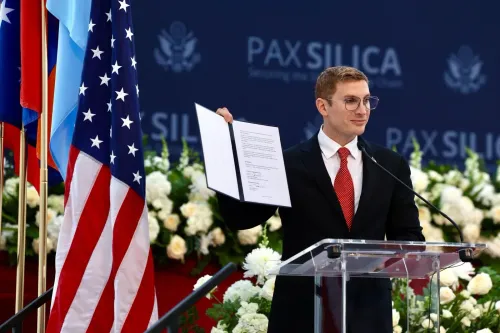
Jacob Helberg , US Under Secretary of State, called India 'the only country on earth that fundamentally rivals China' in engineering workforce depth at the USISPF summit on 30 June .
India was an early signatory to the PAX Declaration ; a bilateral US-India AI joint statement helped shape a declaration co-signed by 35 countries .
Helberg cited India's engineering talent, mineral refining capacity, and nascent tech ecosystem as pillars of the partnership.
Washington's stated goal is to increase production capacity outside China and build supply chain reliability and abundance for partner nations.
Mastercard confirmed India is its second-largest workforce outside the US, with its largest global tech hub in Pune .
Helberg warned against the 'AI sovereignty' trap, arguing that rebuilding entire domestic tech stacks would waste billions and divert engineering talent from future innovation.
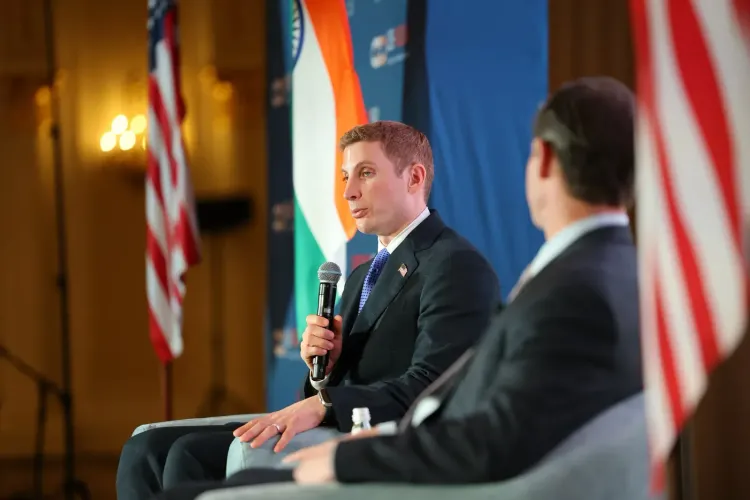
Jacob Helberg, the US Under Secretary of State for Economic Growth, Energy and the Environment, declared on 30 June that India is 'the only country on earth that fundamentally rivals China' in the depth of its engineering workforce and talent pool, calling New Delhi an indispensable partner in building secure technology ecosystems and reducing global reliance on China. Helberg made the remarks at the ninth US-India Strategic Partnership Forum (USISPF) Leadership Summit in Washington, in a fireside conversation with Tucker Foote, Chief Government Affairs and Policy Officer at Mastercard.
Why India Stands Out for Washington
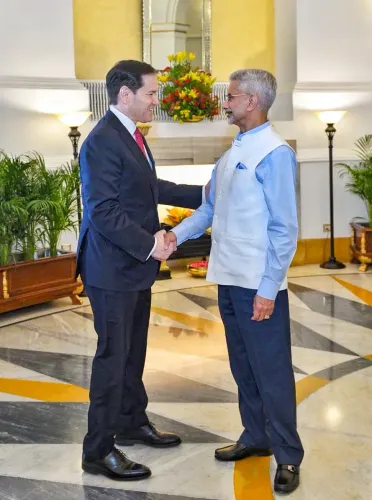
Helberg said India's appeal to the United States rested on four pillars: democratic alignment, engineering talent, mineral refining capacity, and a rapidly maturing technology ecosystem. 'India is especially interesting because it is not only a country with who we have a deep values alignment, but India obviously is the only country on earth that fundamentally rivals China as with respect to the depth of its engineering workforce and talent pool,' he said.
He also highlighted India's 'very deep mineral refining industry' and what he described as a 'true nascent technology ecosystem', arguing that India was already making meaningful contributions at the application layer of emerging technologies — the layer he said would be essential for broader technology diffusion globally.
AI Diplomacy and the PAX Declaration
Helberg noted that India was among the early signatories to the PAX Declaration and a central participant in the Trump administration's technology and artificial intelligence diplomacy. He said he had travelled to India in February for India's AI Impact Summit, where both sides marked India's accession and published a joint statement on AI opportunity. That bilateral statement, he said, subsequently helped shape a broader declaration co-signed by 35 countries at a follow-on summit.
On AI collaboration specifically, Helberg said India could become a 'transformative partner' in developing a dynamic AI developer ecosystem, with American platforms serving as developer tools for Indian entrepreneurs and startups building applications for the Indian market.
Supply Chain Diversification and the China Risk
Helberg was direct about the strategic imperative driving Washington's outreach. 'The supply chains are, as they stand today, are too overly concentrated geographically and thematically in some places. And they need to be diversified,' he said. He said the overarching objective was to 'increase production capacity outside of China in order to de-risk our overall over concentration with China', citing India's potential role in memory capacity, mineral refining, and AI applications as priority areas for bilateral deepening.
He stressed that the United States was not pursuing a zero-sum competition among technology partners. 'We don't view it as a zero sum game,' he said, noting that the technology industry was 'a pie that grows' and that Washington was not threatened by the success of partner-country companies in the sector.
Warning Against 'AI Sovereignty' Trap
Helberg cautioned against what he termed the 'digital sovereignty' or 'AI sovereignty' trap — the notion that countries must rebuild the entire technology stack domestically to be truly sovereign. He argued this interpretation was being 'weaponized' by various voices to push countries toward economically damaging self-sufficiency drives. 'We think that is incredibly backward and really, really dangerous economically for them because what that means is they're going to sink billions of dollars in resources to reinvent something that already exists,' he said.
Instead, he advocated an ecosystem-based model in which trusted partners leverage each other's strengths. 'Sovereignty comes from being a net contributor to the world's innovation ecosystem,' he said, pointing to the US use of SK Hynix memory chips as an example of productive interdependence among allies.
Mastercard's India Footprint and the Road Ahead
Foote said Mastercard viewed India as a major technology base, noting that India was the company's second-largest workforce outside the United States and home to its largest global technology hub in Pune. He said a central question in the bilateral relationship remained how both countries could build technology together 'in a protected, secure way.'
Helberg said Washington's twin goals were supply chain reliability — ensuring companies never had to seek permission to access critical inputs — and abundance, meaning the ability to scale production of memory chips, logic chips, and minerals quickly and at scale. He said some Chinese firms were already attempting to exploit existing supply constraints by filling global demand gaps with their own products, and that the US-India response would be to 'compete through a strategy of abundance and supply chain reliability.'
The remarks came as India and the United States continue to deepen cooperation across artificial intelligence, critical minerals, semiconductors, advanced manufacturing, and secure supply chains — with the USISPF summit serving as the latest high-level forum to chart the next phase of the partnership.
Point of View
And it arrives as Washington accelerates supply chain decoupling from China. Yet the gap between rhetoric and execution in US-India tech cooperation has been wide: semiconductor fab investments, critical mineral agreements, and AI governance frameworks have moved slowly despite years of summitry. The real test is whether the PAX Declaration and USISPF commitments translate into binding procurement, investment, and talent-mobility arrangements — or remain aspirational talking points. India, for its part, must weigh the sovereignty concerns Helberg dismissed: being a 'net contributor' to an American-led innovation ecosystem is not the same as being an equal architect of it.
NationPress
29 Sept 2026
Frequently Asked Questions
What did US official Jacob Helberg say about India's engineering workforce?
Jacob Helberg, the US Under Secretary of State for Economic Growth, Energy and the Environment, said India is 'the only country on earth that fundamentally rivals China' in the depth of its engineering workforce and talent pool. He made the remarks at the ninth USISPF Leadership Summit in Washington on 30 June.
What is the USISPF Leadership Summit?
The US-India Strategic Partnership Forum (USISPF) Leadership Summit is a high-level annual gathering of senior officials, diplomats, and business leaders from both countries. The ninth edition, held in Washington, focused on the next phase of the US-India bilateral partnership across technology, AI, and supply chains.
Why does the US consider India a critical technology partner?
According to Helberg, India combines democratic alignment, deep engineering talent, mineral refining capacity, and a growing technology ecosystem — making it a natural partner for building secure, diversified supply chains and an AI developer ecosystem that reduces global dependence on China.
What is the PAX Declaration and how is India involved?
The PAX Declaration is a technology and AI diplomacy initiative championed by the Trump administration. India was among its early signatories, and a bilateral US-India joint statement on AI opportunity — published after Helberg's visit to India's AI Impact Summit in February — reportedly helped shape a broader declaration co-signed by 35 countries.
What warning did Helberg issue about 'AI sovereignty'?
Helberg cautioned that the concept of 'AI sovereignty' was being misused to push countries into rebuilding entire domestic technology stacks — an approach he called 'incredibly backward' and economically damaging. He argued that true sovereignty comes from being a net contributor to a global innovation ecosystem, not from self-sufficiency.