India-Russia Eastern Maritime Corridor rises as West Asia crisis chokes Hormuz
Synopsis
With the Strait of Hormuz blockaded and the Red Sea still volatile, India's eastern bet — the Chennai-Vladivostok maritime corridor — is no longer a contingency plan. It is a strategic necessity, cutting 24 days off Suez transit times while opening doors to Arctic resources that China is already racing to claim.
Key Takeaways
India's Eastern Maritime Corridor (EMC) links Chennai port to Russia's Vladivostok port , activated in 2024 amid Red Sea disruptions.
The EMC cuts transit time by roughly 24 days compared to over 40 days via the Suez Canal route.
The Strait of Hormuz blockade amid the West Asia conflict has further elevated the corridor's strategic and economic importance for India.
India's Sagarmala project complements the EMC by building port infrastructure for efficient inland distribution of Russian energy and raw materials.
The EMC aligns with India's Act East Policy and provides potential access to the resource-rich Arctic zone , where China's cargo ship Istanbul Bridge completed a 20-day Arctic transit to Felixstowe on 13 October 2025 .
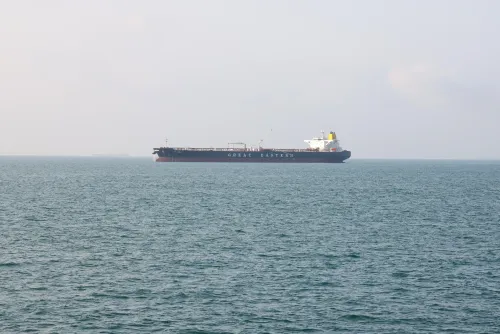
The Eastern Maritime Corridor (EMC) — the seaborne trade route linking Chennai port with Russia's Vladivostok port — has emerged as a critical economic and strategic lifeline for India, as the West Asia conflict and the blockade of the Strait of Hormuz continue to disrupt global energy supply chains, according to a new report. The route's importance has sharpened significantly amid mounting pressure on traditional westward shipping lanes.
Why the Hormuz Crisis Changes the Calculus
The choking of the Strait of Hormuz — through which a substantial share of global crude oil transits — has delivered fresh energy shocks to import-dependent economies, including India. This follows an earlier disruption in the Red Sea zone, where Yemen's Houthi rebels targeted international commercial shipping with drones and missiles in support of Hamas during the Hamas-Israel war. Together, these crises have exposed the fragility of India's western maritime supply lines and accelerated the case for eastern alternatives.
The EMC Advantage: Time, Cost, and Stability
India formally activated the EMC, also known as the Vladivostok-Chennai shipping route, in 2024. The corridor reduces transit time by roughly 24 days compared to the more than 40 days required via Suez Canal routes. For India's steel and energy sectors — which depend heavily on Russian coking coal and crude oil — the EMC offers a viable, stable, and cost-efficient supply channel that bypasses contested western chokepoints entirely.
Sagarmala and Domestic Connectivity
The EMC's strategic value is further amplified by India's ongoing port infrastructure push under the Sagarmala project. While the corridor ensures a steady and faster flow of raw materials from Russia to Indian ports, the Sagarmala initiative is designed to ensure efficient onward distribution from those ports into the broader domestic economy. The two programmes are increasingly seen as complementary pillars of India's maritime logistics strategy.
Strategic Dimensions: Act East and Arctic Access
Beyond trade, the EMC fits squarely within India's Act East Policy, reinforcing integration with the wider Indo-Pacific region and providing a counterweight to Chinese dominance in Pacific maritime corridors. The Indian Navy's growing participation in Pacific maritime security exercises with East Asian and Pacific partners strengthens India's security footprint along the route.
Notably, the corridor also opens a potential gateway to the Arctic zone — a region rapidly emerging as a new frontier of geopolitical and resource competition. China drew global attention when its cargo ship Istanbul Bridge reached the British port of Felixstowe on 13 October 2025 via the Arctic Ocean in just 20 days. The Arctic belt, rich in natural resources including rare earth materials, is now a zone that India cannot afford to cede to rivals.
As West Asia tensions show no sign of near-term resolution, the EMC's role as India's eastern energy and trade anchor is likely to deepen further.
Point of View
Customs efficiency, and naval reach — not just the existence of a route. The Arctic dimension is where the real long-game lies: China's 20-day Istanbul Bridge transit in October 2025 was a strategic signal, and India has no equivalent answer yet. The EMC is a necessary move, but it is the opening of a competition India has not yet fully resourced to win.
NationPress
23 Jun 2026
Frequently Asked Questions
What is the Eastern Maritime Corridor between India and Russia?
The Eastern Maritime Corridor (EMC) is a seaborne trade route connecting India's Chennai port to Russia's Vladivostok port , activated in 2024. It provides India with a direct eastern maritime link to Russian energy resources and raw materials, bypassing the increasingly disrupted western routes through the Suez Canal and the Strait of Hormuz.
Why has the Eastern Maritime Corridor gained importance now?
The corridor has risen in strategic significance due to two compounding disruptions: Houthi rebel attacks on Red Sea shipping during the Hamas-Israel conflict, and the more recent blockade of the Strait of Hormuz amid the West Asia crisis. Both have choked India's traditional western supply routes, making the EMC a viable and stable alternative.
How much transit time does the EMC save compared to the Suez Canal route?
The EMC reduces transit time by roughly 24 days compared to the more than 40 days required via Suez Canal routes, according to the report. This makes it significantly faster for transporting Russian coking coal and crude oil to Indian ports.
How does the Sagarmala project relate to the Eastern Maritime Corridor?
The Sagarmala project is India's port infrastructure development initiative that complements the EMC by improving domestic connectivity from ports to the rest of the country. Together, the two programmes are designed to ensure that Russian energy and raw materials arriving via the EMC are distributed efficiently and cost-effectively across India.
What is India's strategic interest in the Arctic through the EMC?
The EMC opens a potential gateway for India to access the Arctic zone, which is rich in natural resources including rare earth materials. The route's strategic relevance was underscored when China's cargo ship Istanbul Bridge completed an Arctic Ocean transit to the British port of Felixstowe in just 20 days on 13 October 2025, signalling growing geopolitical competition in the region.