CM Saini, PM Modi cited as Haryana marks 12 years of welfare push
Synopsis
The Chief Minister's Office of Haryana on 23 June 2026 highlighted twelve years of welfare delivery under PM Modi and CM Nayab Saini, citing Ayushman Bharat, PMGKAY, PM Surya Ghar Yojana and Poshan Abhiyan as pillars of a citizen-welfare push anchored in the Antyodaya philosophy and the Viksit Bharat vision.
Key Takeaways
CMO Haryana on 23 June 2026 credited 12 years of BJP governance at Centre and state for welfare gains.
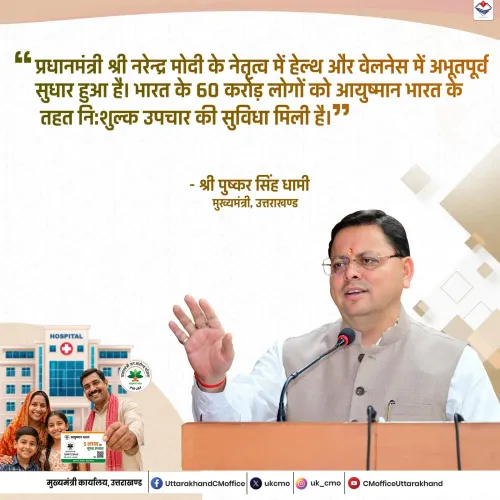
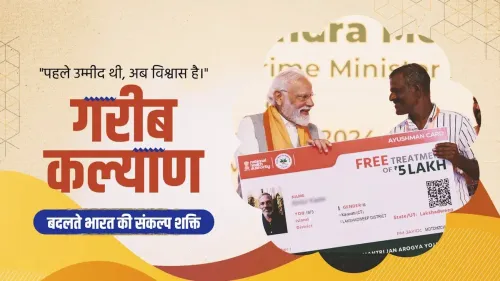
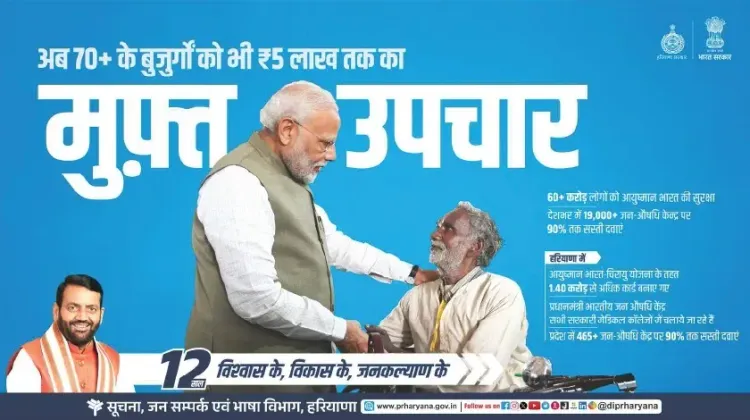
Ayushman Bharat (launched 2018 ) provides health cover of up to Rs 5 lakh per family, extended to senior citizens.
Pradhan Mantri Garib Kalyan Anna Yojana , introduced in 2020 , continues to provide free foodgrains to poor households.
PM Surya Ghar Muft Bijli Yojana promotes rooftop solar energy for affordable and clean power access to families.
Poshan Abhiyan (rolled out from 2018 ) targets stunting, undernutrition and anaemia across the country.
All schemes are framed under the Antyodaya philosophy and linked to the Viksit Bharat 2047 development roadmap.
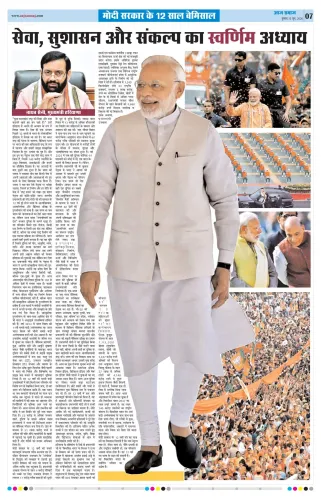
The Chief Minister's Office of Haryana on Tuesday, 23 June 2026 highlighted twelve years of welfare delivery under Prime Minister Narendra Modi at the national level and Chief Minister Nayab Singh Saini at the state level, crediting schemes spanning health, energy, food security and nutrition with transforming the lives of crores of citizens.
Context
The post, shared from the official CMO Haryana account, states: 'Pradhan Mantri shri Narendra Modi ke margdarshan mein desh mein aur Mukhyamantri shri Nayab Saini ke netritva mein Haryana mein pichle 12 varshon mein jankalyan ko nayi disha mili hai' — 'Under the guidance of Prime Minister Narendra Modi at the national level and the leadership of Chief Minister Nayab Saini in Haryana, public welfare has received a new direction over the past 12 years.' The statement positions the combined tenure of BJP governments at the Centre and in Haryana as a unified welfare arc anchored in the Antyodaya philosophy of prioritising the poorest of the poor.
The post specifically names Ayushman Bharat, PM Surya Ghar Yojana, Pradhan Mantri Garib Kalyan Anna Yojana (PMGKAY) and Poshan Abhiyan as the pillars of this effort, and closes with the hashtag #ViksitBharat, linking the welfare record to the central government's long-term vision of a developed India by 2047.
Policy Backdrop
Ayushman Bharat, launched in 2018, is India's largest government-funded health insurance scheme, providing health cover of up to Rs 5 lakh per eligible family per year, with its scope subsequently expanded to include senior citizens. PMGKAY was introduced in 2020 during the COVID-19 pandemic to provide free foodgrains to poor households and has been extended multiple times since, becoming a cornerstone of food security policy.
Poshan Abhiyan, approved in 2017 and rolled out from 2018, is the national nutrition mission targeting stunting, undernutrition and anaemia through coordinated inter-ministerial action. The PM Surya Ghar Muft Bijli Yojana promotes rooftop solar installations to give households access to affordable and clean energy, aligning with India's renewable energy commitments. Together, these schemes represent the direct-benefit welfare architecture the central government has expanded since 2014.
Stakeholders and Impact
The primary beneficiaries cited in the post are senior citizens, poor households and rural families across Haryana and the country. Haryana, governed by the BJP since 2014, has aligned state-level implementation with these national programmes to improve coverage metrics in health insurance enrolment, ration distribution and rooftop solar adoption.
The framing of Antyodaya — a concept rooted in serving the last person in the queue — as the guiding principle signals that the government's stated intent is to direct welfare resources toward the most marginalised sections. The post's reference to a 'positive transformation in the lives of crores of people' reflects the official narrative of scheme saturation across income groups and geographies.
What's Next
State-level progress reports on scheme coverage in Haryana and any announcements in upcoming central or state budgets regarding extensions of food or health benefits will be closely watched by policy observers. The invocation of #ViksitBharat suggests the government intends to keep linking welfare delivery milestones to the broader 2047 development goal as a political and policy narrative ahead of future electoral cycles. How effectively ground-level saturation of these schemes is documented and independently verified will determine the durability of this welfare framing.
Point of View
Bundling four flagship central schemes under a single 12-year arc that spans both the Modi government at the Centre and the Saini administration in the state. By invoking Antyodaya — a concept with deep roots in Indian social policy — the messaging attempts to frame technocratic direct-benefit transfers within a moral vocabulary of serving the poorest. The #ViksitBharat hashtag performs a dual function: it roots the welfare record in a forward-looking 2047 vision while simultaneously making the BJP's tenure synonymous with the idea of national development. As Haryana approaches future electoral cycles, this kind of consolidated welfare messaging is likely to intensify, with scheme saturation data becoming a key battleground between the ruling party and opposition critics.
NationPress
23 Jun 2026
Frequently Asked Questions
What is the Ayushman Bharat scheme and who benefits from it in Haryana?
Ayushman Bharat is India's flagship government-funded health insurance scheme launched in 2018, providing health cover of up to Rs 5 lakh per eligible family per year. In Haryana, its coverage has been extended to senior citizens and other vulnerable groups as part of the state's alignment with the central welfare programme.
What is PM Surya Ghar Muft Bijli Yojana?
PM Surya Ghar Muft Bijli Yojana is a central government scheme that promotes rooftop solar panel installations for households to provide affordable and clean electricity. It is one of the schemes highlighted by CMO Haryana as part of 12 years of welfare delivery under the BJP.
What is the Pradhan Mantri Garib Kalyan Anna Yojana?
Pradhan Mantri Garib Kalyan Anna Yojana (PMGKAY) is a food security scheme introduced in 2020 during the COVID-19 pandemic that provides free foodgrains to poor households. It has been extended multiple times and remains one of the central government's key welfare programmes.
What is the Viksit Bharat vision mentioned in the CMO Haryana post?
Viksit Bharat, or 'Developed India', is the central government's long-term development vision articulated in 2023 with the goal of making India a fully developed nation by 2047. CMO Haryana's post links the welfare schemes implemented over 12 years as the foundation for achieving this goal.
What is Antyodaya and why is it referenced in the Haryana welfare post?
Antyodaya is a philosophy of governance that prioritises the welfare of the poorest and most marginalised sections of society. CMO Haryana referenced it to frame the BJP government's welfare schemes as being driven by a commitment to uplift those at the bottom of the economic ladder.