Rijiju Hails Record ₹1.78 Lakh Cr Defence Output in FY26
Synopsis
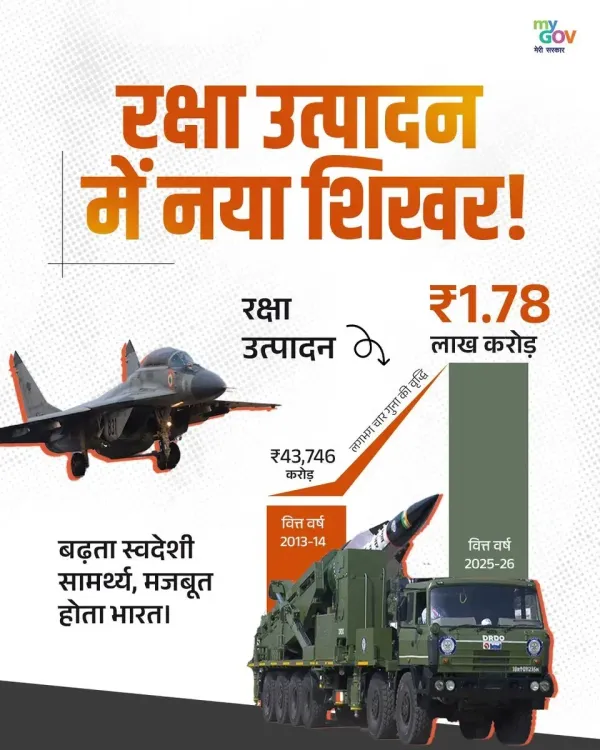
Union Parliamentary Affairs Minister Kiren Rijiju has highlighted a reported four-fold rise in India's domestic defence production — from ₹43,746 crore in FY 2013-14 to a record ₹1.78 lakh crore in FY 2025-26 — crediting the Atmanirbhar Bharat mission and successive indigenisation policies.
Key Takeaways
Rijiju cited India's defence production rising from ₹43,746 crore (FY 2013-14) to ₹1.78 lakh crore (FY 2025-26), a more than four-fold increase.
The minister attributed the growth to indigenous capability, innovation, and the Atmanirbhar Bharat self-reliance mission.
Policy foundations include the Defence Procurement Procedure 2016 , positive indigenisation lists from August 2020 , and expanded private-sector participation.
The Department of Defence Production is expected to release audited FY 2025-26 figures in mid-2026.
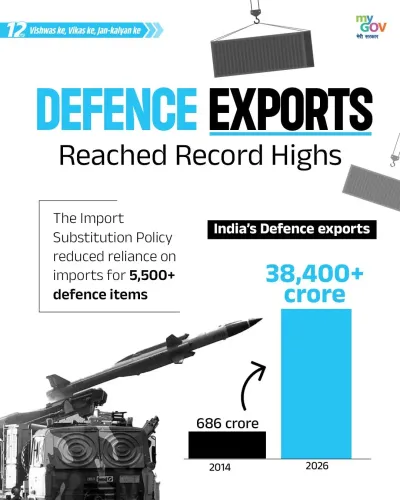
India has a defence export target of ₹50,000 crore by 2028-29 , making production growth a key benchmark.
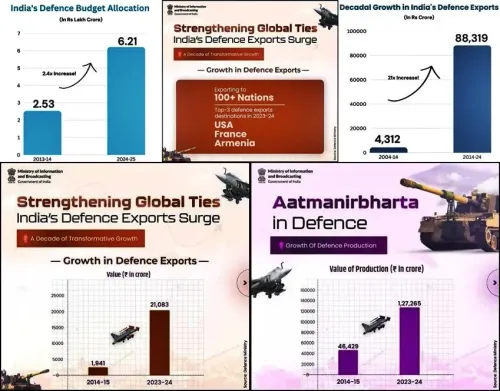
Union Parliamentary Affairs Minister Kiren Rijiju on Tuesday, 23 June 2026, highlighted what he called a historic milestone in India's defence manufacturing sector, citing a jump in domestic defence production from ₹43,746 crore in FY 2013-14 to a record ₹1.78 lakh crore in FY 2025-26 — a more than four-fold increase over roughly a decade.
Context
Rijiju posted in Hindi on X, writing: 'रक्षा उत्पादन में भारत की ऐतिहासिक उपलब्धि!' ('India's historic achievement in defence production!'). He framed the production surge as proof of indigenous capability, innovation, and the resolve of the Atmanirbhar Bharat (self-reliant India) mission, adding: 'Indigenous capability, a secure and empowered India.'
The figures cited span twelve years of defence manufacturing data tracked by the Department of Defence Production under the Ministry of Defence. The minister's post attributes the growth to a sustained push toward domestic design, development, and manufacture rather than any single policy intervention.
Policy Backdrop
India's drive toward self-reliance in defence manufacturing has been built on successive policy layers. The Defence Procurement Procedure 2016 and its updates introduced priority categories for indigenously designed and manufactured equipment. In August 2020, the government notified the first positive indigenisation list of 101 defence items barred from import, followed by additional lists through 2023, covering everything from ammunition to complex weapons platforms.
The broader Atmanirbhar Bharat Abhiyan, announced in May 2020, embedded a dedicated defence production and export roadmap within India's post-pandemic economic strategy. Measures have included expanded private-sector participation, technology transfers from the Defence Research and Development Organisation (DRDO), and export promotion through lines of credit to partner nations. The production trajectory Rijiju cited reflects the cumulative outcome of these reforms rather than any single scheme.
Stakeholders and Impact
The beneficiaries of this expansion span a wide ecosystem: large public-sector defence manufacturers, a growing cohort of private-sector firms that have entered the sector since procurement rules were liberalised, and the three wings of the Indian Armed Forces that increasingly draw on domestically produced equipment. A higher share of indigenous production is also expected to reduce the foreign-exchange outflow historically associated with defence imports.
For the private sector in particular, the shift represents a structural opening. Companies in aerospace, electronics, shipbuilding, and land-systems segments have ramped up capacity in response to guaranteed domestic demand and export incentives. The scale of the production figure — ₹1.78 lakh crore — if confirmed by official departmental data, would mark a significant inflection point for Indian industry.
What's Next
The Department of Defence Production is expected to release its official annual report for FY 2025-26 in mid-2026, which will provide audited production and export figures against which the minister's claim can be benchmarked. Attention will also turn to whether the government notifies further indigenisation lists or announces revised export targets as part of the Union Budget 2026-27 process.
India has separately set an ambitious defence export target of ₹50,000 crore by 2028-29. The pace of domestic production growth will be a key indicator of whether that export ambition is on track, making the forthcoming official data release a closely watched event for defence analysts and industry stakeholders alike.
Point of View
The last full year before the current government took office — is a deliberate framing device. Whether or not the ₹1.78 lakh crore figure is validated by official departmental data, the broader trend of rising domestic defence production is well-documented and reflects genuine policy continuity across multiple procurement reforms. The post also signals that Atmanirbhar Bharat, now six years old, remains a live political asset that senior ministers are actively deploying in public messaging.
NationPress
23 Jun 2026
Frequently Asked Questions
What is India's defence production in FY 2025-26?
Union Minister Kiren Rijiju has stated that India's defence production reached a record ₹1.78 lakh crore in FY 2025-26, up from ₹43,746 crore in FY 2013-14. Official audited figures from the Department of Defence Production are expected in mid-2026.
What is Atmanirbhar Bharat in defence?
Atmanirbhar Bharat Abhiyan, launched in May 2020, includes a dedicated defence production and export roadmap. It introduced positive indigenisation lists barring imports of specified items and encouraged greater private-sector participation in defence manufacturing.
What is India's defence export target?
India has set a defence export target of ₹50,000 crore by 2028-29, supported by export promotion through lines of credit and DRDO technology transfers to private manufacturers.
What is the indigenisation list in Indian defence?
The positive indigenisation list is a government-notified catalogue of defence items that cannot be imported, compelling the armed forces to source them domestically. The first list of 101 items was notified in August 2020, with additional lists released through 2023.
Who is Kiren Rijiju?
Kiren Rijiju is a senior BJP leader from Arunachal Pradesh who currently serves as Union Minister of Parliamentary Affairs and Minister of Minority Affairs. He frequently comments on government policy milestones and national achievements.