Jaishankar Visits Gandan Monastery, Backs Buddhist Manuscript Drive
Synopsis
EAM Dr. S. Jaishankar visited Ulaanbaatar's Gandan Monastery on 23 June 2026, witnessing the India-Mongolia project to digitise one million Buddhist manuscripts and reaffirming India's commitment to preserving the shared Buddhist heritage that defines the bilateral spiritual partnership.
Key Takeaways
Jaishankar paid his respects at Gandan Monastery in Ulaanbaatar on 23 June 2026 .
He witnessed the India-Mongolia joint project for the digitisation of one million Buddhist manuscripts at the monastery.
India reaffirmed its commitment to continuing support for Gandan Monastery , the principal centre of Gelugpa Buddhism in Mongolia .
The spiritual partnership between India and Mongolia was formally elevated by Prime Minister Modi's historic visit to Ulaanbaatar in 2015 .
The visit is part of India's broader Act East cultural diplomacy, which leverages shared Buddhist heritage to build strategic goodwill across Central and East Asia .
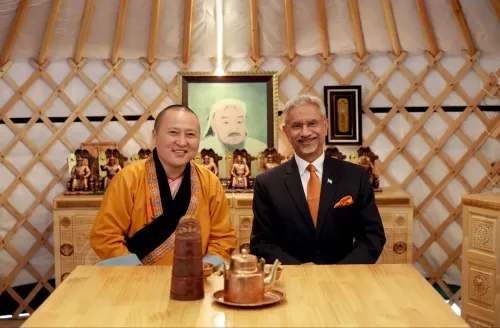
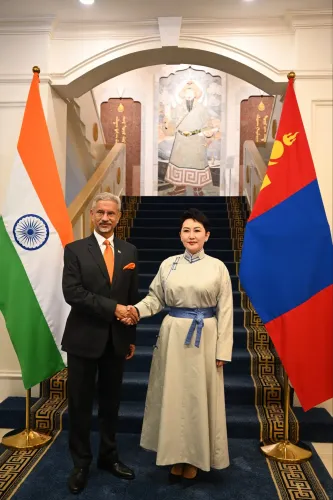
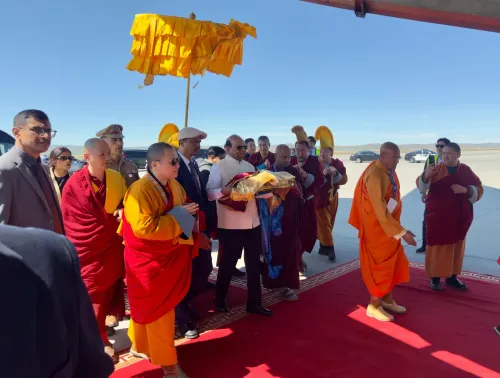
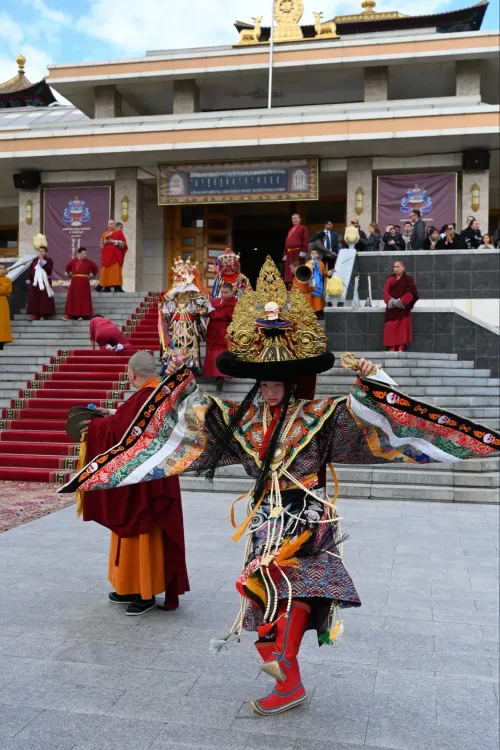
Union External Affairs Minister Dr. S. Jaishankar paid his respects at the Gandan Monastery in Ulaanbaatar on Tuesday, 23 June 2026, describing the principal Buddhist monastery of Mongolia as a symbol of the 'special and spiritual bond' between the two countries. During the visit, he witnessed the India-Mongolia partnership project for the digitisation of one million Buddhist manuscripts in operation and reaffirmed India's commitment to continuing its support for the monastery.
Context
Gandan Monastery, formally known as Gandantegchinlen Monastery, is the foremost centre of Gelugpa Buddhism in Mongolia and one of the few major monasteries to have survived the Soviet-era suppression of religion. It holds an irreplaceable archive of Buddhist texts, thangkas, and ritual objects that span centuries. For India, the site carries civilisational significance as a living repository of a shared heritage rooted in the spread of Buddhism from the Indian subcontinent.
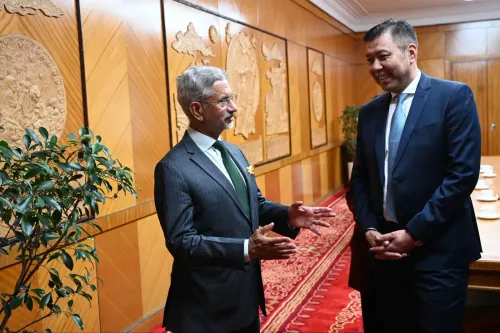
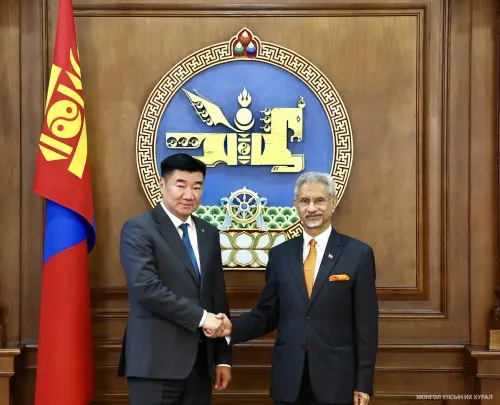
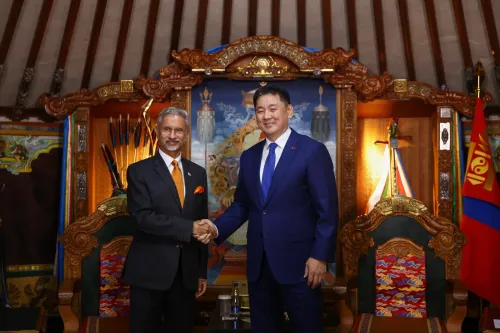
Dr. Jaishankar's visit to the monastery forms part of a broader diplomatic engagement with Ulaanbaatar. His presence at the digitisation project — an active India-Mongolia joint initiative — signals that cultural diplomacy remains a substantive pillar of bilateral relations, not merely a ceremonial backdrop to strategic discussions.
Policy Backdrop
The foundation for this engagement was laid in 2015, when Prime Minister Narendra Modi became the first Indian Prime Minister to visit Mongolia, formally characterising bilateral ties as a 'spiritual partnership' anchored in Buddhism. That visit elevated the relationship and opened channels for structured cooperation on heritage preservation. India has extended technical and financial assistance for the conservation of Mongolian Buddhist heritage under successive cultural exchange programmes since the 1990s.
The manuscript digitisation project represents one of the most ambitious expressions of this partnership to date, aiming to preserve and make accessible one million Buddhist manuscripts housed at Gandan Monastery. Such initiatives align with India's broader use of soft power — leveraging shared civilisational ties to build durable goodwill across Central and East Asia.
Mongolia also features in India's strategic calculus. The two countries conduct annual joint military exercises, Nomadic Elephant, and coordinate within multilateral forums. India's outreach to Ulaanbaatar sits within the wider Act East policy framework, which seeks to deepen engagement with countries along Asia's eastern arc.
Stakeholders and Impact
The digitisation project directly benefits Buddhist monastic communities in Mongolia and scholars of Indology and Buddhist studies worldwide, who stand to gain unprecedented digital access to rare manuscripts that were previously difficult to consult. Preservation in digital form also insures the texts against physical deterioration or loss.
For India, the project reinforces its identity as a custodian of Buddhist heritage — a role it also projects through initiatives such as the development of Buddhist pilgrimage circuits domestically and outreach to Sri Lanka, Thailand, Japan, and other nations with Buddhist traditions. For Mongolia, Indian partnership offers technical expertise and resources that supplement domestic conservation capacity.
What's Next
Progress on the manuscript digitisation project will be a key metric to watch in the coming months, alongside any joint statements that may emerge from the next round of India-Mongolia Foreign Office Consultations or a high-level bilateral summit. Dr. Jaishankar's visit is expected to give fresh momentum to the cultural cooperation agenda and may precede broader diplomatic deliverables.
India's sustained engagement with Gandan Monastery underscores a long-term strategic choice: that civilisational diplomacy, when backed by concrete projects, can create bonds that outlast transient geopolitical shifts and deepen India's footprint in a region where major powers compete for influence.
Point of View
The External Affairs Minister lends ministerial weight to what could otherwise be perceived as a low-profile cultural programme. This fits a consistent pattern: India has invested in Buddhist heritage partnerships with multiple Asian nations as a means of building durable soft-power capital that operates independently of transactional security or trade calculations. At a time when major powers are competing for influence across Central and East Asia, India's ability to project itself as a custodian of shared heritage gives it a distinct and largely uncontested lane.
NationPress
23 Jun 2026
Frequently Asked Questions
Why did Jaishankar visit Gandan Monastery in Mongolia?
Dr. S. Jaishankar visited Gandan Monastery in Ulaanbaatar on 23 June 2026 to pay his respects and to witness the India-Mongolia partnership project for the digitisation of one million Buddhist manuscripts, reaffirming India's commitment to supporting the monastery.
What is the India-Mongolia Buddhist manuscript digitisation project?
It is a joint India-Mongolia initiative to digitise one million Buddhist manuscripts housed at Gandan Monastery in Ulaanbaatar, aimed at preserving rare texts and making them accessible to scholars and monastic communities worldwide.
What is Gandan Monastery and why is it significant for India?
Gandan Monastery, formally Gandantegchinlen Monastery, is the principal centre of Gelugpa Buddhism in Mongolia. For India, it symbolises the deep civilisational and spiritual bond between the two countries rooted in the spread of Buddhism from the Indian subcontinent.
What is the India-Mongolia spiritual partnership?
The India-Mongolia spiritual partnership was formally articulated by Prime Minister Narendra Modi during his 2015 visit to Ulaanbaatar — the first by an Indian Prime Minister — and is grounded in the two countries' shared Buddhist heritage and civilisational ties.
How does Mongolia fit into India's Act East policy?
Mongolia is part of India's Act East policy framework, which seeks to deepen engagement with countries across Central and East Asia. Beyond cultural cooperation, the two countries also conduct annual joint military exercises called Nomadic Elephant and coordinate in multilateral forums.