CM Saini Announces Tax Relief on BS-VI, EV, CNG Vehicles in Haryana NCR
Synopsis
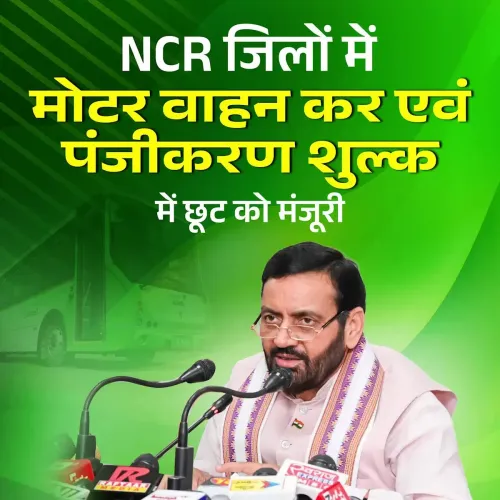
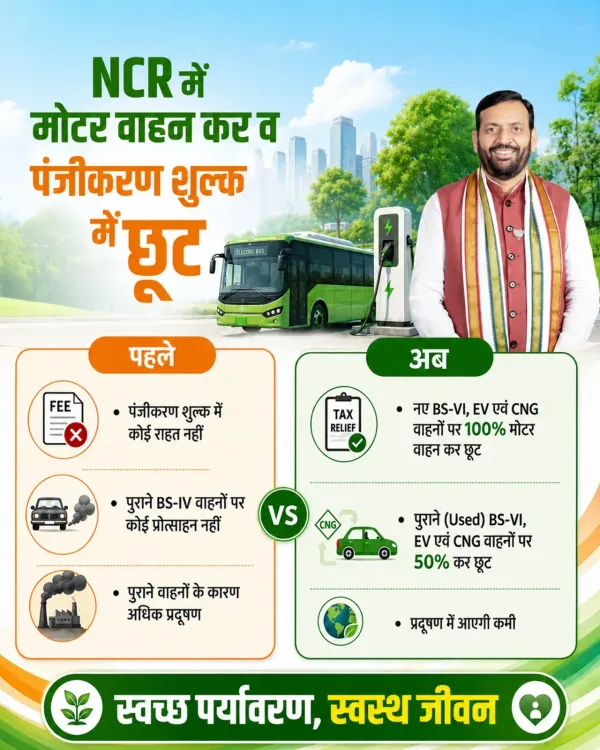
Haryana Chief Minister Nayab Singh Saini on 23 June 2026 announced significant concessions on motor vehicle tax and registration fees for BS-VI, EV, and CNG vehicles in the state's NCR districts, positioning the move as a commitment to reducing air pollution and promoting cleaner transport.
Key Takeaways
Haryana CM Nayab Singh Saini announced major tax and registration fee concessions for BS-VI, EV, and CNG vehicles on 23 June 2026 .
The concessions apply specifically to Haryana's NCR districts , which face severe seasonal air pollution.
India's BS-VI emission norms have been in force nationwide since April 2020 , replacing BS-IV standards.
The move mirrors similar EV and clean-fuel tax policies already in place in Delhi and Uttar Pradesh.
An official gazette notification with exact exemption slabs and eligible districts is yet to be issued.
The policy is aimed at reducing vehicular emissions, which are a major contributor to NCR air pollution .
Haryana Chief Minister Nayab Singh Saini announced on Tuesday, 23 June 2026 that the state government will offer significant concessions on motor vehicle tax and registration fees for BS-VI, electric (EV), and CNG vehicles in the National Capital Region (NCR) districts of Haryana, in a move aimed at curbing air pollution and promoting cleaner mobility.
Context
Posting on X, CM Saini stated — 'BS-VI, EV एवं CNG वाहनों पर मोटर वाहन कर व पंजीकरण शुल्क में बड़ी छूट मिलेगी' ('BS-VI, EV and CNG vehicles will receive major concessions on motor vehicle tax and registration fees') — framing the decision as the government's commitment to reducing pollution, protecting the environment, and securing a better future for coming generations. The announcement applies specifically to Haryana's NCR districts, which include areas such as Gurugram, Faridabad, Sonipat, and Panipat, among others that fall within the metropolitan planning zone.
Policy Backdrop
India mandated Bharat Stage VI (BS-VI) emission standards nationwide from April 2020, replacing the older BS-IV norms and requiring vehicles to emit significantly lower levels of particulate matter and nitrogen oxides. The Supreme Court had earlier, through orders between 1998 and 2001, directed a progressive shift of Delhi-NCR public transport to CNG, establishing a long legal and regulatory lineage for clean-fuel mandates in the region. The central government's FAME scheme, launched in 2015, has further provided demand-side incentives for electric vehicles across the country.
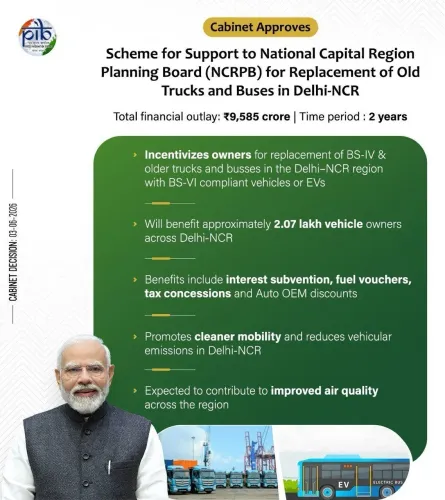
Haryana's latest move aligns with a broader pattern of NCR states deploying fiscal tools — tax waivers and fee reductions — to accelerate the retirement of older, more polluting vehicles. Delhi and Uttar Pradesh have previously introduced similar EV-friendly registration and tax policies, and Haryana's announcement extends comparable relief to its NCR belt, which experiences severe seasonal air quality deterioration driven substantially by vehicular emissions.
Stakeholders and Impact
The primary beneficiaries are vehicle buyers and urban commuters in Haryana's NCR districts who are considering purchasing new BS-VI-compliant, electric, or CNG-powered vehicles. Lower upfront costs through reduced taxes and registration charges are widely regarded as among the most effective levers to shift consumer preference toward cleaner alternatives at the point of purchase. The move is also expected to benefit dealerships and manufacturers of compliant vehicles operating in the region, potentially accelerating sales volumes.
For residents of the NCR airshed, the long-term benefit lies in reduced vehicular emissions, which contribute heavily to the region's chronic winter smog. Coordinated action across NCR states is considered essential because air pollution does not respect administrative boundaries.
What's Next
The government is expected to issue an official gazette notification detailing the exact slabs of tax and fee exemptions, the precise list of covered districts, and the categories of vehicles eligible under the scheme. Observers will watch whether the announcement aligns with any forthcoming revisions to central EV policy frameworks. The specifics of the concession percentages and the implementation timeline have not yet been publicly disclosed and will be critical to assessing the scheme's real-world uptake.
Point of View
The Saini government is positioning Haryana as a coordinated partner in the multi-state effort to address the region's chronic air quality crisis, a politically salient issue given the NCR's dense, urban voter base. The move also allows the BJP-led state government to align visibly with the central government's broader green mobility agenda without waiting for a central directive. The real test will be in the gazette notification: the depth of the concessions and the breadth of covered districts will determine whether this is a meaningful demand-side push or a largely symbolic gesture.
NationPress
23 Jun 2026
Frequently Asked Questions
What vehicles will get tax and fee concessions in Haryana NCR?
BS-VI compliant petrol and diesel vehicles, electric vehicles (EVs), and CNG vehicles will receive concessions on motor vehicle tax and registration fees in Haryana's NCR districts, as announced by CM Nayab Singh Saini on 23 June 2026.
Which Haryana districts fall under NCR and will benefit from this policy?
Haryana's NCR districts include Gurugram, Faridabad, Sonipat, Panipat, Jhajjar, Rewari, Nuh, Palwal, and Rohtak, among others. The exact list of districts covered under the new concession scheme will be confirmed in the official gazette notification.
What are BS-VI emission norms?
BS-VI, or Bharat Stage VI, are India's most stringent vehicular emission standards, implemented nationwide from April 2020. They require vehicles to emit significantly lower levels of pollutants such as particulate matter and nitrogen oxides compared to the older BS-IV norms.
How much is the tax exemption on EVs and CNG vehicles in Haryana NCR?
The exact percentage of motor vehicle tax and registration fee exemptions has not yet been disclosed. An official gazette notification from the Haryana government is expected to detail the specific slabs and eligible vehicle categories.
Why is Haryana focusing clean vehicle incentives on NCR districts?
NCR districts experience some of India's worst air quality, particularly during winter, with vehicular emissions being a major contributor. Coordinated fiscal incentives across NCR states are considered essential to drive a shift toward cleaner vehicles and reduce the region's pollution burden.