Kishan Reddy credits PM Modi for shift to organic farming
Synopsis
Union Minister G. Kishan Reddy praised PM Modi on 23 June 2026 for driving a large-scale shift toward natural and organic farming in India, citing targeted central schemes and the Prime Minister's direct encouragement to farmers as key drivers of ecological transformation.
Key Takeaways
Kishan Reddy , Union Minister of Coal and Mines and BJP Telangana president, credited PM Narendra Modi with transforming India's agricultural landscape through organic farming advocacy.
The minister said PM Modi's vision prioritises 'long-term ecological balance' over crop yields alone, and has inspired a 'massive behavioural shift' among farmers.
The central government launched the Paramparagat Krishi Vikas Yojana (PKVY) in 2015 to support organic farming clusters and PGS certification.
The Bharatiya Prakritik Krishi Paddhati (BPKP) was introduced in 2020-21 as a natural farming sub-programme under PKVY, focusing on chemical-free practices and soil health.
Both schemes are part of the National Mission for Sustainable Agriculture and are implemented through state action plans with varying adoption levels.
Progress on cluster formation, PGS certification, and potential Union Budget allocations will be key indicators of the policy's future trajectory.
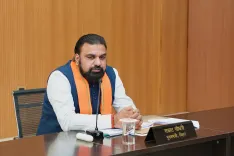
Union Coal and Mines Minister G. Kishan Reddy on Tuesday, 23 June 2026, credited Prime Minister Narendra Modi with driving a large-scale behavioural change among Indian farmers toward natural and organic cultivation, saying the Prime Minister's commitment to sustainable development is 'fundamentally transforming India's agricultural landscape.'
Context
In his post, Kishan Reddy stated that PM Modi's vision 'goes beyond mere crop yields,' pointing to what he described as a focus on 'long-term ecological balance.' He credited 'targeted policies and direct encouragement' from the Prime Minister for inspiring farmers to move away from conventional, input-intensive practices. The minister used the hashtag #OrganicFarming, signalling the post as part of a broader government communication push on the subject.
Kishan Reddy, who also serves as BJP Telangana state president, frequently amplifies central government policy positions on social media. His remarks align with a wider pattern of senior party leaders publicly reinforcing the Modi government's agricultural sustainability narrative.
Policy Backdrop
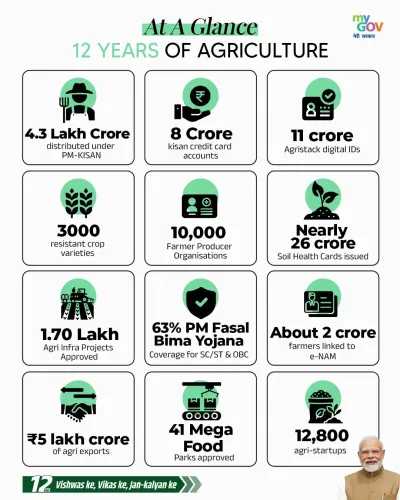
The central government has been building an institutional framework for organic and natural farming since 2015, when it launched the Paramparagat Krishi Vikas Yojana (PKVY) — a centrally sponsored scheme that supports organic cultivation through farmer clusters and Participatory Guarantee System (PGS) certification assistance.
In 2020-21, the government introduced the Bharatiya Prakritik Krishi Paddhati (BPKP) as a dedicated natural farming sub-programme under the same mission, aimed specifically at chemical-free practices and soil health restoration. Both schemes are implemented through state action plans and form part of the broader National Mission for Sustainable Agriculture.
The policy direction represents a deliberate departure from the input-intensive methods of the Green Revolution era, driven by concerns over soil degradation, rising farmer input costs, and India's commitments to sustainable development goals.
Stakeholders and Impact
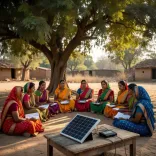
The primary beneficiaries of these schemes are Indian farmers organised into organic farming clusters, who receive technical support, certification assistance and, in some cases, financial incentives to transition away from synthetic fertilisers and pesticides. Smaller and marginal farmers stand to gain from reduced input costs if natural farming methods are successfully adopted at scale.
Adoption rates, however, vary significantly across states depending on local agricultural conditions, the strength of extension services, and the pace of cluster formation under PKVY and BPKP. The emphasis on behavioural change — rather than purely financial support — reflects a recognition that transitioning farming communities requires sustained outreach alongside policy incentives.
What's Next
Attention will now turn to state-level progress reports on cluster formation and PGS certification in the upcoming agricultural season, which will provide a clearer picture of how widely natural farming practices have been adopted on the ground. Any additional budgetary allocations for natural farming in the forthcoming Union Budget will also be closely watched as a signal of the government's continued financial commitment to this agenda.
If the policy push sustains momentum, India could see measurable improvements in soil health indicators and a reduction in chemical input dependency — outcomes that would validate the long-term ecological argument at the centre of PM Modi's organic farming advocacy.
Point of View
Positioning the Prime Minister as the personal catalyst behind a structural shift in Indian agriculture. The framing of 'behavioural change' is significant: it moves the narrative from scheme-level outputs to a broader civilisational argument about India's farming identity. This sits within a long-running effort to differentiate the current government's agricultural philosophy from the chemical-input model of earlier decades. Whether the on-ground adoption data ultimately supports the scale of change being claimed will determine how durable this narrative proves to be.
NationPress
23 Jun 2026
Frequently Asked Questions
What is PM Modi's natural farming policy in India?
PM Modi has championed natural and organic farming through centrally sponsored schemes such as the Paramparagat Krishi Vikas Yojana (PKVY), launched in 2015, and the Bharatiya Prakritik Krishi Paddhati (BPKP), introduced in 2020-21, which together support chemical-free cultivation, soil health restoration, and farmer cluster certification across India.
What is the Paramparagat Krishi Vikas Yojana?
The Paramparagat Krishi Vikas Yojana (PKVY) is a centrally sponsored scheme launched in 2015 that promotes organic farming in India by organising farmers into clusters and providing Participatory Guarantee System (PGS) certification assistance and financial support for transitioning away from synthetic inputs.
What did G. Kishan Reddy say about organic farming?
Union Minister G. Kishan Reddy stated on 23 June 2026 that PM Modi's commitment to sustainable development is 'fundamentally transforming India's agricultural landscape' and that targeted policies have inspired a 'massive behavioural shift' among farmers toward natural and organic cultivation.
What is Bharatiya Prakritik Krishi Paddhati?
Bharatiya Prakritik Krishi Paddhati (BPKP) is a natural farming sub-programme introduced under PKVY in 2020-21, designed to promote chemical-free agricultural practices and restore soil health as part of India's National Mission for Sustainable Agriculture.
How is India promoting organic farming among small farmers?
India promotes organic farming among small and marginal farmers through cluster-based schemes like PKVY and BPKP, which offer technical guidance, certification support, and financial incentives to reduce dependence on costly synthetic fertilisers and pesticides, with implementation carried out through state action plans.