CM Nitish Orders JEEViKA Training for PM Surya Ghar Scheme
Synopsis
Bihar CM Nitish Kumar has ordered specialised training for JEEViKA Didis to accelerate ground-level rollout of the PM Surya Ghar Muft Bijli Yojana, aiming to bring rooftop solar benefits and free electricity to the maximum number of families across the state.
Key Takeaways
CM Nitish Kumar has directed that JEEViKA Didis receive special training for implementing the PM Surya Ghar Muft Bijli Yojana in Bihar.
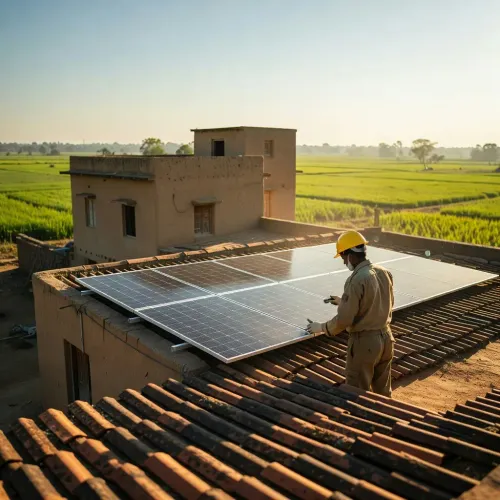
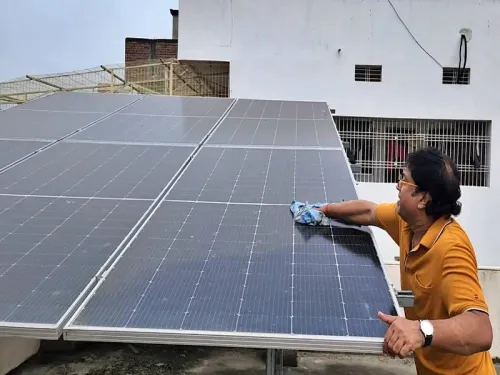
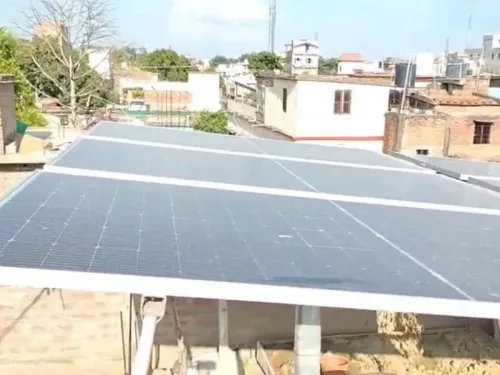
The PM Surya Ghar Muft Bijli Yojana , launched in 2024 , offers rooftop solar installations and up to 300 units of free electricity per month to eligible households.
JEEViKA , Bihar's rural livelihoods society, has a longstanding track record of last-mile delivery for health, sanitation, and financial inclusion schemes.
The directive aims to maximise household coverage by placing trained women community workers at the village level to assist enrolment.
Bihar's model of routing central schemes through SHG networks reflects a broader cooperative-federalism approach used across multiple welfare domains.
District-wise training completion rates and solar installation uptake will be key indicators of the initiative's success.
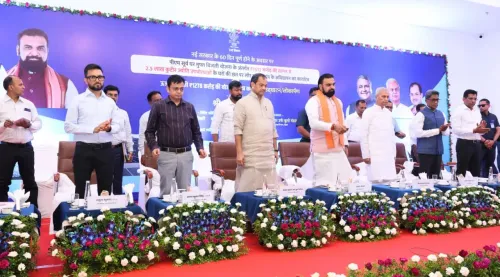
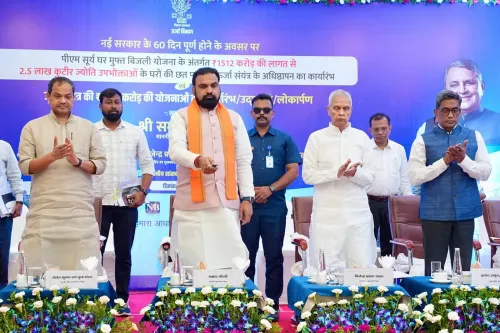
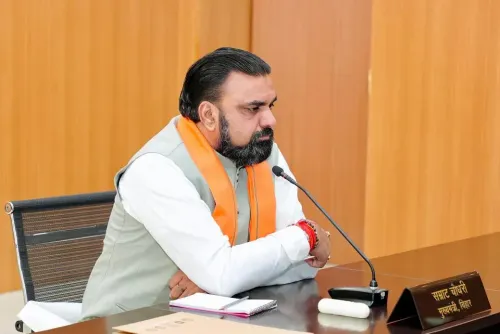
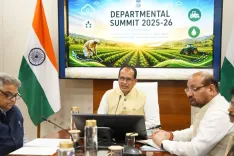
The Chief Minister's Office of Bihar announced on Tuesday, 23 June 2026 that Chief Minister Nitish Kumar has directed that JEEViKA Didis — women drawn from rural self-help groups across the state — receive specialised training to drive effective implementation of the PM Surya Ghar Muft Bijli Yojana, with the explicit goal of extending the scheme's benefits to the maximum number of families in Bihar.
The official post, shared in response to a query, stated: 'Mananiya Mukhyamantri ji ne PM Surya Ghar Yojana ke prabhavi kriyanvayan hetu Jivika Didiyon ko vishesh prashikshan dene ka nirdesh diya' — ('The Hon'ble Chief Minister has directed that Jivika Didis be given special training for the effective implementation of the PM Surya Ghar Yojana') — so that the benefits of this scheme reach the maximum number of families in the state.
Context
The PM Surya Ghar Muft Bijli Yojana is a flagship central government initiative launched in 2024 to provide rooftop solar installations to eligible households and supply up to 300 units of free electricity per month. The scheme targets broad household coverage across India, with states responsible for last-mile delivery and public outreach.
Bihar, with a large rural population and historically low electrification penetration in remote pockets, stands to benefit significantly from the scheme — but effective rollout depends on community-level awareness and assisted enrolment, areas where grassroots networks are critical.
Policy Backdrop
JEEViKA, formally the Bihar Rural Livelihoods Promotion Society, has operated since the late 2000s as the state's primary platform for mobilising women's self-help groups for welfare delivery. It has previously been deployed for programmes spanning health, sanitation, and financial inclusion.
By channelling the solar scheme through JEEViKA's existing network of trained women field workers, the Bihar government is applying a proven cooperative-federalism model: using state community infrastructure to amplify the reach of centrally sponsored programmes. CM Nitish Kumar's directive formalises this integration for the renewable energy domain.
Stakeholders and Impact
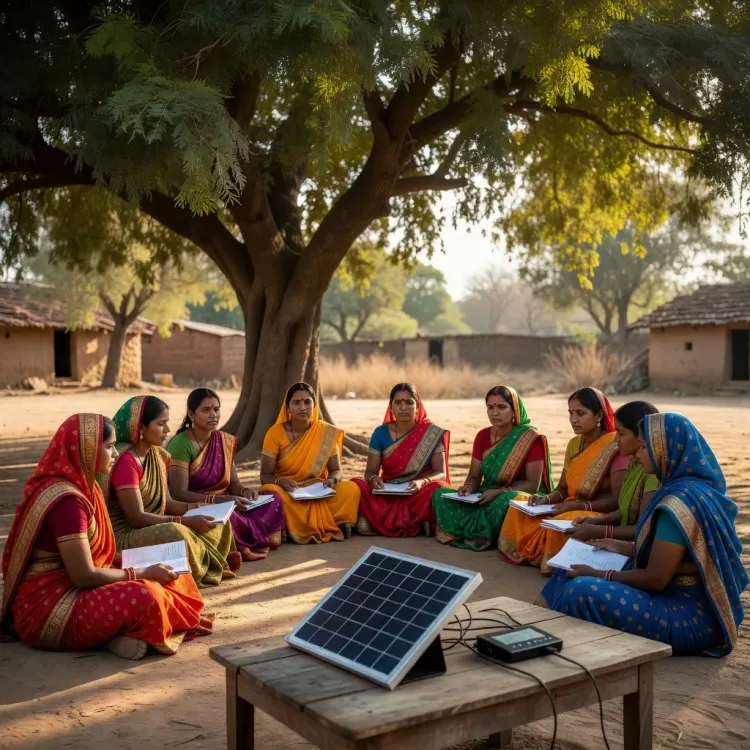
The primary beneficiaries are rural households in Bihar that qualify under the PM Surya Ghar scheme but may lack awareness or capacity to navigate the application process independently. Specialised training for JEEViKA Didis is intended to bridge that gap by placing knowledgeable community representatives at the village level.
The directive also has direct implications for the JEEViKA Didis themselves, expanding their professional mandate into the clean-energy sector and potentially creating new income and livelihood opportunities tied to scheme facilitation. Women's self-help groups in Bihar number in the lakhs, giving this initiative a substantial potential footprint.
What's Next
Attention will now turn to how quickly the state rolls out the mandated training modules across districts, and whether district-wise targets for rooftop solar installations under the scheme will be formally notified. The pace of enrolment and installation completion rates will serve as the clearest measure of whether the JEEViKA integration delivers the coverage gains CM Nitish Kumar has signalled as the objective.
Bihar's experience could also offer a replicable template for other states seeking to accelerate PM Surya Ghar uptake through existing SHG networks, making the outcome of this directive of interest beyond the state's own borders.
Point of View
Now extended into the clean-energy space. It signals that the state views last-mile human infrastructure — not just administrative machinery — as the critical variable in scheme saturation. The move also fits a national pattern where states with mature SHG ecosystems are positioned to outperform peers on central scheme uptake metrics. How quickly and uniformly the training is rolled out across Bihar's diverse districts will determine whether this remains a policy signal or translates into measurable household coverage gains.
NationPress
23 Jun 2026
Frequently Asked Questions
What is the PM Surya Ghar Muft Bijli Yojana?
The PM Surya Ghar Muft Bijli Yojana is a central government scheme launched in 2024 that provides rooftop solar panel installations to eligible households and supplies up to 300 units of free electricity per month.
Who are JEEViKA Didis and what is their role?
JEEViKA Didis are women members of rural self-help groups mobilised by JEEViKA, Bihar's Rural Livelihoods Promotion Society. They serve as community-level workers who assist in awareness, enrolment, and delivery of government welfare schemes at the village level.
Why has CM Nitish Kumar ordered special training for JEEViKA Didis?
CM Nitish Kumar directed the training so that JEEViKA Didis can effectively inform and assist rural families in accessing the PM Surya Ghar Muft Bijli Yojana, maximising the scheme's household coverage across Bihar.
How has JEEViKA been used for government schemes in Bihar before?
JEEViKA has previously been deployed for last-mile delivery of schemes related to health, sanitation, and financial inclusion, making it a tested platform for channelling both central and state welfare programmes to rural communities.
What should we watch for after this Bihar solar training directive?
Key indicators to track include the pace at which training modules are completed across districts, the number of households enrolled under PM Surya Ghar in Bihar, and district-wise rooftop solar installation rates following the JEEViKA integration.