Shivraj Singh Chouhan Calls for Time-Bound Farm Reforms
Synopsis
Union Agriculture Minister Shivraj Singh Chouhan, at the 'Bharat ki Krishi ka Rupantaran' inter-ministerial conference at Krishi Bhawan on 23 June 2026, called for clear action plans with fixed timelines on post-harvest management, value addition, water management, and farmer income — stressing that ideas must reach the ground.
Key Takeaways
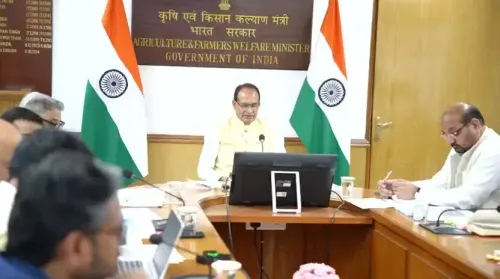
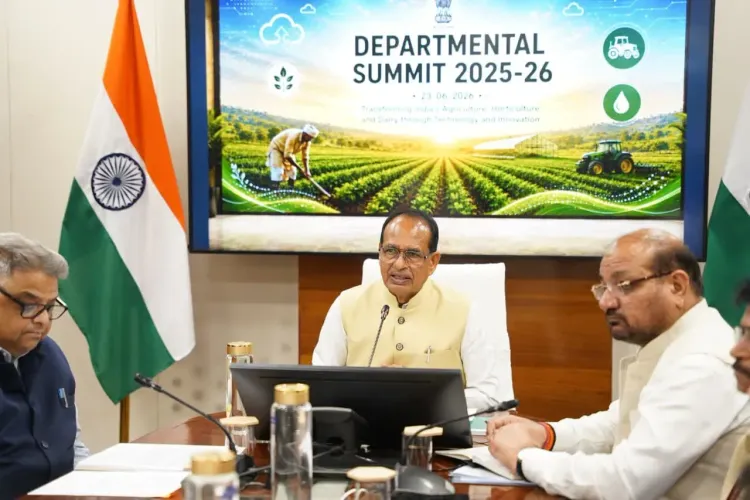
Shivraj Singh Chouhan attended the 'Bharat ki Krishi ka Rupantaran' inter-ministerial conference at Krishi Bhawan, New Delhi , on 23 June 2026 .
The minister stressed that discussion and suggestions are insufficient — real transformation requires ideas to be implemented on the ground with clear action plans and fixed timelines .
Key focus areas identified: post-harvest management, value addition, export promotion, water management, modern technology adoption, and farmer income growth .
Chouhan called for a unified team approach involving central and state governments, research institutions, agriculture universities, startups, private sector, and farmer organisations .
The push aligns with the government's long-standing agenda anchored by schemes such as PM-KISAN (2019), PM Krishi Sinchayee Yojana (2015), and the Agricultural Export Policy (2018) .
Follow-up action plans with measurable outcomes and deadlines are expected to emerge from the conference's recommendations.
Union Agriculture Minister Shivraj Singh Chouhan participated in an inter-ministerial conference titled 'Bharat ki Krishi ka Rupantaran' (Transformation of India's Agriculture) at Krishi Bhawan, New Delhi, on Tuesday, 23 June 2026, calling for concrete action plans with fixed timelines to translate agricultural policy discussions into ground-level results.
Context
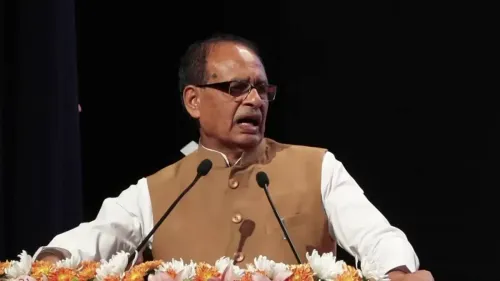
Addressing the conference, Chouhan acknowledged that the summit produced 'extremely serious and useful deliberations' (अत्यंत गंभीर और उपयोगी मंथन) along with several important suggestions for transforming India's agricultural landscape. However, he struck a cautionary note, stating: 'Discussion and suggestions alone are not enough — real change comes only when ideas reach the ground.' The minister underscored that Prime Minister Narendra Modi has consistently emphasised reform paired with firm implementation.
The conference brought together representatives from central ministries, state agriculture departments, research institutions, agriculture universities, startups, and private-sector players — a coalition Chouhan described as working 'like one family' under PM Modi's leadership.
Policy Backdrop
The themes flagged by the minister — post-harvest management, value addition, export promotion, water management, modern technology adoption, and farmer income enhancement — map directly onto a decade-long policy arc. The Agricultural Export Policy (2018) sought to reduce post-harvest losses and boost India's share in global agri-trade, while the Pradhan Mantri Krishi Sinchayee Yojana (2015) targeted micro-irrigation and water-use efficiency across states.
The Doubling Farmers' Income committee, which submitted its report in 2018, had similarly identified post-harvest infrastructure, processing, and market reforms as the primary levers for raising farm incomes. The PM-KISAN direct-benefit scheme, launched in 2019, supplemented earnings while these structural reforms were being built out. Chouhan's emphasis on 'clear action plans, definite timelines, and effective implementation' signals a push to accelerate what has been a multi-year reform agenda.
Stakeholders and Impact
Agriculture remains a state subject under the Indian Constitution, making centre-state coordination the central challenge in converting policy into outcomes. Chouhan explicitly named state governments, research institutions, agriculture universities, startups, private-sector entities, and farmer organisations as co-owners of this transformation — a framing that places accountability beyond the central ministry alone.
For farmers, the immediate significance lies in the conference's potential to generate time-bound commitments on infrastructure and market access. Agri-startups and private players stand to gain from clearer policy signals on technology adoption and value-chain investment. The minister's call to 'turn challenges into opportunities and write a new chapter of farmer prosperity' (किसानों की समृद्धि का नया अध्याय लिखें) sets an aspirational benchmark against which follow-up action will be measured.
What's Next
The immediate watch-point is whether the conference's suggestions are converted into cabinet notes or inter-ministerial action plans with specific deliverables and deadlines. Chouhan has signalled that the Ministry of Agriculture intends to accelerate existing efforts rather than announce new standalone schemes, suggesting implementation reviews and outcome tracking will take centre stage.
Progress on post-harvest infrastructure buildout and agricultural export targets is likely to surface in subsequent economic surveys and ministry outcome reports. A follow-up meeting of state agriculture ministers could be an early indicator of how quickly the centre-state coordination framework Chouhan outlined is activated.
Point of View
' he is both insulating himself from criticism over slow progress and placing the reform burden on a broader coalition of states, institutions, and the private sector. The explicit call for 'definite timelines' is politically significant: it sets a public benchmark that the ministry will be judged against, raising the stakes for follow-through. This pattern of high-visibility inter-ministerial summits followed by implementation reviews has become a signature governance device, but its credibility will depend entirely on whether cabinet-level action plans emerge in the weeks ahead.
NationPress
23 Jun 2026
Frequently Asked Questions
What was the 'Bharat ki Krishi ka Rupantaran' conference about?
'Bharat ki Krishi ka Rupantaran' (Transformation of India's Agriculture) was an inter-ministerial conference held at Krishi Bhawan, New Delhi, on 23 June 2026, focused on accelerating agricultural reforms through coordinated centre-state action, with emphasis on post-harvest management, value addition, exports, water management, and farmer income.
What did Shivraj Singh Chouhan say at the agriculture conference?
Chouhan said that discussions and suggestions alone are not enough and that real change comes when ideas are implemented on the ground. He called for clear action plans, fixed timelines, and effective implementation across post-harvest management, value addition, export promotion, water management, and technology adoption.
What is Shivraj Singh Chouhan's current role?
Shivraj Singh Chouhan is the Union Minister of Agriculture and Farmers Welfare and Rural Development in the Government of India. He is a senior BJP leader and former four-term Chief Minister of Madhya Pradesh.
What schemes back India's agricultural transformation agenda?
Key schemes include PM-KISAN (2019) for direct income support, Pradhan Mantri Krishi Sinchayee Yojana (2015) for micro-irrigation and water efficiency, and the Agricultural Export Policy (2018) for value addition and boosting India's share in global agri-trade.
What will happen after the inter-ministerial agriculture conference?
The immediate next step is converting the conference's suggestions into time-bound action plans, potentially through cabinet notes or inter-ministerial directives. Follow-up state agriculture ministers' meetings and progress indicators on post-harvest infrastructure and export targets are the key markers to watch.