India rejects Pakistan's Kashmir, IWT remarks at ASEAN forum in Manila
Synopsis
India used the ASEAN Regional Forum in Manila to deliver a pointed, on-record rebuke of Pakistan — rejecting Islamabad's Kashmir narrative, doubling down on the suspension of the Indus Waters Treaty over cross-border terrorism, and condemning Pakistan's use of the term 'Fitna al-Hindustan'. The response signals India's intent to actively counter Pakistani messaging at every multilateral venue.
Key Takeaways
India rejected Pakistan FM Ishaq Dar's remarks on Kashmir and the Indus Waters Treaty at the 33rd ASEAN Regional Forum in Manila on 23 July .
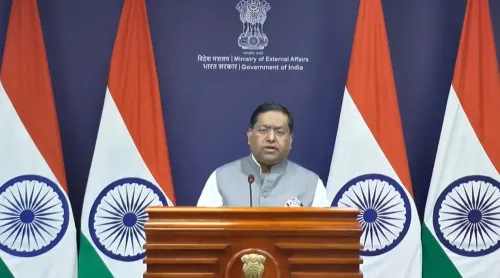
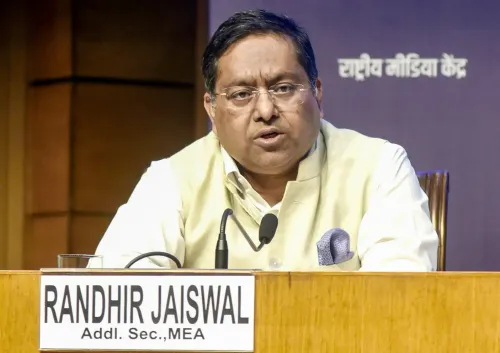
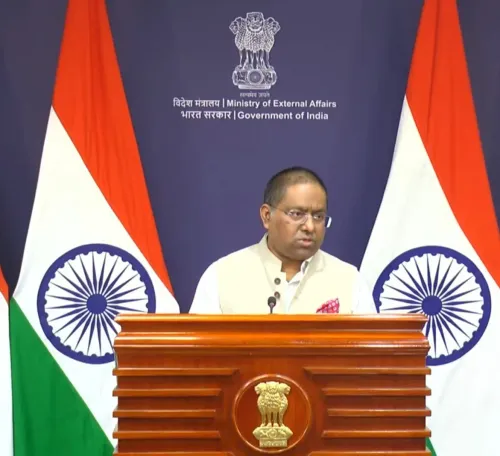
MEA spokesperson Randhir Jaiswal called the comments 'baseless and unwarranted' and accused Pakistan of exploiting a multilateral forum for disinformation.
India reiterated that Jammu and Kashmir and Ladakh are 'integral and inalienable' parts of India; Pakistan has 'no locus standi' on the issue.
The Indus Waters Treaty remains 'in abeyance' until Pakistan 'credibly and irrevocably' ends support for cross-border terrorism, including the Pahalgam attack .
India condemned Pakistan's use of the term 'Fitna al-Hindustan' as state-sponsored, religiously framed disinformation.
External Affairs Minister S.
Jaishankar attended ASEAN-India, EAS, and ARF ministerial meetings in Manila over two days.
India on Thursday, 23 July sharply rejected what it called 'baseless and unwarranted' comments by Pakistan's Deputy Prime Minister and Foreign Minister Ishaq Dar on Kashmir and the Indus Waters Treaty (IWT), made at the 33rd ASEAN Regional Forum (ARF) meeting in Manila. New Delhi accused Islamabad of cynically exploiting a multilateral platform to amplify falsehoods and peddle state-sponsored disinformation.
India's Categorical Rejection
Ministry of External Affairs (MEA) spokesperson Randhir Jaiswal, responding to media queries, said: 'India categorically rejects the baseless and unwarranted comments made by the Deputy Prime Minister/Foreign Minister of Pakistan. It is no surprise that a multilateral forum has once again been cynically exploited by Pakistan to amplify falsehoods, peddle state-sponsored disinformation, and divert attention from its own well-documented record of sponsoring cross-border terrorism.'
New Delhi reiterated its long-standing position that the Union Territories of Jammu and Kashmir and Ladakh 'have been, are and will always remain integral and inalienable parts of India,' adding that Pakistan has no locus standi to comment on the matter.
IWT Held in Abeyance Over Terrorism Links
On the Indus Waters Treaty, the MEA statement was unambiguous: the treaty 'stands in abeyance in response to Pakistan's continued sponsorship of cross-border terrorism, including the dastardly Pahalgam attack.' India stated that the IWT will remain suspended until Pakistan 'credibly and irrevocably abjures its support for cross-border terrorism.'
This is a significant escalation in India's use of the IWT as diplomatic leverage — a treaty that has survived two full-scale wars and multiple crises since 1960 — underscoring how severely ties have deteriorated following the Pahalgam attack.
India Condemns 'Fitna al-Hindustan' Rhetoric
New Delhi also took direct aim at Pakistan's use of religiously charged terminology, strongly condemning what it described as 'officially sponsored disinformation, often dressed in religious terminology such as the use of terms like Fitna al-Hindustan.' The MEA called this a 'futile attempt by the Pakistani establishment to deflect attention from its own internal crisis and its well-proven role as a safe haven for global terrorist networks.'
India urged Pakistan to dismantle the 'infrastructure of terrorism on its soil' rather than misusing international platforms to point fingers at its neighbours.
Jaishankar's Presence at Manila Meetings
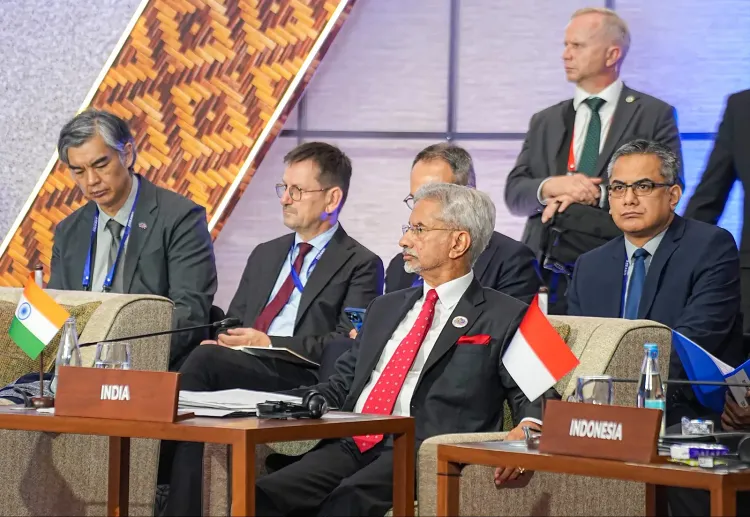
External Affairs Minister S. Jaishankar attended the Foreign Minister-level meetings under the ASEAN framework in Manila over two days, including the ASEAN-India, East Asia Summit (EAS), and ASEAN Regional Forum (ARF) sessions. India's firm public rebuttal came in the backdrop of those engagements, signalling that New Delhi intends to counter Pakistani narratives directly and on record at multilateral venues.
This is not the first time India has called out Pakistan at an ASEAN-linked forum — a pattern that reflects a broader Indian strategy of denying Islamabad any diplomatic space on Kashmir in third-country settings.
Point of View
Escalating strategy to deny Pakistan any narrative foothold at multilateral forums. The explicit linkage of IWT suspension to the Pahalgam attack is significant: India is now openly weaponising a treaty that survived the 1965 and 1971 wars, signalling that the post-Pahalgam rupture is categorically different. The condemnation of 'Fitna al-Hindustan' is also notable — calling out religiously framed state propaganda by name is a harder-edged move than India typically makes in formal MEA statements. What mainstream coverage underplays is the pattern: this is not an isolated rebuke but part of a consistent Indian effort to pre-empt Pakistani framing in every ASEAN-linked forum, turning third-country diplomatic spaces into arenas of active counter-messaging.
NationPress
23 Jul 2026
Frequently Asked Questions
Why did India reject Pakistan's comments at the ASEAN Regional Forum?
India rejected Pakistani Foreign Minister Ishaq Dar's remarks on Kashmir and the Indus Waters Treaty at the 33rd ASEAN Regional Forum in Manila on 23 July, calling them 'baseless and unwarranted.' New Delhi accused Pakistan of exploiting the multilateral platform to spread state-sponsored disinformation and deflect from its own record of supporting cross-border terrorism.
What is India's current position on the Indus Waters Treaty?
India has placed the Indus Waters Treaty in abeyance in response to Pakistan's alleged sponsorship of cross-border terrorism, including the Pahalgam attack. The MEA stated the treaty will remain suspended until Pakistan credibly and irrevocably ends its support for such terrorism.
What is 'Fitna al-Hindustan' and why did India condemn it?
'Fitna al-Hindustan' is a term used in Pakistani state and official discourse, framed in religious terminology, that India characterises as officially sponsored disinformation targeting India. The MEA strongly condemned its use, calling it a futile attempt to deflect attention from Pakistan's internal crises and its role as a haven for global terrorist networks.
Who represented India at the ASEAN meetings in Manila?
External Affairs Minister S. Jaishankar represented India at the Foreign Minister-level ASEAN meetings in Manila, attending the ASEAN-India, East Asia Summit (EAS), and ASEAN Regional Forum (ARF) sessions held over two days.
What is India's stated position on Jammu and Kashmir?
India reaffirmed that the Union Territories of Jammu and Kashmir and Ladakh 'have been, are and will always remain integral and inalienable parts of India,' and that Pakistan has no locus standi — meaning no legal or diplomatic standing — to raise the issue in any forum.