Indian-American voters back Democrats 66% ahead of 2026 US midterms
Synopsis
Nine in ten Indian-American registered voters say they will vote in the 2026 US midterms — and two-thirds back Democratic candidates in both Senate and House races. With 74% viewing President Trump unfavourably and the community recording the sharpest enthusiasm surge among major Asian ethnic groups, Indian Americans are shaping up as a significant and reliably Democratic force in a closely contested election cycle.
Key Takeaways
92 per cent of Indian-American registered voters plan to vote in the 2026 US midterm elections , per the 2026 Asian American Voter Survey .
66 per cent back Democratic candidates in both Senate and House races; Republicans trail at 22 per cent and 18 per cent respectively.
Indian Americans recorded the largest enthusiasm increase among major Asian ethnic groups; 43 per cent are more enthusiastic than usual.
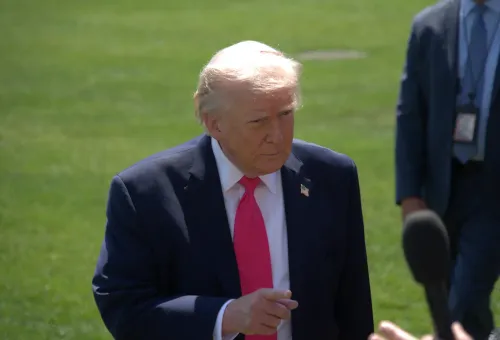
74 per cent of Indian-American voters view President Donald Trump unfavourably, including 56 per cent very unfavourably.
Cost of living and inflation is the top issue for 90 per cent of AAPI voters surveyed.
The survey covered 242 Indian-American respondents out of 2,066 total, conducted between 3 June and 27 July 2026 .
Indian-American registered voters are displaying record-high enthusiasm and a decisive tilt toward Democratic congressional candidates ahead of the 2026 US midterm elections, according to the 2026 Asian American Voter Survey released on 28 August. The survey found that 92 per cent of Indian-American registered voters plan to cast a ballot in November — the highest stated participation intent among the major Asian ethnic groups polled.
Turnout Intent and Enthusiasm
Of the 92 per cent who said they would vote, 74 per cent were absolutely certain and another 23 per cent were fairly certain. Indian Americans also recorded the largest increase in enthusiasm among all major Asian ethnic groups surveyed. Forty-three per cent reported being more enthusiastic about voting than usual, compared with 22 per cent who were less enthusiastic and 32 per cent who reported a similar level of interest as past cycles.
This comes amid a broader uptick across the Asian-American and Pacific Islander (AAPI) electorate: 90 per cent of registered AAPI voters overall said they plan to participate in the midterms, up from 84 per cent in 2022 and 86 per cent in 2018.
Congressional Preferences: Democrats Lead by Wide Margins
Indian-American voters showed a strong and consistent preference for Democratic candidates across both chambers of Congress. In Senate races, 66 per cent backed Democratic candidates against 22 per cent for Republicans and 7 per cent for another party. The same 66 per cent figure held in House races, where Republicans drew just 18 per cent support and another party 9 per cent. Notably, among Indian Americans who expressed a House preference, 60 per cent said they strongly supported their chosen candidate — indicating depth, not just breadth, of partisan alignment.
Across the wider AAPI electorate, Democrats led Senate races 60 per cent to 24 per cent, and House races 64 per cent to 22 per cent. Indian-American Democratic support at 66 per cent was the highest of any major Asian ethnic group surveyed; Filipino voters, by comparison, recorded 42 per cent Democratic Senate support — the lowest end of the range.
Views on President Trump
The survey found a largely unfavourable view of President Donald Trump among Indian-American respondents. Seventy-four per cent viewed him unfavourably, including 56 per cent who held a very unfavourable opinion. Twenty per cent viewed him favourably — 7 per cent very favourably and 13 per cent somewhat favourably.
Civic Engagement and Voting Method
Indian Americans displayed above-average offline civic engagement. Three-quarters had discussed politics with family or friends in the past year. Nineteen per cent had attended a protest, march, demonstration, or rally, and 20 per cent had participated in a local government meeting such as a city council or school board session.
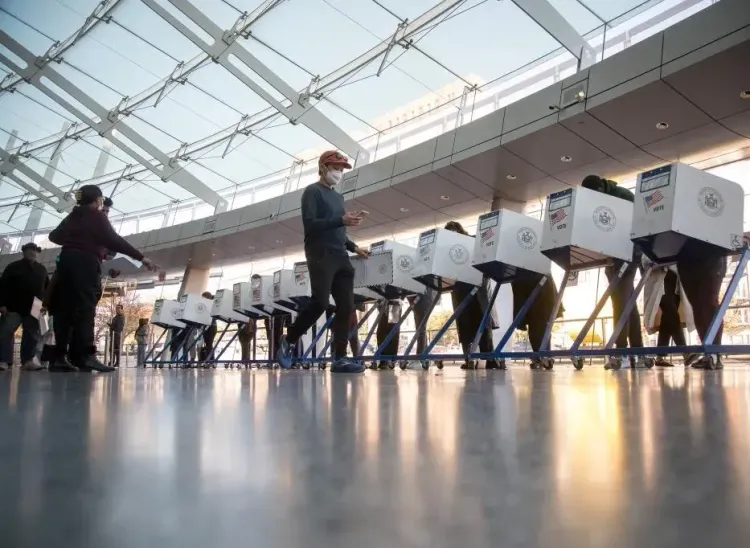
On voting method, Indian Americans leaned toward in-person participation more than other AAPI groups: 55 per cent planned to vote at a polling place, 34 per cent preferred mail-in ballots, and 8 per cent intended to use a ballot drop-off location.
Survey Methodology and Broader Context
The survey covered 2,066 registered voters — 1,896 Asian Americans and 170 Pacific Islanders. The Indian-American subgroup comprised 242 respondents; the Senate preference finding was based on 148 Indian-American respondents. Interviews were conducted by telephone, web, and online recruitment between 3 June and 27 July, using ethnicity-based sampling quotas and voter-characteristic weighting. The survey was conducted by Asian and Pacific Islander American Vote and AAPI Data.
Cost of living and inflation emerged as the dominant issue across the AAPI electorate, with 90 per cent of respondents rating it very or extremely important in determining their vote. The groups estimate that 16 million AAPI citizens are eligible to vote in 2026, including 1.6 million who became eligible after 2022. With all 435 House seats and roughly one-third of the Senate on the ballot, the midterms will serve as a significant gauge of public sentiment toward the current administration.
Point of View
And 60 per cent of House-preference holders say they strongly back their candidate. This suggests the community is not just leaning Democratic but actively mobilising. Yet the survey's Indian-American subgroup of 242 respondents — with Senate data drawn from just 148 — warrants caution before treating these figures as definitive. The more consequential signal may be the 74 per cent unfavourable rating for Trump: if that sentiment translates into turnout, Indian Americans in competitive districts could shift margins in ways that aggregate national polling routinely misses.
NationPress
28 Aug 2026
Frequently Asked Questions
What does the 2026 Asian American Voter Survey say about Indian-American voters?
The survey found that 92 per cent of Indian-American registered voters plan to vote in the 2026 US midterms, with 66 per cent backing Democratic candidates in both Senate and House races. Indian Americans also recorded the highest enthusiasm increase among major Asian ethnic groups surveyed.
How do Indian Americans view President Donald Trump?
Seventy-four per cent of Indian-American respondents view President Trump unfavourably, including 56 per cent who hold a very unfavourable opinion. Only 20 per cent view him favourably.
Who conducted the 2026 Asian American Voter Survey?
The survey was conducted by Asian and Pacific Islander American Vote and AAPI Data. It covered 2,066 registered voters, with interviews held between 3 June and 27 July 2026 via telephone, web, and online recruitment.
What is the top issue for Asian-American voters in the 2026 midterms?
Cost of living and inflation is the dominant concern, with 90 per cent of Asian-American voters rating it very or extremely important in determining their vote.
How does Indian-American Democratic support compare with other Asian groups?
At 66 per cent, Indian Americans recorded the highest Democratic Senate support of any major Asian ethnic group in the survey. Filipino voters were at the lower end at 42 per cent, while the overall AAPI average stood at 60 per cent.