Indian Navy 2026: From Indian Ocean to Atlantic, a blue-water force takes shape
Synopsis
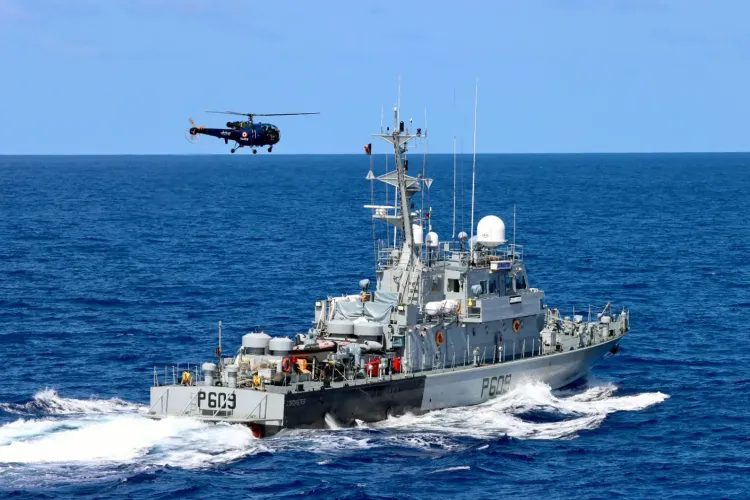
The Indian Navy is no longer an Indian Ocean fleet — in 2026, frontline frigates are operating in European waters, Indian officers are commanding 40-nation coalitions, and indigenous stealth frigates with 75% local content are joining the fleet. The convergence of global reach, coalition leadership and accelerating domestic shipbuilding is the most important strategic signal in India's maritime story this decade.
Key Takeaways
The Indian Navy in 2026 has operated simultaneously across the Indian Ocean , Indo-Pacific , Mediterranean and Atlantic approaches.
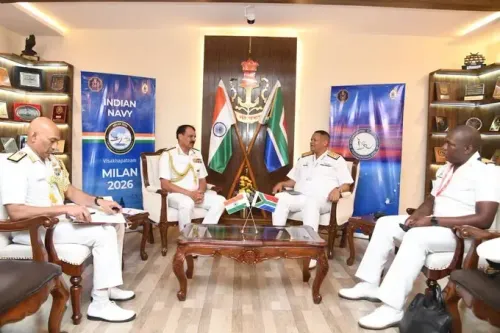
MILAN 2026 at Visakhapatnam involved 42 ships and submarines , 29 aircraft and 18 foreign vessels , centred on INS Vikrant .
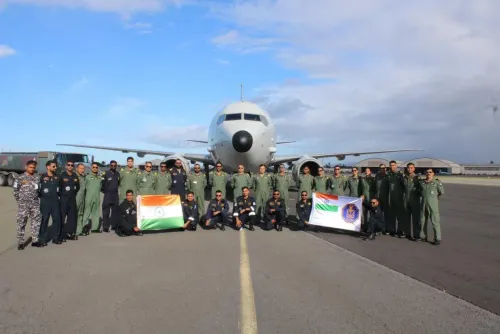
INS Trishul participated in Exercise Varuna with the French Navy at Toulon and continued into Atlantic approaches.
India assumed command of Combined Task Force 154 under the US-led Combined Maritime Forces , a coalition of more than 40 nations .
New commissionings include INS Dunagiri , INS Sanshodhak , INS Agray and INS Mahendragiri — the last a Project 17A stealth frigate with 75% indigenous content .
India contracted 20 GNSS jammers with 75% indigenous content and leased two MQ-9B Sea Guardian unmanned surveillance systems.
The Indian Navy in 2026 has demonstrated an expanding capacity to operate simultaneously across the Indian Ocean, Indo-Pacific, Mediterranean and Atlantic approaches — a shift that analysts say marks the transition from a regionally focused force to a genuinely blue-water, technology-enabled maritime power. The year's operational pattern is defined not by any single engagement but by the convergence of geographical reach, interoperability with major navies, and accelerating indigenous capability development.
Scale and Spread: Key Exercises in 2026
The year opened with a long-range training deployment to Southeast Asia, involving INS Tir, INS Shardul, INS Sujata and ICGS Sarathi, with port calls planned in Singapore, Indonesia and Thailand. The deployment aligned with India's Act East maritime engagement strategy.
MILAN 2026, conducted from Visakhapatnam, brought together 42 ships and submarines, 29 aircraft and 18 foreign vessels — placing the indigenous aircraft carrier INS Vikrant at the centre of a major multilateral exercise. The significance lies not merely in numbers but in India's demonstrated capacity to host, coordinate and operate alongside a wide spectrum of foreign naval forces.
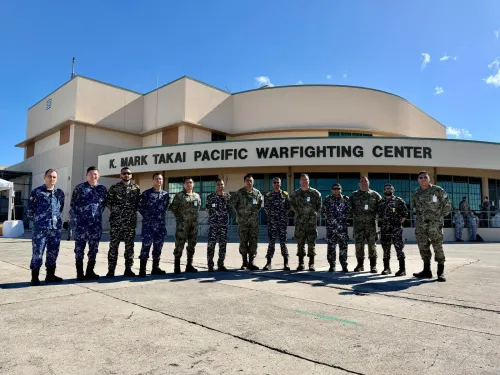
Separately, the ASEAN-India Maritime Exercise 2026 deployed INS Sahyadri and INS Kulish in coordinated activity with ASEAN forces in the Philippines, covering humanitarian assistance and disaster relief (HADR), visit-board-search-and-seizure (VBSS), underway replenishment, cross-deck helicopter operations and CASEVAC drills — tests of practical interoperability, not ceremonial naval diplomacy.
European Waters: INS Trishul and Exercise Varuna
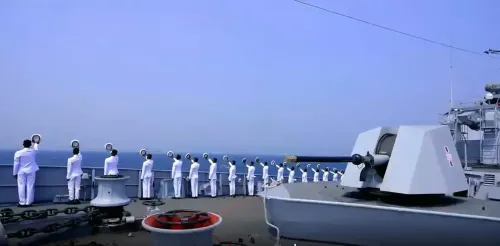
INS Trishul's 2026 deployment underscores how far Indian naval reach has extended. The frontline frigate participated in the 24th edition of Exercise Varuna with the French Navy at Toulon, before continuing through the Mediterranean and Atlantic approaches, including a port call at Valencia, Spain.
This is operationally significant: an Indian frontline combatant sustained a high-level bilateral engagement with France and then continued operating through European maritime spaces, demonstrating endurance, diplomatic reach and expeditionary flexibility that would have been rare a decade ago.
Coalition Leadership and Capacity Building
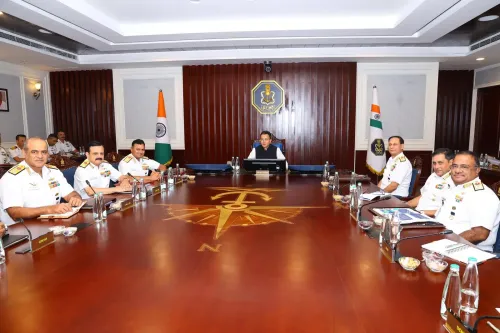
India's maritime role is visibly evolving from participant to organiser. The Indian Navy's assumption of command of Combined Task Force 154 under the US-led Combined Maritime Forces placed Indian officers within a coalition framework involving more than 40 nations. Subsequently, Operation Southern Readiness 26-2 brought together 276 personnel from 27 countries in India, covering maritime law, domain awareness, counter-narcotics, force protection, asymmetric threats and uncrewed systems.
India also expanded its regional maritime-security role through IOS SAGAR, deploying INS Sunayna with personnel from 16 partner nations across the Indian Ocean. The exercise covered seamanship, navigation, communications, VBSS, firefighting, damage control and bridge operations — building operational capacity in partner navies rather than merely demonstrating Indian combat capability.
Indigenous Platforms and Technology Depth
Operational reach requires industrial underpinning. In 2026, the commissioning of INS Dunagiri, INS Sanshodhak and INS Agray added surface combat, hydrographic surveying and anti-submarine warfare capabilities to the fleet. INS Mahendragiri, a Project 17A stealth frigate with 75% indigenous content, further reinforced the combat fleet.
Beyond platforms, India contracted for 20 enhanced-capability GNSS jammers with at least 75% indigenous content, providing electronic-warfare capability against adversary navigation systems. The leasing of two MQ-9B Sea Guardian unmanned systems adds persistent maritime surveillance and ISR coverage across the Indian Ocean, anchoring maritime domain awareness as a core strategic priority.
The result, according to analysts, is an increasingly layered force — surface combatants, submarines, naval aviation, ISR, electronic warfare, unmanned systems and indigenous shipbuilding developing in parallel rather than in isolation.
Limitations and the Road Ahead
Observers note that a globally dispersed presence carries its own demands. Sustaining credible combat power over extended distances requires substantial logistics, replenishment infrastructure, fleet availability and continued investment in submarines, maritime aviation and network-centric warfare. Global presence, analysts caution, must be measured not simply by port calls but by the ability to sustain operational effectiveness far from home waters.
As 2026 draws on, the Indian Navy's emerging model appears broader than classical blue-water power: a force aiming to combine combat operations, maritime security, coalition interoperability, capacity building, technological innovation and sustained overseas presence — positioning India as one of the significant globally deployable naval powers of the Indo-Pacific era.
Point of View
But their collective significance is strategic: India is no longer just patrolling the Indian Ocean — it is leading coalitions, commissioning technology-dense indigenous platforms and sustaining frontline ships in European waters. The gap between aspiration and execution is narrowing, but the harder test lies ahead. Blue-water credibility ultimately rests on logistics depth and submarine readiness, two areas where public data remains thin. India's naval diplomacy is increasingly backed by genuine capability — the question is whether its sustainment infrastructure can keep pace with its operational ambitions.
NationPress
14 Oct 2026
Frequently Asked Questions
What does the Indian Navy's 2026 operational pattern show?
It shows a force capable of deploying simultaneously across the Indian Ocean, Indo-Pacific, Mediterranean and Atlantic approaches while exercising with major navies including those of the United States, France, Australia, Japan and the United Kingdom. This is a marked departure from a predominantly Indian Ocean-focused posture.
What is the significance of India commanding Combined Task Force 154?
India's assumption of command of Combined Task Force 154 under the US-led Combined Maritime Forces placed Indian officers at the helm of a multinational coalition involving more than 40 nations. It signals a shift from India as a participant in multilateral maritime operations to a recognised organiser and operational coordinator.
Which new Indian Navy ships were commissioned or highlighted in 2026?
Key additions include INS Dunagiri, INS Sanshodhak, INS Agray and INS Mahendragiri — a Project 17A stealth frigate carrying 75% indigenous content. Together they span surface combat, anti-submarine warfare and hydrographic surveying capabilities.
What new technology did the Indian Navy acquire in 2026?
India contracted for 20 enhanced-capability GNSS jammers with at least 75% indigenous content, providing electronic-warfare capability against adversary navigation systems. It also leased two MQ-9B Sea Guardian unmanned aerial systems for persistent maritime surveillance and ISR coverage across the Indian Ocean.
What are the limitations of India's expanding naval presence?
Analysts note that sustaining a globally dispersed presence demands robust logistics, replenishment infrastructure, fleet availability and continued investment in submarines, maritime aviation and network-centric warfare. Credibility is measured not by port calls alone but by the ability to project and sustain combat power over extended distances.