Naval Commanders' Conference 2026 ends with push for AI, indigenisation
Synopsis
India's Naval Commanders' Conference 2026 wrapped up with a pointed call to go beyond self-reliance — Defence Minister Rajnath Singh declared that newly commissioned warships already carry over 75 per cent indigenous content and urged the Navy to begin exporting vessels to friendly nations. With AI, quantum tech and uncrewed systems at the centre of deliberations, the conference signals a decisive pivot in how India plans to project maritime power.
Key Takeaways
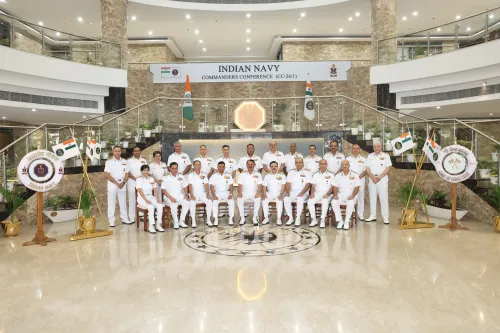
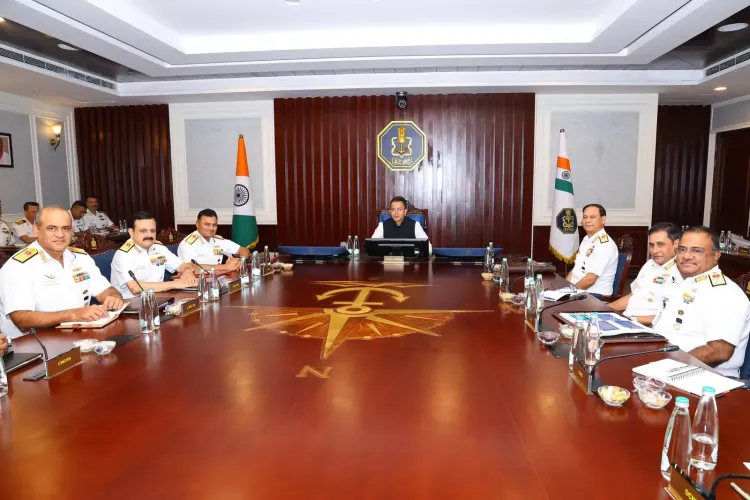
The Naval Commanders' Conference 2026 concluded in New Delhi on 1 October 2026 after three days of deliberations.
Defence Minister Rajnath Singh stated that recently commissioned warships carry over 75 per cent indigenous content and called for future warship exports to friendly nations.
Raja Subramani described the Navy as a 'strategic force multiplier' and highlighted the importance of technology-driven integration among defence forces.
MoS Jitin Prasada stressed accelerating domestic capabilities in semiconductors , AI , and quantum technologies .
Key themes included AI absorption , autonomous and uncrewed systems , jointness, and interagency coordination.
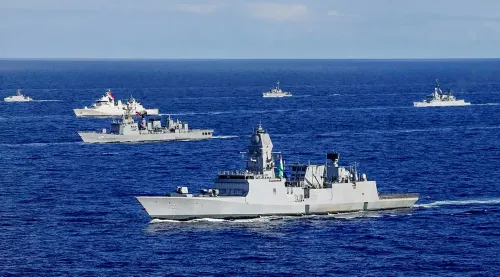
Indian Navy's operational reach now extends to the South China Sea , Mediterranean , and Atlantic Ocean , according to Singh.
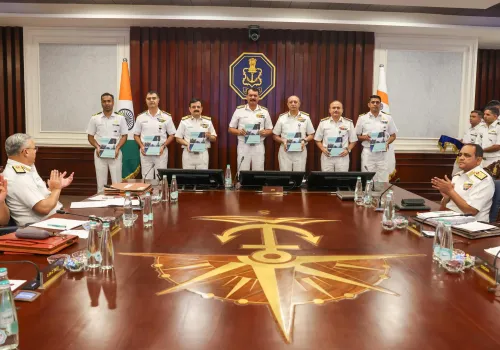
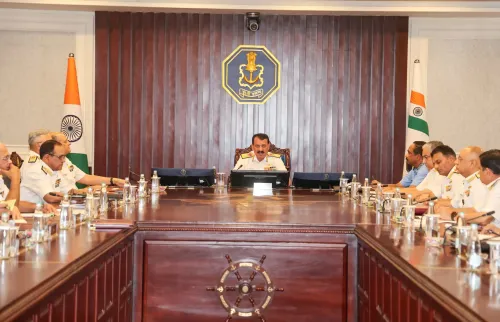
The biannual Naval Commanders' Conference 2026 concluded in New Delhi on 1 October 2026 after three days of high-level deliberations on operational preparedness, logistics, maintenance, and reforms in training and human resource management. The second edition of the conference, held from 29 September to 1 October, brought together senior naval leadership alongside top civilian and military officials, signalling the government's intent to accelerate technology adoption and self-reliance in India's maritime domain.
Key Addresses and Highlights
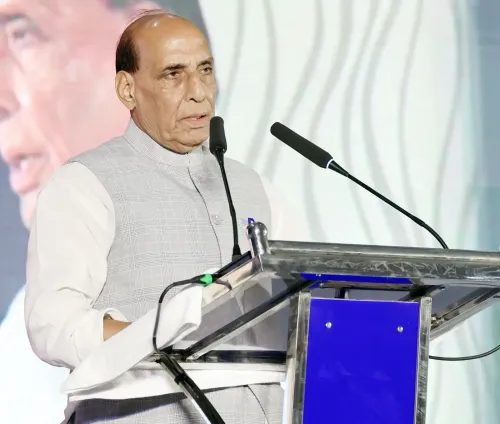
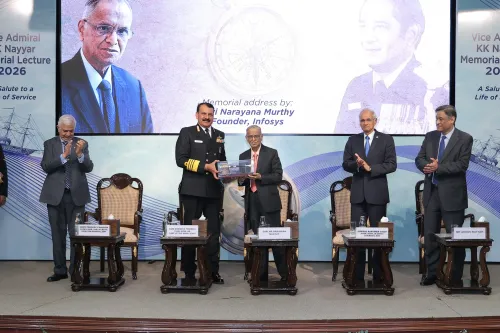
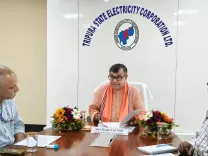
Minister of State for Electronics and IT Jitin Prasada addressed the gathering, stressing the urgency of adopting emerging technologies and strengthening domestic capabilities in semiconductors, artificial intelligence (AI), and quantum technologies. His presence at a naval forum underscored the deepening intersection between civilian technology policy and defence modernisation.
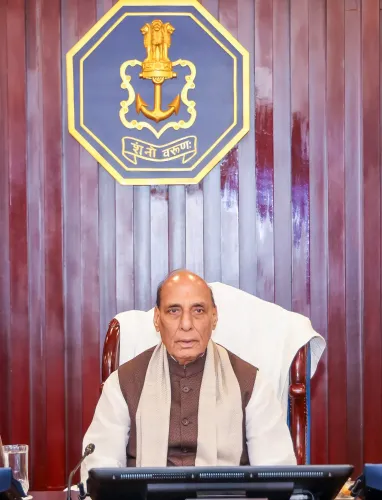
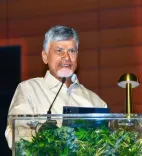
Defence Minister Rajnath Singh, who addressed the conference on its opening day, praised the Indian Navy's expanding strategic footprint, noting that Indian warships now operate as far as the South China Sea, the Mediterranean, and the Atlantic Ocean. Singh emphasised the Navy's indigenisation milestones, stating: 'The Indian Navy's warship production ecosystem is now meeting global benchmarks. The warships commissioned recently contain over 75 per cent indigenous content. In the times ahead, we must not only meet our own requirements but also export our warships to friendly foreign nations.'
CDS and Army Chief's Remarks
Chief of Defence Staff General N.S. Raja Subramani described the Navy as a 'strategic force multiplier' in safeguarding national interests. He commended the service's operational commitment to maintaining energy security and its sustained drive toward technology absorption and indigenisation. General Subramani also emphasised technology-driven transformation, resilience, and greater integration among the three defence forces.
Chief of the Army Staff General Dhiraj Seth outlined the Indian Army's preparedness to address regional security challenges, contextualising the Navy's maritime role within a broader joint-forces framework.
Operational and Strategic Deliberations
Discussions on operational preparedness and logistics were framed against the backdrop of a rapidly evolving global security environment. The growing role of autonomous and uncrewed systems, the absorption of AI in naval operations, and rapid technological advances were central themes. Notably, the conference placed particular emphasis on jointness, interagency coordination, and optimal utilisation of resources — areas that have seen increased focus following the appointment of the CDS and the ongoing theatre-isation process.
Key deliberations reinforced the strategic goal of building a combat-ready, credible, cohesive, and future-ready force aligned with India's evolving maritime security requirements.
Indigenisation and the Road Ahead
The 75 per cent indigenous content benchmark cited by Defence Minister Singh reflects a significant shift from a decade ago, when the Navy remained heavily dependent on foreign platforms and systems. The push to eventually export warships to friendly nations marks an aspirational leap — one that would place India alongside established naval exporters. Industry observers note, however, that realising export potential will require sustained investment in quality certifications, after-sales support, and competitive pricing.
The next edition of the biannual conference is expected to take stock of progress on these technology and indigenisation targets, with the pace of AI integration and uncrewed systems deployment likely to dominate future agendas.
Point of View
Not an incremental one. The 75 per cent indigenous content figure is credible progress, but export readiness demands a different discipline: competitive lifecycle costing, global certification frameworks, and dedicated after-sales infrastructure that India's defence industry has yet to build at scale. The presence of the MoS for Electronics and IT at a naval commanders' forum is also telling — it reflects how blurred the line between civilian deep-tech policy and frontline military capability has become in the AI and semiconductor era.
NationPress
2 Oct 2026
Frequently Asked Questions
What was the Naval Commanders' Conference 2026?
It was the second edition of the biannual Naval Commanders' Conference, held in New Delhi from 29 September to 1 October 2026. Senior naval commanders, the Defence Minister, CDS, and Army Chief convened to deliberate on operational preparedness, logistics, technology adoption, and indigenisation.
What did Defence Minister Rajnath Singh say at the conference?
Rajnath Singh stated that recently commissioned Indian Navy warships contain over 75 per cent indigenous content and called on the Navy to not only meet domestic requirements but also export warships to friendly foreign nations. He also highlighted the Navy's expanded operational presence across the South China Sea, Mediterranean, and Atlantic.
Why was the MoS for Electronics and IT present at a naval conference?
Minister of State Jitin Prasada addressed the conference to highlight the importance of accelerating technology adoption, particularly in semiconductors, AI, and quantum technologies — domains where civilian policy and defence capability increasingly overlap. His presence reflects the government's push to align India's deep-tech industrial base with military modernisation goals.
What role did the CDS play at the conference?
Chief of Defence Staff General N.S. Raja Subramani described the Navy as a strategic force multiplier, commended its commitment to energy security and indigenisation, and stressed the need for technology-driven transformation and greater integration among the three armed forces.
What were the main themes of the Naval Commanders' Conference 2026?
The conference centred on operational preparedness and logistics in an evolving security environment, the absorption of AI and autonomous or uncrewed systems, jointness and interagency coordination, and the strategic push toward indigenisation and eventual warship exports.