India's Indo-Pacific maritime rise: 'Necklace of Diamonds' counters China's String of Pearls
Synopsis
A Japan Forward report argues that India — not the US or any other Quad member — is the most credible structural counter to China's maritime expansion in the Indo-Pacific. With BrahMos sales, the MAHASAGAR framework, and a decade of Indian Ocean outreach predating America's own FOIP doctrine, India's strategic autonomy is now its sharpest diplomatic weapon.
Key Takeaways
India's 'Necklace of Diamonds' counter-strategy is identified as the most credible pushback to China's String of Pearls in the Indo-Pacific, according to a Japan Forward report.
China has dispatched more than 45 naval missions to the Indian Ocean Region since 2008 and operates at least 13 ports across it.
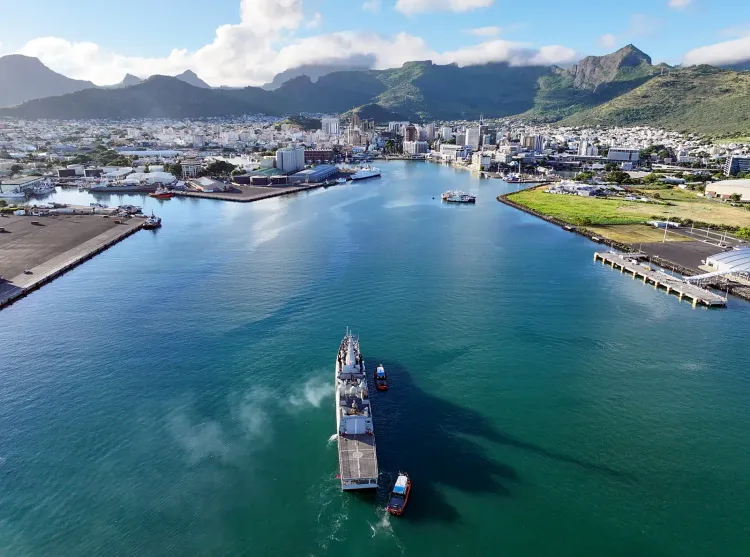
PM Modi launched SAGAR from Port Louis, Mauritius in March 2015 — two years before the US adopted the FOIP framework.
India expanded the doctrine into MAHASAGAR in March 2025 , framed as an inclusive alternative to China's Belt and Road Initiative .
The AIKEYME naval exercise in April 2025 brought together ten African nations under India's maritime engagement framework.
India's strategic autonomy — its refusal to join a formal US alliance — is cited as key to FOIP's credibility across the Global South .
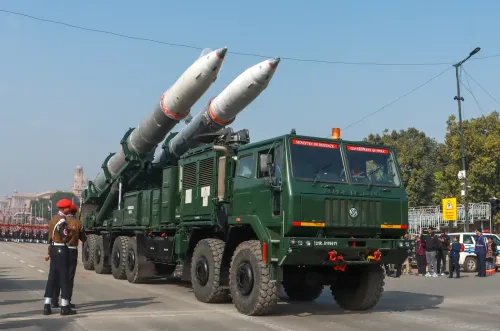
India has emerged as the most 'proximate and credible structural pushback' to Chinese maritime assertiveness in the Indo-Pacific region, according to a detailed report in Japan Forward. The assessment points to India's expanding naval footprint — spanning logistics agreements with Australia, France, and Japan; coastal surveillance networks; naval base arrangements in Seychelles; and BrahMos missile sales to the Philippines beginning in 2024 — as forming a coherent counter-architecture to Beijing's regional ambitions.
China's String of Pearls and the Indian Response
The report details how China's 'String of Pearls' strategy is, at its operational core, directed at India. The network of Chinese-funded ports — at Gwadar in Pakistan, Hambantota in Sri Lanka, Kyaukpyu in Myanmar, and Chittagong in Bangladesh — effectively encircles India's maritime perimeter. Since 2008, Beijing has dispatched more than 45 naval missions to the Indian Ocean Region, and China now operates at least 13 ports across it, according to the report.
India's counter-posture — described as the 'Necklace of Diamonds' — mirrors this logic through strategic partnerships, access agreements, and military sales rather than port ownership. Analysts argue no other Quad member possesses India's geographic and strategic positioning to perform this role.
SAGAR: India's Own Rules-Based Order Doctrine
The report challenges a persistent blind spot in Western discourse: that India entered the Free and Open Indo-Pacific (FOIP) framework merely as a junior partner absorbing an external doctrine. Prime Minister Narendra Modi articulated SAGAR (Security and Growth for All in the Region) in March 2015 from Port Louis, Mauritius — a full two years before the United States formally adopted the FOIP framework.
'The doctrine prioritises trust, respect for international maritime norms, peaceful dispute resolution, and cooperative security in the Indian Ocean. It was, in essence, India's own rules-based order doctrine, rooted in its immediate strategic neighbourhood,' the report noted. Over the decade that followed, the Indian Navy advanced SAGAR through anti-piracy operations in the Gulf of Aden, humanitarian missions, and COVID-19 relief dispatched to Mauritius, Maldives, Madagascar, Comoros, and Seychelles.
MAHASAGAR and the Africa Pivot
In March 2025, India broadened the initiative into MAHASAGAR (Mutual and Holistic Advancement for Security and Growth Across Regions), explicitly framed as an inclusive alternative to China's Belt and Road Initiative (BRI). Practical implementation followed swiftly: the AIKEYME (Africa-India Key Maritime Engagement) naval exercise with Tanzania in April 2025 brought together ten African nations, while India's IOS SAGAR mission conducted joint EEZ patrols with personnel from African and South Asian navies.
Strategic Autonomy as a Diplomatic Asset
India's refusal to enter a formal security alliance with the United States is, according to the report, precisely what prevents FOIP from being perceived across the Global South as a Western containment project. 'India's participation, on its own terms, signals to fence-sitting nations across ASEAN, Africa and South Asia that FOIP is not a binary Cold War choice,' the report stated, citing analysts who argue that emphasising inclusivity is essential to the framework's credibility as a region-wide organising principle.
As India deepens its maritime architecture across the Indian Ocean Region, the trajectory points toward a more assertive but non-alliance-bound role — one that may increasingly define the Indo-Pacific's security equilibrium in the years ahead.
Point of View
Which means New Delhi is a co-author of the framework, not a recruit. That distinction matters enormously — India's credibility with fence-sitting Global South nations rests precisely on not being seen as a US proxy. The harder question the report leaves unanswered is whether India's non-alliance posture can sustain deterrence as Chinese port infrastructure and naval presence in the IOR deepens. Strategic autonomy is a diplomatic asset; whether it translates into hard deterrence at scale remains the unresolved tension at the heart of India's Indo-Pacific ambition.
NationPress
20 Sept 2026
Frequently Asked Questions
What is India's 'Necklace of Diamonds' strategy in the Indo-Pacific?
India's 'Necklace of Diamonds' is a counter-strategy to China's 'String of Pearls' that involves logistics agreements with Australia, France, and Japan; coastal surveillance networks; naval base arrangements in Seychelles; and BrahMos missile sales to the Philippines from 2024. It is designed to build a network of strategic partnerships across the Indian Ocean Region without replicating China's port-ownership model.
What is China's String of Pearls strategy and why does it concern India?
China's String of Pearls refers to a network of Chinese-funded ports — including Gwadar in Pakistan, Hambantota in Sri Lanka, Kyaukpyu in Myanmar, and Chittagong in Bangladesh — that encircles India's maritime perimeter. Since 2008, China has sent more than 45 naval missions to the Indian Ocean Region and operates at least 13 ports across it, according to the Japan Forward report.
What is SAGAR and how does it relate to the Free and Open Indo-Pacific framework?
SAGAR (Security and Growth for All in the Region) is India's Indian Ocean doctrine, articulated by PM Modi in March 2015 from Port Louis, Mauritius — two years before the US formally adopted the FOIP framework. It prioritises trust, international maritime norms, peaceful dispute resolution, and cooperative security, and is considered India's own rules-based order doctrine for its strategic neighbourhood.
What is MAHASAGAR and how does it differ from SAGAR?
MAHASAGAR (Mutual and Holistic Advancement for Security and Growth Across Regions) was launched by India in March 2025 as an expansion of SAGAR. It is explicitly framed as an inclusive alternative to China's Belt and Road Initiative and has a broader geographic scope, evidenced by the AIKEYME naval exercise with Tanzania in April 2025 that involved ten African nations.
Why is India's refusal to join a formal US alliance seen as strategically significant?
According to analysts cited in the Japan Forward report, India's strategic autonomy prevents FOIP from being perceived across the Global South as a Western containment project. India's participation on its own terms signals to nations across ASEAN, Africa, and South Asia that FOIP is not a binary Cold War choice, which is seen as essential to the framework's broader credibility.