India's women empowerment, clean energy initiatives spotlighted at UNHRC 63rd Session
Synopsis
At the UNHRC's 63rd Session in Geneva, India's Jan Dhan and MUDRA schemes were held up as global models for women's financial inclusion, while the International Solar Alliance drew praise for clean energy cooperation — but speakers made clear that access alone is not enough, calling for structural reform and rights-based energy transitions.
Key Takeaways
India's Pradhan Mantri Jan Dhan Yojana and MUDRA were cited at the UNHRC 63rd Session in Geneva on 1 October 2026 as models for women's economic empowerment.
Kamiliya Mashrabbekova of the Global Institute for Water, Environment and Health stressed that financial access alone is insufficient without tackling structural barriers like unpaid care work and employment discrimination.
India's International Solar Alliance and One Sun, One World, One Grid initiative were highlighted as examples of combining national climate action with international cooperation.
Malek Youssef of the Youth Parliament for SDG called for equitable access to climate finance and technology transfer so developing countries and rural communities are not left behind.
Both speakers called on member states to go beyond beneficiary-model schemes and recognise women and marginalised communities as active agents of development.
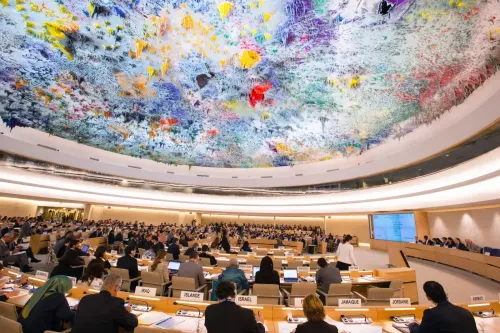
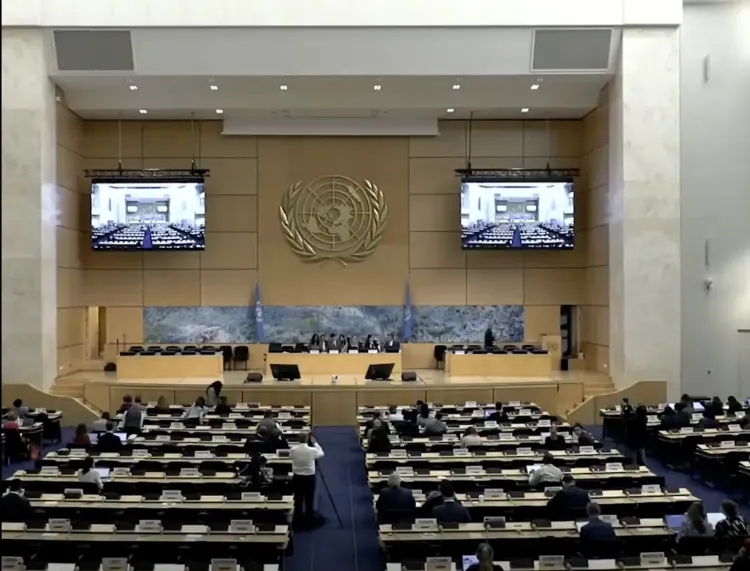
India's experience in advancing women's economic empowerment and renewable energy was spotlighted at the 63rd Session of the United Nations Human Rights Council (UNHRC) in Geneva on 1 October 2026, with multiple government schemes cited as models for developing nations seeking to combine financial inclusion with sustainable development.
Women's Empowerment: What Was Highlighted
Kamiliya Mashrabbekova, representative of the Global Institute for Water, Environment and Health, told the session that women's economic empowerment is fundamental to human rights, equality, poverty reduction, and the right to development. She specifically cited Indian government programmes as instructive examples for member states.
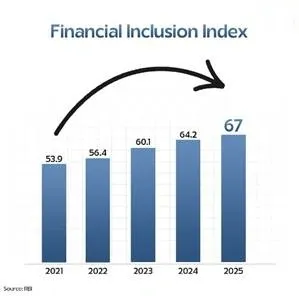
'India's experience demonstrated the potential of combining financial inclusion, digital access, entrepreneurship, skills development and social protection to expand women's economic participation. Initiatives such as the Pradhan Mantri Jan Dhan Yojana and MUDRA provide examples of how access to banking and credit can strengthen women's economic autonomy and support livelihoods,' Mashrabbekova said.
She was careful, however, to frame these as necessary but insufficient steps. 'Financial access alone is not sufficient. Women continue to face structural barriers, including unequal access to education and skills, unpaid care responsibilities, discrimination in employment, unequal remuneration, and limited participation in decision-making,' she added. She urged member states to address these systemic gaps alongside expanding financial access.
India's Renewable Energy Record Under the Spotlight
India's clean energy push also drew recognition at the session. Malek Youssef, a representative of the Youth Parliament for SDG, welcomed the global acknowledgement that affordable, reliable and sustainable energy is integral to the right to development and economic, social and cultural rights.
'India's renewable energy experience demonstrates how national action can be combined with international cooperation. Through the International Solar Alliance, India has helped advance technology sharing, capacity building, investment, and affordable solar energy, particularly across developing countries. We also welcome initiatives such as One Sun, One World, One Grid, which seek to strengthen renewable energy connectivity and cooperation,' Youssef stated.
This comes amid broader global pressure on developing nations to accelerate energy transitions without sacrificing economic growth or leaving vulnerable communities behind — a tension that India's multi-track approach is increasingly held up as a partial answer to.
Calls for Inclusive Transition and Rights-Based Access
Both speakers stressed that progress on paper must translate into rights on the ground. Youssef cautioned that 'the energy transition must remain inclusive and rights-based,' noting that developing countries require greater access to climate finance, technology transfer and capacity building, while rural communities and vulnerable populations must not be left behind.
Mashrabbekova echoed the theme of agency over beneficiary status: 'Women must not remain merely beneficiaries of development. They must be recognised as active participants, decision-makers and agents of development.'
Key Asks from the Session
Youssef called on the Human Rights Council and member states to strengthen international and South-South cooperation, facilitate equitable access to clean energy technologies and finance, and promote the exchange of successful experiences. Mashrabbekova similarly urged strengthened access to finance, decent employment, digital technologies, skills and social protection, with an explicit emphasis on privacy, non-discrimination and accessibility.
The session signals growing international recognition of India's twin-track approach — pairing domestic welfare schemes with global climate diplomacy — as a template worth studying, even as advocates push for deeper structural reform to turn access into genuine equality.
Point of View
Not Indian officials, made the case for its domestic schemes on a global human rights stage. Yet the same speakers who praised Jan Dhan and the International Solar Alliance immediately flagged what those programmes do not fix — structural employment discrimination, unpaid care burdens, and climate finance gaps that developing nations cannot bridge on goodwill alone. The applause for India's model is real, but it should not crowd out the harder accountability question: whether expanded access has translated into measurable reductions in the gender wage gap or energy poverty at the household level. International recognition is a useful platform; it is not a substitute for verified outcomes.
NationPress
1 Oct 2026
Frequently Asked Questions
What did the UNHRC 63rd Session say about India's women empowerment programmes?
The session highlighted India's Pradhan Mantri Jan Dhan Yojana and MUDRA scheme as examples of how financial inclusion and digital access can strengthen women's economic autonomy. However, speakers also noted that structural barriers — including employment discrimination and unpaid care responsibilities — remain unaddressed by financial access alone.
Why was India's renewable energy work discussed at a human rights forum?
Access to affordable, reliable and sustainable energy is increasingly recognised as integral to the right to development and economic, social and cultural rights. India's International Solar Alliance and One Sun, One World, One Grid initiative were cited as models of combining domestic action with international technology sharing and capacity building for developing countries.
What is the International Solar Alliance and why does it matter?
The International Solar Alliance is an India-led multilateral initiative focused on advancing solar energy deployment, technology sharing, and investment — particularly across developing nations. It was cited at the UNHRC session as a practical example of South-South cooperation in the clean energy transition.
What did speakers at the UNHRC session call for?
Speakers called on member states to strengthen women's access to finance, decent employment, digital technologies, skills and social protection, while also urging greater international climate finance and technology transfer so rural communities and vulnerable populations are not left behind in the energy transition.
Where and when was the 63rd Session of the UNHRC held?
The 63rd Session of the United Nations Human Rights Council is being held in Geneva. India's women empowerment and renewable energy initiatives were spotlighted there on 1 October 2026.