Experts Highlight Women's Empowerment for India's Vision 2047 at Delhi Summit
Synopsis
The Chintan Research Foundation's event in New Delhi emphasizes the critical role of women's empowerment in realizing India's vision for development by 2047. Experts discuss necessary changes and the importance of societal attitudes in achieving this goal.
Key Takeaways
Women’s empowerment is essential for national development.
Three pillars support this vision: constitutional equality, leadership initiatives, and evolving societal attitudes.
Government initiatives play a crucial role in enhancing women’s opportunities.
Addressing societal attitudes is critical for real progress.
Recognizing women’s economic contributions is vital for sustainable development.
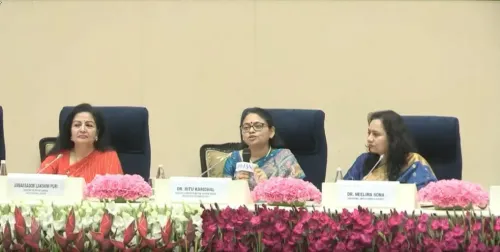
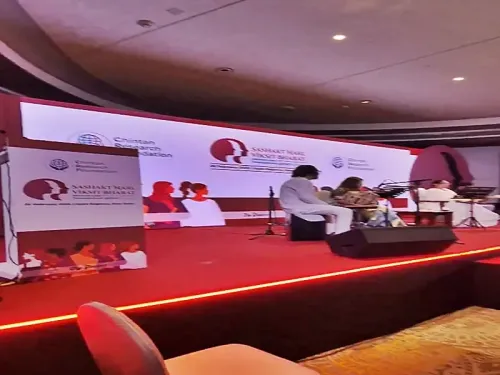
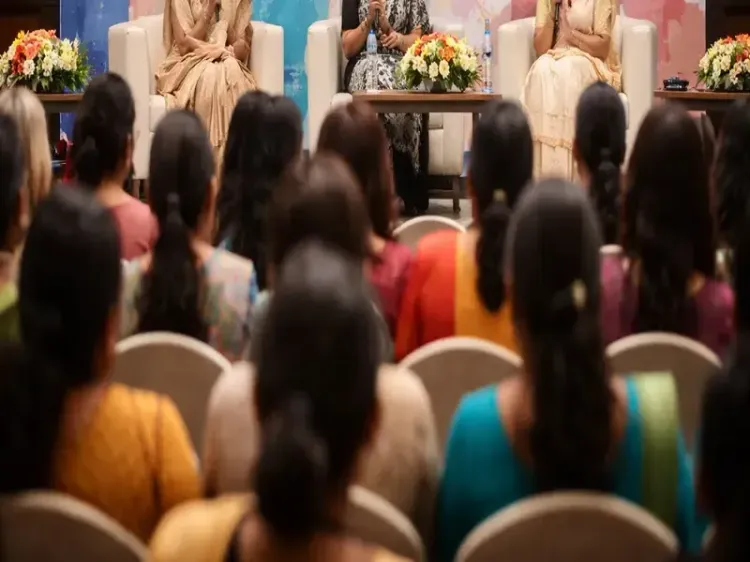
New Delhi, Feb 26 (NationPress) The Chintan Research Foundation orchestrated an event named Empowered Women, Developed India in the capital, convening policymakers, diplomats, economists, and other specialists to deliberate on the crucial role of women in shaping a prosperous India by 2047.
The assembly emphasized that genuine national advancement is incomplete without the comprehensive and proactive engagement of women in social, economic, political, and institutional realms.
Notable participants included Deepti Mohil Chawla, Additional Secretary in the Ministry of Defence; former Indian High Commissioner Veena Sikri; and Shamika Ravi, a member of the Prime Minister’s Economic Advisory Council.
Each shared perspectives on avenues towards authentic empowerment and highlighted enduring structural and societal obstacles.
Deepti Mohil Chawla articulated that the aspiration for a developed India by 2047 is intimately tied to women’s empowerment and increased involvement in national growth.
She identified three fundamental pillars supporting this vision. First, India’s constitutional and legal framework ensures equality, equal opportunities, and protection for women. Second, leadership initiatives and governmental programs have aimed to amplify women’s involvement across sectors, from grassroots governance to advanced political and institutional roles. Third, societal attitudes are gradually shifting, allowing women to transcend traditional limitations and embrace opportunities in fields like defence, law, and governance.
She observed that women are increasingly assuming operational roles in the armed forces and leadership positions within judicial and legal institutions, indicating a progressive change in opportunities and social perceptions. However, she cautioned that this advancement has not yet permeated all segments of society.
Veena Sikri remarked on the significance of such dialogues in the current context, asserting that sustainable development is unattainable without the complete involvement of women.
She pointed out that governmental initiatives like the “Beti Bachao, Beti Padhao” campaign and the Pradhan Mantri Ujjwala Yojana have played a role in enhancing women’s welfare and access to opportunities.
Nonetheless, she stressed the importance of addressing entrenched social attitudes that still impede women’s empowerment, beyond legislative and policy interventions.
She noted that patriarchal mindsets pose significant challenges, affecting women’s access to opportunities and undermining their confidence and autonomy, despite educational and professional advancements.
From an economic standpoint, Shamika Ravi highlighted that women play a crucial role in economic activities, although a considerable amount of their work, especially unpaid domestic labor, remains unacknowledged in formal economic evaluations.
She stressed the necessity for policies that recognize women’s contributions and facilitate their participation through institutional and social support.
She concluded that ensuring visibility and acknowledgment of women’s economic contributions is vital for achieving inclusive and sustainable development.
The event underscored the importance of empowering women as an essential element of India’s overarching development strategy and its long-term vision of becoming a developed nation by 2047.
Point of View
The discussions at the summit reflect a significant commitment to integrating women's empowerment into the broader framework of India's development strategy. The insights shared emphasize the need for both systemic changes and shifts in societal attitudes to ensure women can fully participate in the nation's journey towards becoming a developed country by 2047.
NationPress
3 Oct 2026
Frequently Asked Questions
What was the primary focus of the summit?
The summit focused on women's empowerment as a crucial element for achieving India's development vision by 2047.
Who were some notable attendees at the event?
Notable attendees included Deepti Mohil Chawla, Veena Sikri, and Shamika Ravi, all of whom shared valuable insights.
What initiatives were discussed to support women's empowerment?
Initiatives like 'Beti Bachao, Beti Padhao' and the Pradhan Mantri Ujjwala Yojana were highlighted as significant efforts contributing to women's welfare.
What challenges to women's empowerment were mentioned?
The persistence of patriarchal mindsets and deep-rooted social attitudes were recognized as major challenges that hinder women's empowerment.
Why is women's economic contribution important?
Recognizing women's economic contributions is essential for inclusive and sustainable development, as much of their work remains unrecognized.