Empowering Women: Insights from the 'Bharati -- Nari se Narayani' Convention
Synopsis
The 'Bharati -- Nari se Narayani' convention in New Delhi offers a vital platform for women across India to propose recommendations enhancing women's empowerment and education, aiming for a transformative journey from 'Nari' to 'Narayani'.
Key Takeaways
Empowerment Focus: The convention emphasizes the importance of bridging gaps in education and empowerment for women.
Success Stories: Highlighting the achievements of women to inspire others.
Collaboration: Joint efforts from multiple organizations to foster women’s roles.
Policy Recommendations: Suggestions to be shared with Ministries for actionable change.
Future Generation: Encouraging young women to take part in nation-building.
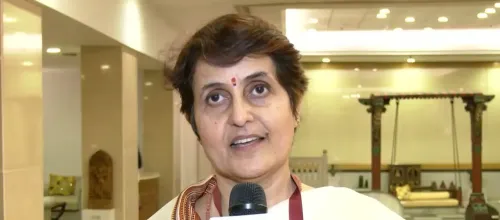
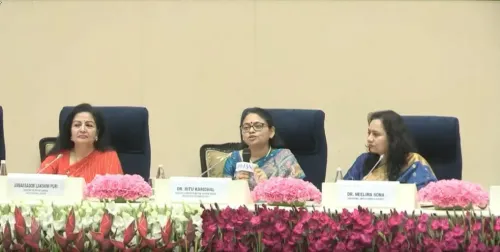
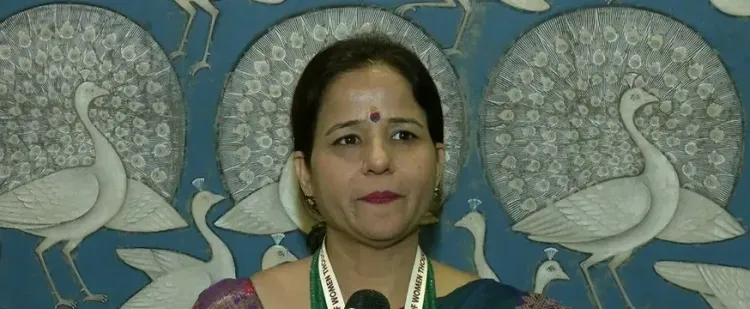
New Delhi, March 7 (NationPress) Insights and recommendations from the two-day national gathering named 'Bharati -- Nari se Narayani' will be presented to various Ministries to advance the awakening and empowerment of women, stated Professor Charu Kalra, the Pramukh of Delhi Sevika Samiti, on Saturday.
In an interview with IANS during the event, which celebrated the transformative path of women from 'Nari' to 'Narayani', Kalra emphasized, "Our aim is to propose initiatives that will reduce disparities across various sectors—especially in education and empowerment—to elevate the status and opportunities available to women in the future."
"We encourage all women to acknowledge their journey from 'Nari' to 'Narayani'," she remarked, mentioning the intention to showcase the success narratives of women achievers throughout the convention.
The event serves as a platform for participants from 25 states to propose recommendations aimed at creating a brighter future for women.
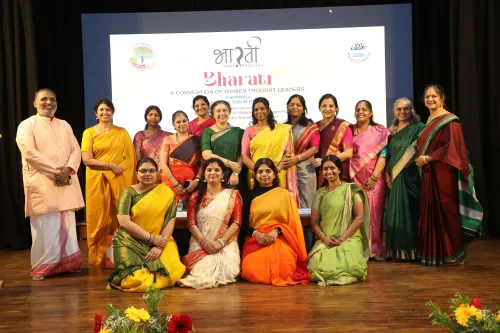
This national convention is being convened in the capital to commemorate International Women's Day, observed on March 8. It is a collaborative effort by Rashtra Sevika Samiti, Bharatiya Vidvat Parishat, and Sharanya, taking place at Vigyan Bhawan.
The organizers described 'Bharati' as an ambitious initiative with the core mission of transforming 'Nari' into a strategically empowered 'Narayani'.
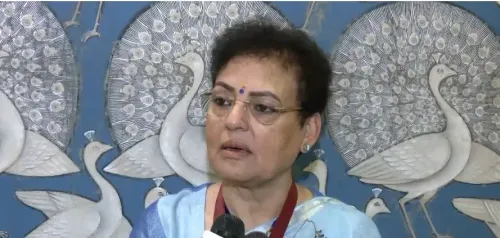
Rachna Bajpai, the Delhi Prant Prachar Pramukh of Rashtriya Sevika Samiti, noted that the discussions aim to assess challenges faced by women achievers and learn from them.
"The goal is to devise suggestions that will make the journey of the new generation of women more impactful for national development," she added.
Bhagyashree Satheya, an All India Executive Member of Rashtriya Sevika Samiti and Co-convenor of Mahila Coordination, stated, "On International Women's Day, this convention seeks to incorporate an Indian perspective into the frameworks used for evaluating women's empowerment and development."
"While visible social changes are encouraging women's participation, stronger efforts are still required to enhance their role in development," she continued.
Pratibha, a dedicated member of Rashtriya Sevika Samiti, mentioned, "Prominent achievers from diverse fields are participating in the convention, and their insights will yield recommendations for the future empowerment and development of women."
"This event resembles a Maha Kumbh focused on women's empowerment," she added.
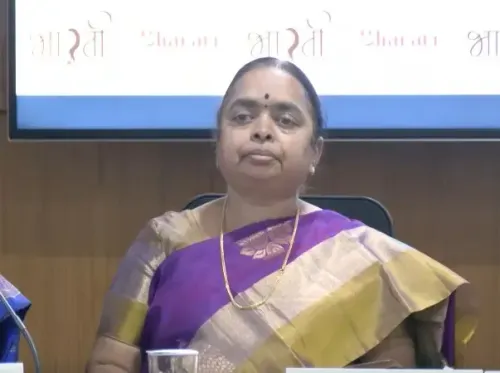
Shanta Kumari, the Pramukh Sanchalika of Rashtriya Sevika Samiti, indicated that the convention aims to guide the younger generation in channeling their energy towards nation-building.
"Participants will be encouraged to hold similar gatherings in their respective states to awaken women at the grassroots level, fostering self-reliance. We are also emphasizing the unique strengths of Indian women," she added.
M. Jagadesh Kumar, Chairman of the Board of Governors at IIM Calcutta, highlighted that while India boasts a notable 42.5% female participation in STEM fields, a concerning 12.5% dropout rate among girls at the secondary level was discussed. "We explored strategies to mitigate this dropout rate," he noted.
"We also discussed the integration of modern skill education with academic degrees to empower students towards entrepreneurship and self-employment," said Jagadesh Kumar, a former Chairman of the University Grants Commission.
Geeta Bhatt, Director of the Non Collegiate Women Education Board at Delhi University, remarked, "Women leaders have convened to share their experiences and create a roadmap for the leadership and partnerships of young women in the future."
Payal Mago, Director at the Campus of Open Learning, added, "The convention's outcomes regarding education, empowerment, and knowledge will significantly influence policy-making and societal development in the coming years."
Professor Shashikala Vanjari, a participant at the convention, noted that a key session focuses on the pathway from education to employment to entrepreneurship, addressing how women can contribute to a developed India.
Amanat Laxmi Narayana from Tamil Nadu, Co-founder of Aadi Foundation, emphasized the importance of culturally aligned and localized education for women. "When education is delivered in a context that resonates culturally, participation increases," she stated, advocating for the promotion of vocational and online education.
Former Delhi University Professor Priti Goyal, who chaired a session, insisted on the necessity for societal change and a shift in the mindset of the male community to achieve "true equality". She asserted, "Women manage household duties while also contributing professionally. In my perspective, women handle around 60% of the societal workload," she concluded.
Frequently Asked Questions
What is the purpose of the 'Bharati -- Nari se Narayani' convention?
The convention aims to empower women by discussing challenges and proposing recommendations for better policies in various sectors, including education.
Who are the participants in this convention?
Participants include women leaders from 25 states in India, including notable achievers from various fields.
What is the significance of the date of the convention?
The convention is held to commemorate International Women's Day, which is globally recognized on March 8.
What are some key topics discussed at the convention?
Key topics include women's education, empowerment, reducing dropout rates, and enhancing women's roles in development.
How does this convention impact policy-making?
The insights and recommendations generated during the convention will be shared with various Ministries to inform future policies aimed at women's empowerment.