Women Diplomats Break Barriers at 'Sashakt Nari, Viksit Bharat' Forum
Synopsis
At the 'Sashakt Nari, Viksit Bharat' forum, women diplomats shared powerful stories of overcoming challenges in leadership roles. This event highlighted the critical importance of women's empowerment in shaping a progressive India by 2047.
Key Takeaways
Women diplomats are breaking barriers in traditionally male-dominated fields.
Progress in gender representation is evident but still faces challenges.
Empowerment is essential for inclusive global advancement.
Structural changes are necessary for true equality.
International collaboration can enhance women's roles in diplomacy.
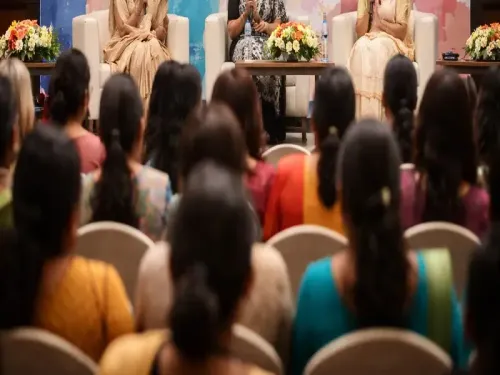
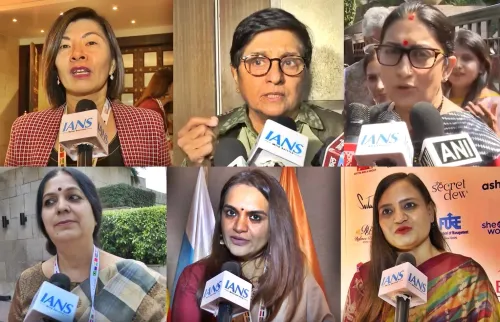
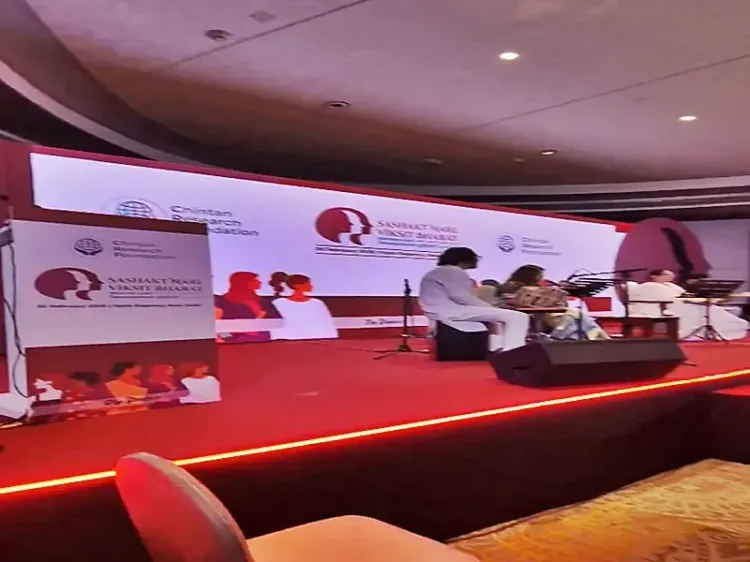
New Delhi, Feb 26 (NationPress) At the "Sashakt Nari, Viksit Bharat" forum in New Delhi, women diplomats from various countries shared remarkable tales of resilience and breakthroughs in overcoming obstacles.
This event, organized by the Chintan Research Foundation, convened women leaders to address women's empowerment and their crucial role in shaping a progressive India by 2047, featuring a special segment titled "Diplomacy Through Her Eyes: Women Leading Globally".
Currently, over 30 women serve as ambassadors or high commissioners in India, embodying significant progress in gender equality on the global platform. Many recounted their personal journeys, detailing the challenges faced and the perseverance needed to navigate them.
Diana Mickeviciene, the Ambassador of Lithuania to India, remarked, "Across various professions, there are definitely numerous common challenges, especially in fields that were predominantly male until quite recently."
She reflected on the past, stating, "The landscape was different then; women often felt inferior." In Lithuania today, 60% of diplomats are women, yet less than half hold ambassadorial roles, indicating ongoing disparities in high-level representation. Sri Lankan High Commissioner Mahishini Colonne compared her country to India, noting the unique context of each nation's progress.
Sri Lanka, with a population of 29.9 million, gave rise to the world's first female prime minister, Sirimavo Bandaranaike, yet she remains the sole woman to serve as foreign minister.
Colonne observed, "Although numerous women occupy roles in foreign service and Parliament, they are still underrepresented in mission posts." Despite public support, administrative policies often fall short, lacking formal reservations for women. Mary M. Mutuku, the Deputy Chief of the Kenyan Mission to India, highlighted cultural norms where leadership roles are predominantly held by men.
She expressed, "In African culture, men typically lead in most areas, including as CEOs." Mutuku pointed out a hard truth: "Even women sometimes fail to recognize each other's strengths and may underestimate one another." She emphasized that women often need to exert greater effort to prove their capabilities.
Marje Luup, Estonia's Ambassador, shared her perspective: "I believe gender is becoming less of a focus now. Estonia's e-governance and digital success stories often take precedence in discussions with Indian counterparts." She acknowledged the positive change in perceptions, as Estonia's strong IT performance garners interest from India, with conversations veering towards technology rather than gender.
Nonetheless, she recognized the need for improvement, noting that fewer women are currently employed in IT, prompting initiatives to inspire more young women to pursue careers in this field.
The forum emphasized a collective global narrative—while there are evident advancements in women's diplomatic leadership, persistent structural and societal challenges necessitate ongoing advocacy for equality and acknowledgment. These narratives from the frontlines of international representation reinforced the essential message of the event—empowering women diplomats is vital for fostering inclusive global progress and realizing India's developmental vision.
Point of View
The narratives shared at the 'Sashakt Nari, Viksit Bharat' forum reflect both progress and the continuing challenges women face in diplomatic roles. The emphasis on empowerment underscores the necessity for structural changes to achieve true equality and representation in international relations.
NationPress
20 Sept 2026
Frequently Asked Questions
What was the main focus of the 'Sashakt Nari, Viksit Bharat' forum?
The forum emphasized women's empowerment and their crucial role in shaping a developed India by 2047.
How many women currently serve as ambassadors or high commissioners in India?
Over 30 women currently hold ambassadorial or high commissioner positions in India.
What challenges do women diplomats face?
Women diplomats often encounter societal and structural barriers, including underrepresentation in leadership roles.
What was the significance of Sri Lanka's history in women's leadership?
Sri Lanka produced the world's first female prime minister, yet continues to struggle with women's representation in foreign service.
What initiatives are being taken to encourage women in IT?
Efforts are underway to motivate more young women to enter the IT sector, addressing gender disparities in this field.