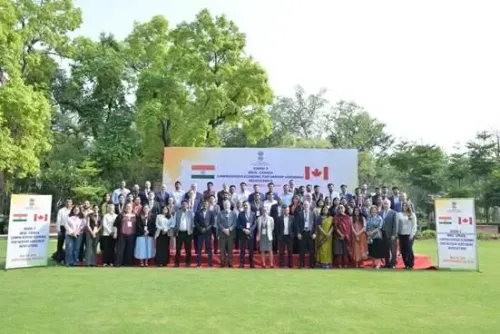
Canada-India trade target: $30 bn to $70 bn in five years, CEPA talks accelerate

Synopsis
Canada and India want to more than double their bilateral trade to $70 billion by 2030 — and a fifth round of CEPA negotiations kicks off in Ottawa on Monday. With Canadian LNG, critical minerals, and over $100 billion in existing investment already in the mix, the two governments are signalling this is the most serious push toward a free-trade deal since talks collapsed in 2023.
Key Takeaways
Canada and India have set a target of raising bilateral trade from $30.4 billion to $70 billion by 2030 .
CEPA round five begins in Ottawa on Monday ; both governments aim to conclude talks by end of 2026 .
Key sectors identified: energy (LNG) , critical minerals , and aerospace .
Canada expects India will need 70% more energy by 2035 , creating a direct export opportunity.
Canada is described as the largest collective investor in India , with over USD 100 billion in cumulative investments.
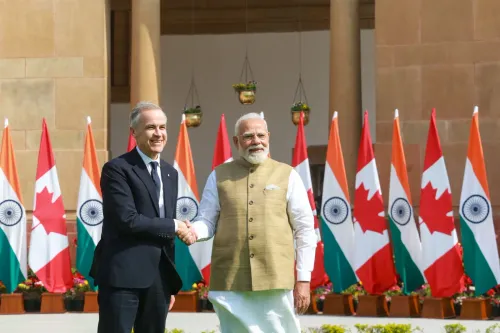
Talks were relaunched in November 2025 after Prime Ministers Carney and Modi agreed to restart negotiations.
Canada and India have set an ambitious goal of more than doubling bilateral trade — from $30.4 billion to nearly $70 billion — by 2030, Canadian International Trade Minister Maninder Sidhu said on Thursday, 1 October 2026, on the sidelines of the G20 Trade Ministers' Meeting in Milwaukee. The announcement came as both governments push ahead with negotiations on a Comprehensive Economic Partnership Agreement (CEPA), with a fifth round of talks set to open in Ottawa on Monday.
Where the Talks Stand
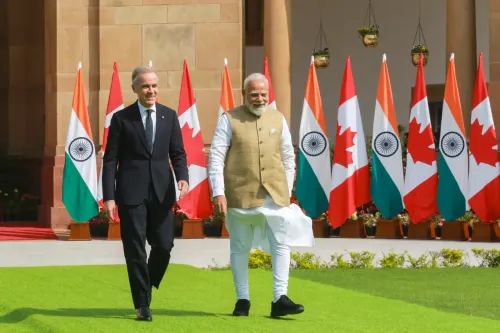
Four rounds of CEPA negotiations have already been completed since Canada and India restarted talks in November 2025, following an agreement between Prime Minister Mark Carney and Prime Minister Narendra Modi. Sidhu said both sides are working toward concluding negotiations by the end of 2026. 'Round five will happen in Ottawa on Monday,' Sidhu told reporters. 'Of course, negotiations are always tough, but we look forward to concluding in the coming months.'
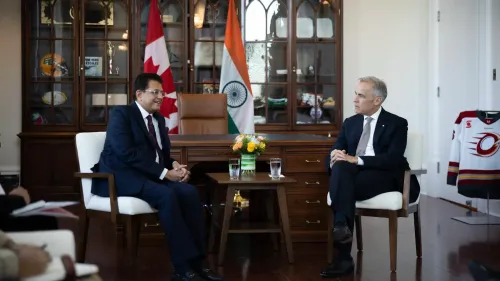
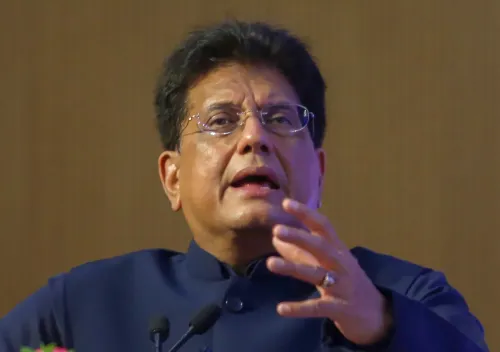
Sidhu visited India approximately 10 days ago and held discussions with Commerce and Industry Minister Piyush Goyal in Mumbai, where the progress of four completed rounds was reviewed.
Key Sectors: Energy, Critical Minerals, Aerospace
The minister identified energy, critical minerals, and aerospace as the three pillars of deepened cooperation. He underscored India's projected energy shortfall as a direct opportunity for Canadian exporters: 'India is growing at 7 per cent year over year. India requires 70% more energy by 2035. We have that energy in Canada,' Sidhu said.
Canada currently has several LNG projects in various stages of development and expects to rank among the world's top five LNG exporters within five years. For India, which is rapidly expanding its electric vehicle and battery industries, Canada's critical mineral reserves hold particular strategic value. 'Canada is the only country in the Western hemisphere that has every single element to make an electric battery,' Sidhu noted, pointing to India's interest in diversifying EV-related supply chains.
Investment Flows: Over $100 Billion Already Committed
Beyond merchandise trade, Sidhu highlighted the depth of existing investment ties. Canada is described as the largest collective investor in India, with more than USD 100 billion in cumulative investments — including Canadian participation in airport and highway construction projects. At the same time, Ottawa is actively courting Indian capital for its mining and energy sectors. 'We also welcome Indian investors in Canada to invest in our mining projects, to invest in our energy projects, so we can grow together,' Sidhu said.
Complementary, Not Competing Economies
Sidhu was explicit in framing the two economies as complementary rather than rival. 'It's about building up our economies in complementary styles. It's not about competing with one another,' he said. He added that Prime Minister Carney and Prime Minister Modi had held 'excellent conversations' on bringing the two economies closer — signalling political buy-in at the highest level on both sides.
This comes amid a broader global push by major democracies to diversify supply chains away from single-source dependencies, a trend that has accelerated since 2022. A successfully concluded CEPA would mark a significant milestone in India's free-trade agenda, which also includes active negotiations with the United Kingdom and the European Union.
Point of View
But the real story is the architecture being assembled around it. Canada is not merely offering a trade deal — it is positioning itself as India's preferred Western supplier of LNG, EV battery minerals, and infrastructure capital simultaneously. That is a strategic bet, not just a commercial one, and it reflects Ottawa's need to diversify beyond US dependency as much as New Delhi's need to diversify supply chains. The risk is execution: four rounds of CEPA talks have come and gone without a framework text in the public domain, and the end-of-2026 deadline is tight. If critical minerals and energy market access become sticking points — as they have in India's negotiations with the EU — the headline numbers could outlast the deal itself.
NationPress
2 Oct 2026
Frequently Asked Questions
What is the Canada-India CEPA and where do negotiations stand?
The Comprehensive Economic Partnership Agreement (CEPA) is a proposed free-trade deal between Canada and India. Negotiations were relaunched in November 2025 after Prime Ministers Mark Carney and Narendra Modi agreed to restart talks; four rounds have been completed and round five is set to begin in Ottawa on Monday, with both sides targeting a conclusion by end of 2026.
What is the Canada-India bilateral trade target and by when?
Canada and India have set a goal of raising annual two-way trade from $30.4 billion in 2025 to nearly $70 billion by 2030, roughly a 130% increase over five years. The target was publicly confirmed by Canadian International Trade Minister Maninder Sidhu at the G20 Trade Ministers' Meeting in Milwaukee on 1 October 2026.
Which sectors are central to the Canada-India trade push?
Energy — particularly LNG — critical minerals, and aerospace are the three sectors highlighted by Minister Sidhu. Canada expects India will require 70% more energy by 2035 and positions its LNG projects as a direct supply solution. On critical minerals, Canada is the only country in the Western hemisphere with every element needed to manufacture an electric battery, making it strategically important to India's EV expansion.
How significant is Canadian investment in India currently?
Canada is described as the largest collective investor in India, with more than USD 100 billion in cumulative investments, including involvement in airport and highway construction. Canada is also seeking Indian investment in its own mining and energy sectors as part of a two-way capital flow strategy.
Why did Canada-India trade talks restart in 2025?
Prime Ministers Mark Carney and Narendra Modi agreed in November 2025 to relaunch CEPA negotiations, which had stalled. The resumption reflects both countries' interest in diversifying trade and investment relationships, particularly as global supply chain realignment accelerates.