Iran dismisses supply shortage fears, cites storage crunch amid US sanctions
Synopsis
While Iran's government publicly dismisses fears of an essential goods shortage — blaming a storage crunch rather than a supply failure — it simultaneously acknowledges surging domestic prices and flatly rejects US negotiation overtures. The mixed signals from both Tehran and Washington suggest a geopolitical standoff that is far from resolved, with economic consequences for ordinary Iranians caught in the middle.
Key Takeaways
Ali Zeinivand , Iran's Deputy Interior Minister, said on 19 September that there is no shortage of essential goods, citing high import volumes instead.
Iran is reportedly facing a storage facility shortage due to high import volumes, and has called on the private sector for help.
Zeinivand acknowledged a rise in domestic product prices , saying officials are working to address it.
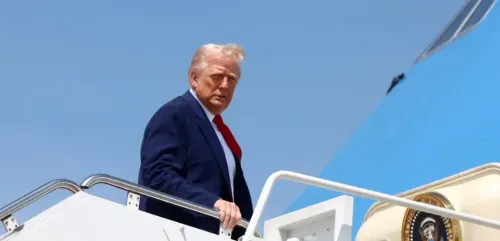
US President Donald Trump last month announced sweeping economic pressure on Iran, calling it 'Economic Warfare and Isolation on an unprecedented scale.' Mohsen Rezaei , Secretary of Iran's Supreme National Security Council, said on X that Iran will not negotiate with the US until its conditions are met.
Trump had claimed on Truth Social that Tehran wanted to make a deal 'quickly and badly,' a claim Rezaei dismissed as 'mixed signals.'
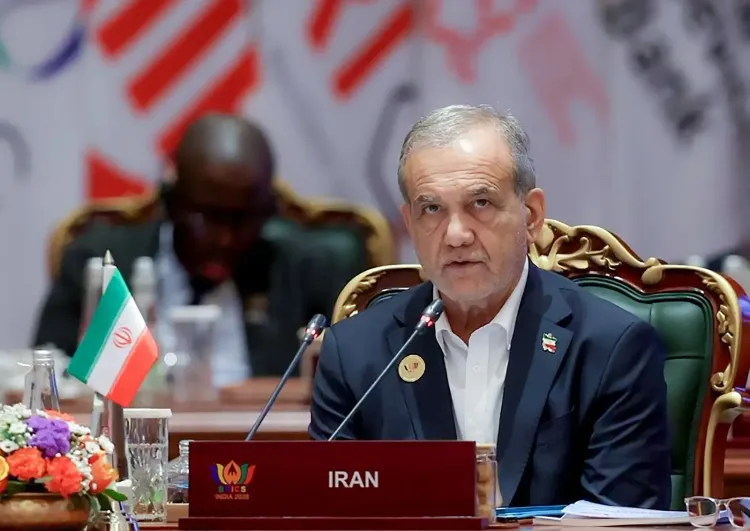
Iran's Deputy Interior Minister for Political Affairs and official spokesperson for the Ministry of Interior, Ali Zeinivand, said on Saturday, 19 September that the country has no concerns about the availability of essential goods, pushing back against what he called 'enemies' false propaganda.' Speaking at a press conference in Tehran, Zeinivand acknowledged a paradoxical challenge: the volume of essential goods imports is so high that Iran is currently facing a shortage of storage facilities, not commodities.
What Officials Said
'Iran's people should not be concerned about the supply of essential goods and impacted by the enemies' false propaganda. We are working optimally in this area,' Zeinivand said, according to the semi-official Fars news agency. He called on the private sector to step in and help expand storage capacity to absorb the high import volumes. Notably, Zeinivand also acknowledged a rise in domestic product prices, adding that officials are actively adopting measures to resolve the issue.
US Sanctions and Economic Pressure
United States President Donald Trump last month announced what he described as 'the most crushing economic operation ever taken' against any country providing a lifeline to Iran, calling it 'Economic Warfare and Isolation on an unprecedented scale' and invoking the phrase 'an ECONOMIC D-DAY.' The escalation has intensified scrutiny over Iran's economic resilience and access to imported goods. The Iranian government's public reassurance appears, in part, a direct response to those pressure tactics.
Iran Rejects US Negotiation Signals
Earlier in the week, Mohsen Rezaei, Secretary of Iran's Supreme National Security Council, firmly rejected the prospect of talks with Washington. Rezaei's remarks came in a post on social media platform X in response to Trump's claim — made on Truth Social — that Tehran wanted to make a deal 'quickly and badly' and that Washington was open to resuming negotiations.
'Don't get distracted by the US president's mixed signals — from 'no negotiations' to 'we're ready to talk.' The stakes around oil and the straits have changed. Damage control won't stop what's coming,' Rezaei wrote. He added: 'No talks until Iran's conditions are met. Period!'
What This Means for the Standoff
The dual messaging from Tehran — public confidence on essential goods on one hand, and a hardened negotiating stance on the other — reflects the Iranian government's attempt to project stability at home while signalling resolve internationally. Analysts note that domestic price pressures, which Zeinivand himself acknowledged, could complicate that narrative if sanctions continue to tighten. With both sides sending conflicting signals, the trajectory of US-Iran tensions and their economic fallout remains closely watched.
Point of View
Posted publicly on X, leaves little room for back-channel diplomacy even as Trump's Truth Social remarks suggest Washington is leaving a door ajar. The real question is whether Iran's import pipeline can remain robust if the US succeeds in squeezing the financial arteries that fund those imports — something the storage-surplus argument does not address.
NationPress
19 Sept 2026
Frequently Asked Questions
What did Iran's Deputy Interior Minister say about essential goods?
Ali Zeinivand said on 19 September that Iran has no concerns about the supply of essential goods and that citizens should not be influenced by what he called 'enemies' false propaganda.' He noted the country is actually facing a storage crunch due to high import volumes, not a shortage of supplies.
Why is Iran facing a storage facility shortage?
According to Zeinivand, the volume of essential goods imports into Iran is currently so high that existing storage facilities are insufficient to accommodate them. He called on the private sector to provide additional storage capacity to address the bottleneck.
What economic pressure is the US applying on Iran?
US President Donald Trump announced last month what he described as 'the most crushing economic operation ever taken' against any country supplying Iran, framing it as 'Economic Warfare and Isolation on an unprecedented scale.' The move is aimed at cutting off economic lifelines to Iran.
Will Iran negotiate with the US?
Iran's Supreme National Security Council Secretary Mohsen Rezaei stated categorically on X that Iran will not negotiate with the United States unless its conditions are met. This was in direct response to Trump's claim on Truth Social that Tehran wanted to make a deal 'quickly and badly.'
What are the broader implications of the US-Iran standoff?
The ongoing sanctions and hardened negotiating positions on both sides suggest a prolonged economic confrontation. While Iran's government projects confidence, the acknowledged rise in domestic prices signals real economic strain, raising concerns about the impact on ordinary Iranians if tensions escalate further.