Iran fires missiles at Israel for first time since April ceasefire
Synopsis
Iran shattered the April ceasefire on 8 June by firing multiple ballistic missile waves at Israel's Ramat David Airbase — the first such strike since the truce. With IDF commanders signalling imminent retaliation, Iraq and Syria closing airspace, Iranian proxies threatening US bases, and Trump urging Netanyahu to hold fire, the Middle East is on the edge of a full-scale re-escalation.
Key Takeaways
Iran launched several waves of ballistic missiles at Israel on 8 June , the first strikes since the April ceasefire .
The IRGC confirmed targeting Ramat David Airbase ; no immediate casualties or damage were reported.
IDF Chief of Staff Eyal Zamir signalled a counterstrike 'as soon as the order is given.' Iraq closed its airspace for 72 hours ; Syria shut southern routes for 12 hours ; Iran closed its western airspace indefinitely.
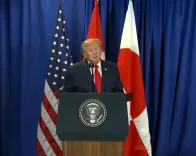
US President Donald Trump said he would urge PM Benjamin Netanyahu not to retaliate, to protect ongoing ceasefire talks.
Iraqi militia Kata'ib Hezbollah threatened US military bases if Washington intervened against Iran.
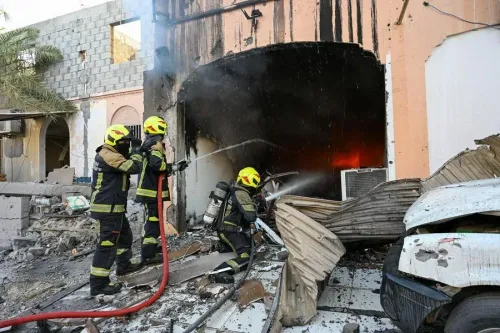
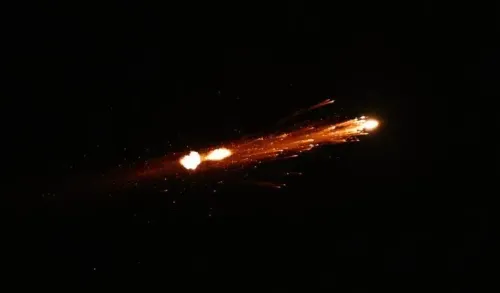
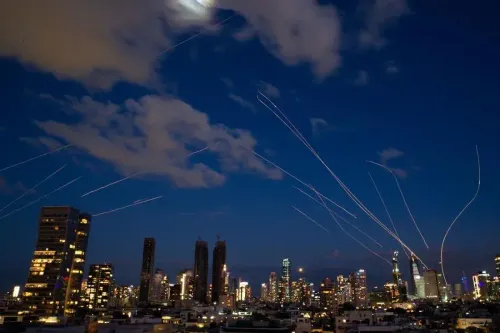
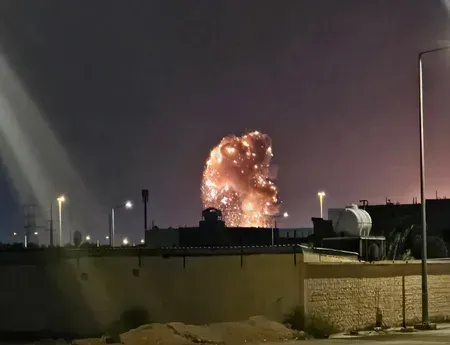
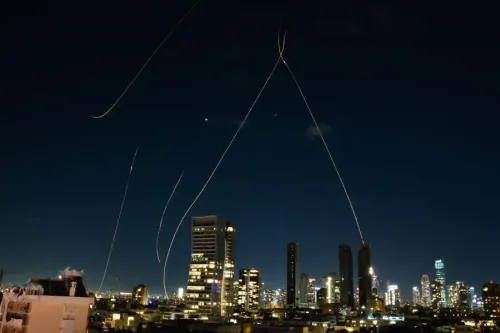
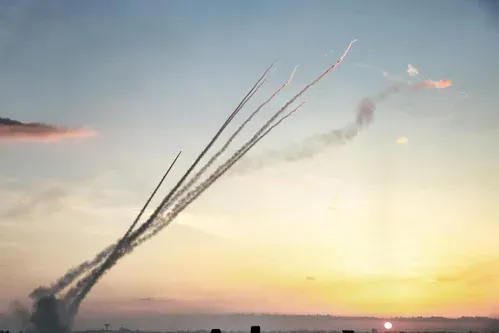
Iran launched several waves of ballistic missiles at Israel on Sunday, 8 June, marking the first such strikes since a ceasefire was reached in April — and immediately warning Jerusalem against any retaliation. The attacks triggered air-raid sirens across northern Israel, though there were no immediate reports of casualties or structural damage.
What Iran Targeted and Why
Iran's Islamic Revolution Guard Corps (IRGC) confirmed in an official statement that it had targeted Israel's Ramat David Airbase with ballistic missiles, citing Israel's 'widespread crimes' in Lebanon as justification. The strikes followed Israeli airstrikes on Beirut's southern suburbs earlier the same day, which Lebanon's Public Health Emergency Operations Centre said killed at least two people and injured 20 others.
Ali Abdollahi, Chief Commander of Iran's Khatam al-Anbiya Central Headquarters, warned on Sunday night that if Israel expanded its attacks on southern Lebanon or the Dahieh district south of Beirut — or retaliated against Iran — it would face 'crushing and regret-inducing blows,' according to Iran's semi-official Tasnim News Agency.
Israel's Military Response and Civil Defence Measures
Israel Defense Forces (IDF) Chief of Staff Eyal Zamir said the military 'will strike the enemy with determination as soon as the order is given.' IDF spokesperson Effie Defrin called Iran's missile launch 'a grave mistake,' adding that the military remained prepared for further volleys.
Israel's Home Front Command swiftly tightened civil defence restrictions nationwide, banning open-air gatherings of more than 200 people and capping indoor gatherings at 500 in venues with protected spaces. Schools and beaches were closed with immediate effect. Israel's Coordinator of Government Activities in the Territories also announced the closure of several crossings into Gaza until further notice.
Regional Fallout: Airspace Closures and Proxy Threats
The escalation triggered a cascade of precautionary moves across the region. Iraq announced a 72-hour closure of its airspace to all flights. Syria shut its southern air routes for 12 hours and suspended operations at Damascus International Airport. Iran itself closed its western airspace until further notice and suspended flights at Imam Khomeini International Airport, according to reports.
Jordan's Minister of Government Communication Mohammad Al Momani said on social media platform X that Jordan's airspace was breached by a number of missiles during the night. Iraqi militia Kata'ib Hezbollah, an Iranian ally, threatened to attack US military bases and interests if Washington struck Iran. Yemen's Houthi group voiced support for the Iranian strikes.
Diplomatic Scramble and US Position
Iran's Foreign Minister Seyed Abbas Araghchi spoke separately with his counterparts in Britain, France, and Türkiye, as well as with Qatar's leadership and Pakistani mediators on Sunday evening, discussing what Tehran described as Israel's 'repeated violations of the ceasefire in Lebanon.'
US President Donald Trump said on Sunday that he intended to call Israeli Prime Minister Benjamin Netanyahu to urge restraint, reportedly concerned that an Israeli counterstrike could derail ongoing US-Iran ceasefire negotiations, according to Israel's Channel 12 News. This comes amid a broader backdrop: the United States and Israel launched a large-scale military campaign against Iran on 28 February, drawing the Middle East into renewed conflict. A ceasefire was reached in early April, but the situation has remained volatile, with Iran insisting the truce must also cover Lebanon — a condition Israel has effectively rejected by escalating its campaign against Hezbollah.
With multiple regional airspaces shut, proxy groups on alert, and Israeli military commanders publicly signalling imminent retaliation, the April ceasefire now appears under severe strain — and the next hours are likely to be decisive.
Point of View
Which Tehran insisted must be part of any truce, has given Iran both a pretext and domestic political cover to strike. The more consequential question is whether Trump's reported call to Netanyahu will actually hold Israeli fire, or whether it is diplomatic noise ahead of an inevitable counterstrike. If Israel responds — as its military leadership has all but promised — the April ceasefire framework collapses entirely, and the region re-enters the conflict cycle that began on 28 February with no credible off-ramp in sight.
NationPress
22 Sept 2026
Frequently Asked Questions
Why did Iran launch missiles at Israel on 8 June?
Iran said the strikes were a response to Israel's 'widespread crimes' in Lebanon and repeated violations of the April ceasefire, particularly Israeli airstrikes on Beirut's southern suburbs that same day. The IRGC framed the attack as an exercise of legitimate self-defence.
What did Iran target in Israel?
Iran's IRGC confirmed it targeted Ramat David Airbase in northern Israel with ballistic missiles. Air-raid sirens sounded across northern Israel, though no immediate casualties or structural damage were reported.
How has Israel responded to the Iranian missile attack?
IDF Chief of Staff Eyal Zamir said the military 'will strike the enemy with determination as soon as the order is given.' IDF spokesperson Effie Defrin called the attack 'a grave mistake' and said the military was prepared for further launches. Civil defence restrictions were tightened nationwide.
What is the US position on the Iran-Israel escalation?
US President Donald Trump said he would call Prime Minister Benjamin Netanyahu to urge him not to retaliate, reportedly to prevent the collapse of ongoing US-Iran ceasefire negotiations, according to Israel's Channel 12 News.
Which countries closed their airspace after the Iranian missile strikes?
Iraq closed its airspace for 72 hours, Syria shut its southern air routes for 12 hours and suspended Damascus International Airport, and Iran closed its western airspace until further notice and suspended flights at Imam Khomeini International Airport.