Iran rejects France's cyberattack accusation over supermarket refrigeration systems
Synopsis
France publicly blamed Iran's IRGC for a cyberattack on supermarket refrigeration systems — and Tehran fired back hard, calling the accusation 'baseless and malicious.' With Italy simultaneously announcing emergency cybersecurity measures after similar European attacks, the incident signals a sharp escalation in state-linked cyber operations against civilian infrastructure across the continent.
Key Takeaways
The Iranian Foreign Ministry on 11 November 2026 rejected France's accusation of Iranian involvement in an October cyberattack on hundreds of French supermarkets.
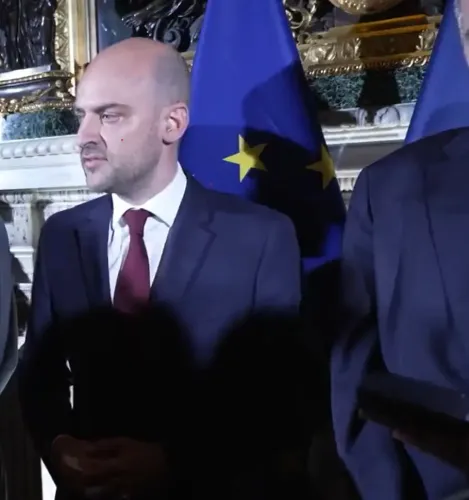
French Foreign Minister Jean-Noel Barrot publicly attributed the attack to Iran's Islamic Revolutionary Guard Corps (IRGC) at a G7 foreign ministers' meeting in Paris .
France summoned the Iranian ambassador to Paris to lodge a 'strong protest' over the incident.
Iran called the accusation an 'irresponsible and silly action' aimed at damaging its image and disrupting its foreign relations.
Italy announced emergency cybersecurity coordination measures on the same day, following a pattern of recent attacks on European countries with a common intent to cause instability.
The Iranian Foreign Ministry on Tuesday, 11 November 2026, categorically rejected France's accusation of Iranian involvement in a cyberattack that targeted refrigeration systems at hundreds of French supermarkets in October, calling the charge 'baseless and malicious.' The rejection came days after French Foreign Minister Jean-Noel Barrot publicly blamed Iran's Islamic Revolutionary Guard Corps (IRGC) for the attack and summoned the Iranian ambassador to lodge a formal protest.
Iran's Official Response
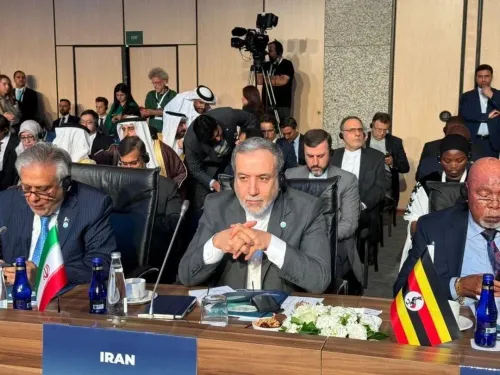
In a formal statement, the Iranian Foreign Ministry described France's accusation as a continuation of a 'threadbare' policy of targeting Iran with unfounded allegations. The ministry said the charge was an 'irresponsible and silly action' aimed at tarnishing Iran's image and disrupting its diplomatic relations with other nations.
The ministry further argued that the accusation was designed to divert public attention from France's own 'destructive policies' toward Iran and the broader West Asia region. It stressed that Tehran would not hesitate to take 'necessary and appropriate' measures to defend its national interests and security against what it termed 'illegal foreign activities.'
France's Accusation and the G7 Context
Foreign Minister Barrot made the allegation on Monday while speaking to reporters in Paris following a meeting of Group of Seven (G7) foreign ministers. He attributed the attack specifically to the IRGC, making it one of the most direct public attributions by a European government against Iranian state actors in recent memory. France subsequently summoned the Iranian ambassador to Paris to register a 'strong protest.'
The cyberattack reportedly disrupted refrigeration systems across hundreds of French supermarkets, raising questions about the vulnerability of retail and food-supply critical infrastructure to state-sponsored cyber operations.
Italy Moves to Bolster Cybersecurity
In a parallel development, the Italian Interior Ministry on Tuesday announced that Italy would strengthen its cybersecurity posture in response to a wave of recent attacks affecting multiple European countries. The measures were agreed at a meeting of the National Committee for Public Order and Security, chaired by Interior Minister Matteo Piantedosi.
Investigators examining the incidents identified a common intent: to cause instability, spread unfounded alarms, and damage the reputation of targeted institutions. The agreed steps include closer coordination among police, intelligence services, and cybersecurity bodies, greater information sharing with public and private operators, and direct investment to strengthen system protection and incident-response capabilities.
Broader Implications for Europe
The episode underscores a growing pattern of cyber incidents targeting European civilian infrastructure — supermarkets, public administrations, and critical utilities — that security analysts say blurs the line between espionage and economic disruption. This comes amid already elevated tensions between Iran and Western governments over regional conflicts in West Asia and ongoing disagreements over Tehran's nuclear programme. Notably, public attribution of a cyberattack to a specific state actor remains a politically significant move, with diplomatic and legal consequences that go well beyond the technical details of the incident.
How Iran and France manage this diplomatic standoff — and whether other G7 partners formally endorse Paris's attribution — will shape European cyber-diplomacy in the months ahead.
Point of View
Not just a technical finding — attributions of this kind are rarely made without political intent. Tehran's swift, emphatic denial follows a well-worn script, but that does not make the underlying question of evidence less important; European governments have a credibility interest in showing their attribution methodology. Italy's parallel announcement of cybersecurity upgrades hints at a coordinated European posture rather than isolated national responses. The real test will be whether other G7 partners formally co-sign France's attribution — silent acquiescence would be diplomatically convenient but would weaken the deterrence value of public naming.
NationPress
11 Nov 2026
Frequently Asked Questions
What cyberattack is France accusing Iran of carrying out?
France has accused Iran's Islamic Revolutionary Guard Corps (IRGC) of conducting a cyberattack in October 2026 that targeted refrigeration systems at hundreds of French supermarkets. French Foreign Minister Jean-Noel Barrot made the attribution publicly following a G7 foreign ministers' meeting in Paris.
How has Iran responded to the accusation?
Iran's Foreign Ministry rejected the accusation as 'baseless and malicious,' describing it as an 'irresponsible and silly action' designed to tarnish Iran's image and disrupt its relations with other countries. Tehran warned it would take 'necessary and appropriate' measures to protect its national interests.
What action did France take against Iran over the cyberattack?
France summoned the Iranian ambassador to Paris to lodge a 'strong protest' over the alleged cyberattack. Foreign Minister Jean-Noel Barrot publicly named the IRGC as responsible while speaking to reporters after the G7 foreign ministers' meeting.
Why is Italy strengthening its cybersecurity?
Italy announced enhanced cybersecurity coordination on 11 November 2026 following a series of cyberattacks affecting several European countries. Investigators found a common intent behind the incidents: to cause instability, spread unfounded alarms, and damage institutional reputations.
What does this episode mean for Iran-Europe relations?
The public attribution of a cyberattack to an Iranian state body represents a significant diplomatic escalation and adds fresh friction to already strained Iran-Europe ties amid regional tensions in West Asia. How other G7 partners respond to France's attribution will be a key signal for European cyber-diplomacy going forward.