Iran reviews US response to 14-point war-ending plan, rules out nuclear talks
Synopsis
Iran has confirmed the US responded to its 14-point war-ending plan — but Tehran is drawing a firm line: no nuclear talks. With the Islamabad ceasefire talks already having collapsed and Iran's Supreme Leader killed in a February US-Israel strike, the diplomatic stakes could hardly be higher.
Key Takeaways
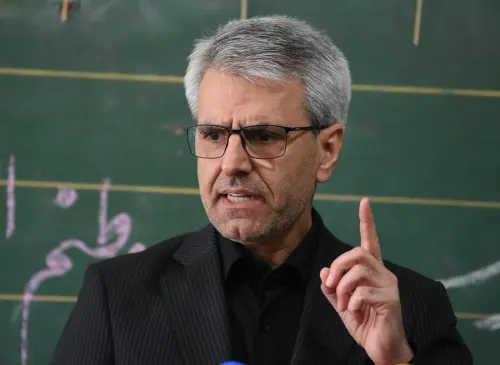
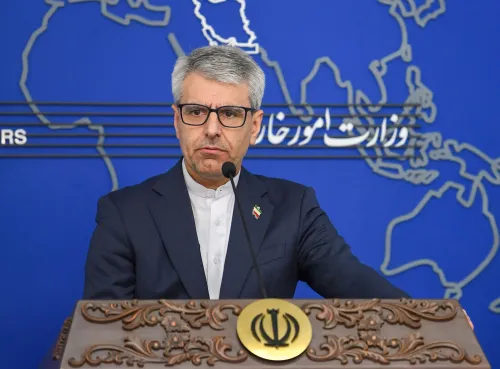
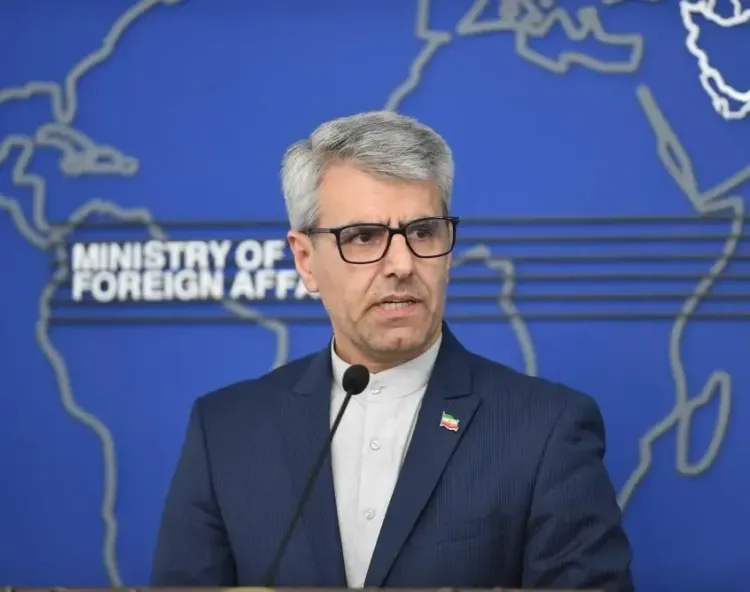
Iranian Foreign Ministry spokesman Esmaeil Baghaei confirmed on 4 May that the US has responded to Iran's 14-point war-ending plan ; Tehran is reviewing the reply.
Iran insists the plan covers only the war , with no nuclear provisions — directly contradicting Washington's demand for a comprehensive deal.
Israel and the US launched joint strikes on Tehran on 28 February , killing then- Supreme Leader Ali Khamenei and senior commanders.
A ceasefire took effect on 8 April , but subsequent Islamabad talks between Iranian and US delegations failed to produce a deal.
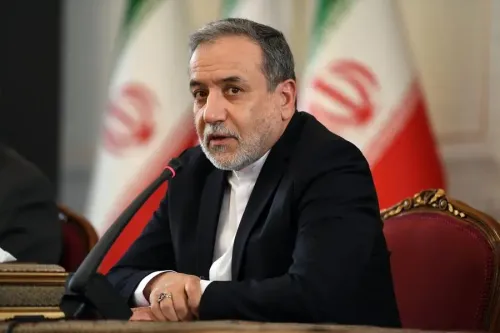
Foreign Minister Araghchi briefed his Omani and German counterparts on Iran's diplomatic initiatives on the same day.
Iranian Foreign Ministry spokesman Esmaeil Baghaei confirmed on 4 May that the United States has formally responded to Iran's 14-point proposed plan to end the ongoing regional war, adding that Tehran is currently reviewing Washington's reply. The announcement marks a significant, if cautious, step in diplomatic efforts that have so far failed to produce a binding agreement.
What Iran's Plan Covers
Baghaei, speaking in an interview with state-run IRIB TV, stressed that Iran's 14-point plan is exclusively focused on ending the war and contains no provisions related to the country's nuclear programme. "At present, we are focused on the parameters related to ending the war in the region, including Lebanon," he said, adding: "We have no nuclear negotiation at this stage."
The explicit exclusion of nuclear issues is notable, as Washington has consistently pushed for Iran's nuclear activities to be part of any broader diplomatic framework. Iran has repeatedly denied seeking a nuclear weapon, maintaining its programme is for peaceful purposes — though it remains the only non-nuclear-armed state to have enriched uranium at near weapons-grade levels.
Background: How the Conflict Escalated
The current conflict traces back to 28 February, when Israel and the United States launched joint strikes on Tehran and other Iranian cities, killing Iran's then-Supreme Leader Ali Khamenei, senior military commanders, and civilians. Iran responded with successive waves of missile and drone attacks targeting Israeli territory and US interests across the region.
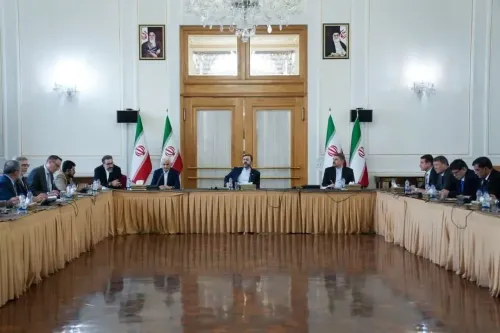
A ceasefire took effect on 8 April, but subsequent talks between Iranian and US delegations held in Islamabad failed to produce a deal, leaving the diplomatic process at an impasse.
Iran's Parallel Diplomatic Outreach
Also on Sunday, Iranian Foreign Minister Seyed Abbas Araghchi held separate phone calls with Omani Foreign Minister Sayyid Badr bin Hamad bin Hamood Albusaidi and German Foreign Minister Johann Wadephul, briefing both on Iran's latest diplomatic initiatives to end the war, according to statements released by the Iranian Foreign Ministry and reported by Xinhua news agency.
Oman has historically served as a backchannel between Tehran and Washington, making Araghchi's outreach to Muscat particularly significant. Germany's involvement signals that European powers are also seeking to remain engaged in any potential resolution.
What Comes Next
With Washington's response now under review in Tehran, the next round of talks — if any — will likely test whether the two sides can agree on a framework that separates the war's end from the nuclear dispute. Analysts note that Iran's insistence on keeping the two tracks distinct directly contradicts Washington's stated preference for a comprehensive deal. How both sides navigate that gap will determine whether the ceasefire holds or the region faces renewed escalation.
Point of View
Araghchi's outreach to Oman — a proven backchannel — hints that Tehran may be probing whether a quieter route can unlock what formal talks have not.
NationPress
7 Oct 2026
Frequently Asked Questions
What is Iran's 14-point plan to end the war?
Iran's 14-point plan is a proposed diplomatic framework to end the ongoing regional conflict, as described by Foreign Ministry spokesman Esmaeil Baghaei. Tehran has stated it is exclusively focused on ending the war and contains no provisions related to Iran's nuclear programme.
Has the US responded to Iran's war-ending proposal?
Yes. Iranian Foreign Ministry spokesman Esmaeil Baghaei confirmed on 4 May that the United States has formally responded to the 14-point plan. Tehran said it is currently reviewing Washington's reply.
Why is Iran excluding nuclear talks from the current negotiations?
Iran has stated that at this stage, diplomatic efforts are focused solely on ending the regional war, including in Lebanon. Tehran has repeatedly denied seeking a nuclear weapon and says its programme is for peaceful purposes, but it has not linked that issue to the current war-ending framework.
What happened at the Islamabad talks between Iran and the US?
Following a ceasefire that took effect on 8 April, Iranian and US delegations met in Islamabad for talks, but the negotiations failed to produce a deal, leaving diplomatic efforts at an impasse.
How did the current conflict between Iran, the US, and Israel begin?
On 28 February, Israel and the United States launched joint strikes on Tehran and other Iranian cities, killing Iran's then-Supreme Leader Ali Khamenei, senior commanders, and civilians. Iran responded with waves of missile and drone attacks targeting Israel and US interests in the region.