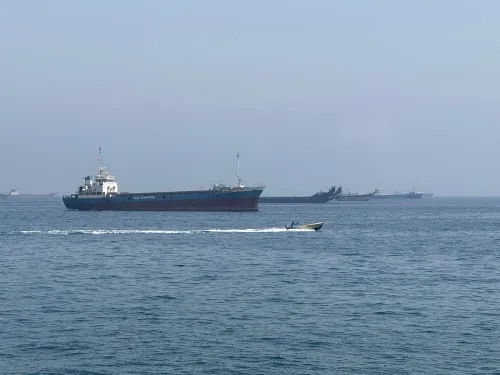
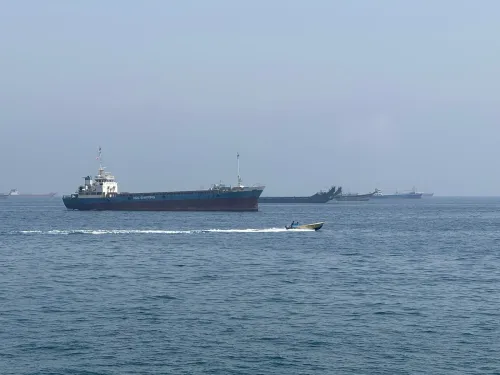
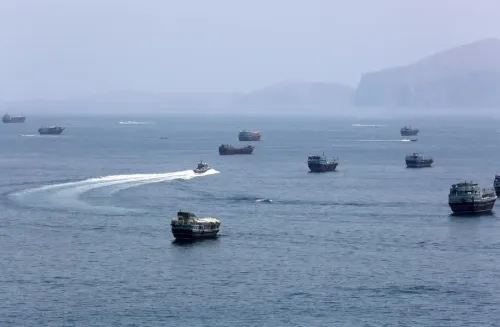
Oil tanker explodes after hitting mine south of Hormuz Strait, IRGC warns ships
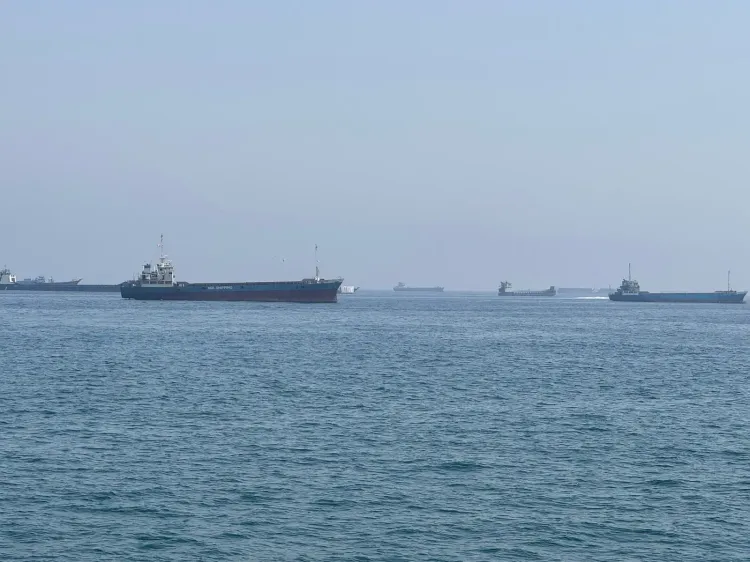
Synopsis
An oil tanker exploded after hitting a naval mine south of the Strait of Hormuz — the latest in a string of such blasts claimed by Iran's IRGC, which has switched off vessels' GPS before striking. Even as mines detonate, Tehran's foreign minister insists a seven-day plan to reopen the world's most critical oil chokepoint is still on the table, with Washington and Tehran exchanging terms.
Key Takeaways
Iran's IRGC Navy confirmed an oil tanker exploded after striking a naval mine south of the Strait of Hormuz on 19 October 2026 .
The tanker had reportedly switched off its GPS and navigation systems and was using an 'unauthorised' exit route.
The IRGC says several tankers have exploded in Hormuz waters over the past week under similar circumstances.
Iran's Foreign Minister Araghchi confirmed Tehran's seven-day plan to reopen the strait remains active and conditions have been submitted to the United States .
Washington has responded to the plan; Tehran is currently reviewing the US position.
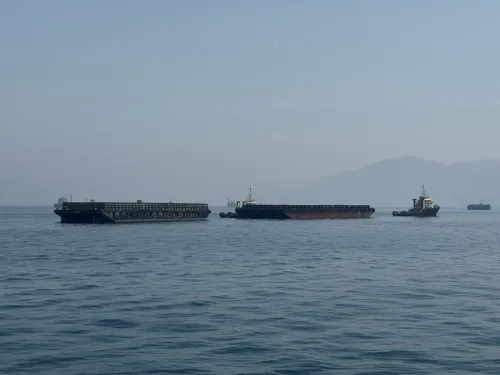
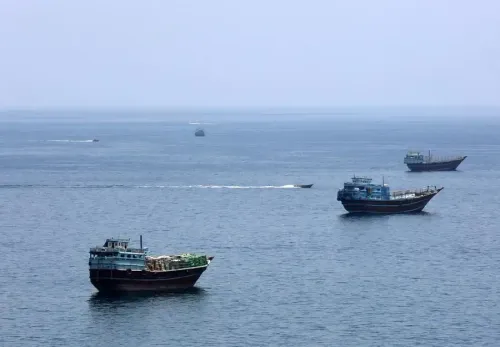
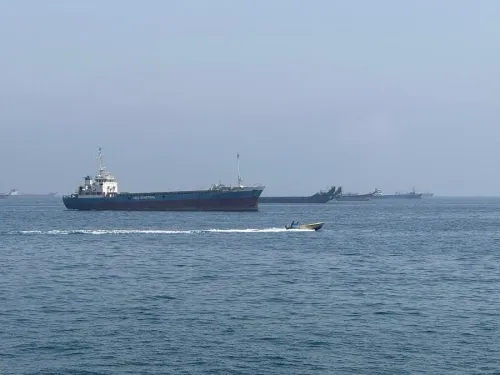
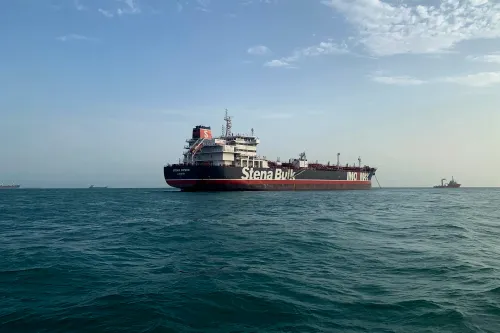
Iran's Islamic Revolutionary Guard Corps (IRGC) Navy announced on Monday, 19 October 2026 that an oil tanker described as 'violating' Iranian maritime regulations suffered a blast after striking a naval mine south of the Strait of Hormuz. The explosion triggered a fire in the vessel's engine room, marking the latest in a series of such incidents in the strategically critical waterway.
What the IRGC Said
In a statement published on the IRGC's official outlet Sepah News, the navy confirmed the tanker had switched off its GPS and navigation systems before attempting to exit the strait via what it described as an 'unauthorised' southern route. The IRGC Navy issued a blunt warning: vessels transiting the Strait of Hormuz and its surrounding waters that disable their navigation and identification systems 'will be dealt with severely and decisively.'
Pattern of Explosions in Hormuz Waters
The incident is not isolated. Over the preceding week, the IRGC Navy reportedly announced that several oil tankers attempting to cross the Strait of Hormuz had exploded after striking naval mines — suggesting a deliberate and escalating enforcement posture by Tehran. The IRGC has also claimed 'full control and dominance' over the strait's eastern waters, the Gulf of Oman, and the Arabian Sea, stating it is 'aware of the risks involved in vessels' transit in forbidden regions.'
Iran's Seven-Day Diplomatic Plan
Against this backdrop of maritime tension, Iran's Foreign Minister Seyed Abbas Araghchi said on Sunday, 18 October that Tehran's proposed seven-day plan to reopen the Strait of Hormuz remains 'still on the table.' Araghchi made the remarks on the sidelines of the 52nd Session of the Council of Foreign Ministers of the Organisation of Islamic Cooperation (OIC) in the Iraqi capital, Baghdad. He stated that Iran's conditions for ceasing hostilities and reopening the strait were 'completely clear' and had been formally submitted to the United States under the plan. Washington has since conveyed its views, which Tehran is currently reviewing, according to Araghchi.
Why the Strait of Hormuz Matters
The Strait of Hormuz is one of the world's most critical energy chokepoints, with roughly 20% of global oil trade passing through it. Any sustained disruption — whether through mine warfare, seizures, or blocked transits — has immediate implications for global crude prices, energy security, and shipping insurance rates. This comes amid broader US-Iran tensions, with the strait increasingly becoming a theatre of coercive signalling.
What Happens Next
The fate of the stricken tanker — including its flag state, cargo, and crew — had not been officially confirmed at the time of reporting. Diplomatic momentum around Tehran's seven-day plan will be closely watched, with the US response to Iran's conditions likely to determine whether the waterway faces further closures or a negotiated de-escalation in the days ahead.
Point of View
Maintaining deniability while maximising coercive leverage in parallel diplomacy. The simultaneous tabling of a seven-day reopening plan is a classic Iranian negotiating posture: escalate on the ground while offering an off-ramp at the table. What mainstream coverage misses is that the gap between 'conditions submitted' and 'conditions accepted' remains vast, and every mine-strike hardens the US position. The real risk is not a sudden closure but a slow-motion chokehold that cumulatively spikes insurance costs and crude prices before any formal deal is struck.
NationPress
19 Oct 2026
Frequently Asked Questions
What happened to the oil tanker near the Strait of Hormuz?
An oil tanker described by Iran's IRGC as 'violating' maritime regulations exploded after striking a naval mine south of the Strait of Hormuz on 19 October 2026. The blast caused a fire in the vessel's engine room, according to the IRGC's official outlet Sepah News.
Why did the IRGC say the tanker was 'violating' regulations?
The IRGC alleged the vessel had turned off its GPS and navigation systems and was attempting to exit the strait via an 'unauthorised' southern route in disregard of Iranian maritime regulations. Iran has warned that any vessel disabling its navigation systems in Hormuz waters will be dealt with 'severely and decisively.'
How many tankers have exploded near the Strait of Hormuz recently?
According to the IRGC Navy, several oil tankers attempting to cross the Strait of Hormuz exploded after striking naval mines over the week preceding 19 October 2026. The string of incidents signals an escalating enforcement posture by Tehran in the waterway.
What is Iran's seven-day plan to reopen the Strait of Hormuz?
Iran's Foreign Minister Seyed Abbas Araghchi confirmed on 18 October that Tehran had submitted a seven-day plan to reopen the strait to the United States, with conditions described as 'completely clear.' Washington has conveyed its views on the plan, which Tehran is currently reviewing.
Why does the Strait of Hormuz matter globally?
The Strait of Hormuz is one of the world's most vital energy chokepoints, with approximately 20% of global oil trade passing through it. Any sustained disruption directly affects crude oil prices, energy security, and shipping costs worldwide.