Rubio: Iran will never have a nuclear weapon under Trump
Synopsis
US Secretary of State Marco Rubio drew the sharpest line yet on Iran's nuclear ambitions in Athens, flatly ruling out any scenario in which Tehran acquires a nuclear weapon under Trump — while claiming the administration has already dismantled Iran's missile, drone, naval, and air force capabilities. The claims, unverified at the press conference, signal Washington's intention to keep maximum military and economic pressure on Tehran ahead of any potential nuclear negotiations.
Key Takeaways
Secretary of State Marco Rubio declared on 8 October 2026 that Iran will never acquire a nuclear weapon as long as President Trump is in office.
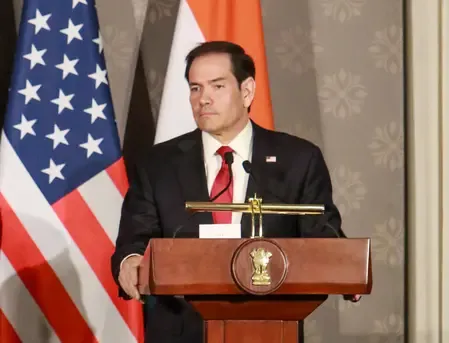
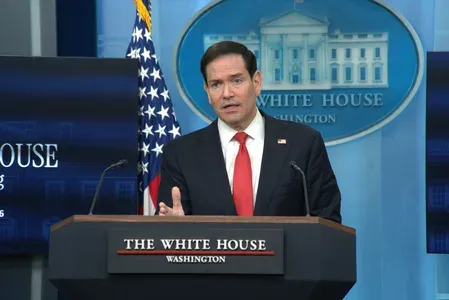
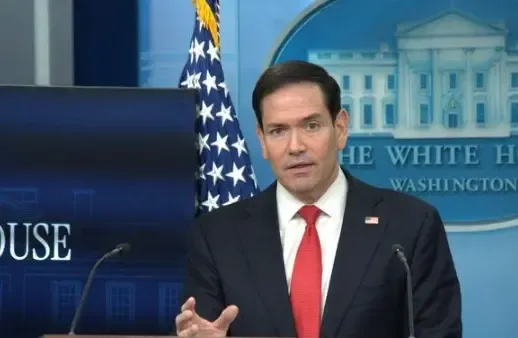
Rubio spoke at a joint press conference with Greek Foreign Minister Giorgos Gerapetritis in Athens .
He claimed the Trump administration had destroyed Iran's drone programme, missile capability, navy, and air force — assertions not independently verified at the conference.
Rubio described Iran's economy as being in 'total and complete freefall' under international sanctions.
He named Hezbollah, Hamas, the Houthis, and Iraq-based militias as recipients of Iranian financial support diverted from domestic needs.
Rubio said oil flows through the Strait of Hormuz had recovered to near pre-conflict levels.
US Secretary of State Marco Rubio declared on 8 October 2026 that Iran would never be permitted to acquire nuclear weapons as long as President Donald Trump remains in office, accusing Tehran of having built a vast missile and drone arsenal specifically to shield its nuclear programme from potential military intervention.
Rubio's Core Position
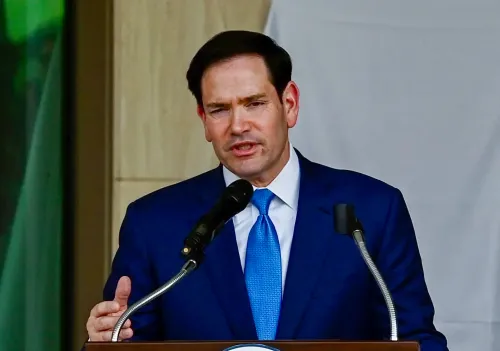
Speaking at a joint press conference alongside Greek Foreign Minister Giorgos Gerapetritis in Athens, Rubio left no ambiguity about the administration's red line. 'Iran cannot have a nuclear weapon, simple, period and end of story,' he said.
He declined to specify what levels of uranium enrichment Washington might tolerate in any future agreement, but stressed that any deal must structurally guarantee Iran could never develop a nuclear weapon. 'Anything they agree to that would be acceptable to the United States has to be something that ensures that Iran will never have a nuclear weapon,' he added.
Iran's Military Strategy, as Rubio Describes It
Rubio argued that Tehran's strategic calculus had been to accumulate sufficient conventional military power — missiles and drones — to threaten devastating retaliation against any country that attempted to strike its nuclear facilities. He claimed the Trump administration had already taken decisive steps to dismantle that deterrent.
'He destroyed their drone program, their drone manufacturing capability,' Rubio said, referring to Trump. 'He destroyed their missile capability. He severely eroded both of those capabilities in terms of current launchers. He destroyed their navy. He destroyed their air force.'
It is important to note that these claims about the scale of damage to Iran's military infrastructure were not independently verified or substantiated at the press conference.
Iran's Economic Deterioration
Rubio also painted a stark picture of Iran's economic situation, attributing its worsening financial difficulties to decisions by Tehran's own leadership. 'Their economy is in total and complete freefall,' he said, adding that international sanctions were placing escalating pressure on the country and predicted further decline.
He accused Iran's leadership of diverting national resources to armed groups abroad — specifically naming Hezbollah, Hamas, the Houthis, and Iraq-based militias as recipients of Iranian financial backing — rather than investing in domestic welfare and infrastructure.
Strait of Hormuz and Regional Stability
Rubio also addressed concerns about the Strait of Hormuz, a critical global oil transit corridor, claiming it remained open and that shipments had recovered to near pre-conflict levels. 'There's almost as much oil flowing out now as there was before this conflict began,' he said.
His remarks in Athens came during wider discussions with Greece covering maritime security, energy supply chains, and the broader consequences of Middle East instability — issues of direct relevance to Europe's energy security.
Context: JD Vance Remarks and Diplomatic Backdrop
Rubio's comments were partly a response to questions triggered by Vice President JD Vance's recent suggestion that Iran needed to take meaningful action on its nuclear enrichment capacity. The Secretary of State's unequivocal language appears designed to close off any ambiguity about the administration's negotiating floor. This comes amid ongoing diplomatic uncertainty over whether the US and Iran are moving toward or away from a renewed nuclear framework agreement.
Point of View
Even a limited one. The unverified claims about the total destruction of Iran's military apparatus deserve scrutiny: if accurate, they would represent one of the most consequential shifts in Middle East military balance in decades, yet they arrived without attribution or evidence. The broader pattern here is a Trump-era strategy of maximum-pressure rhetoric preceding potential negotiation — similar to the playbook used before the 2018 JCPOA withdrawal. Whether Tehran reads this as a sincere red line or an opening gambit will shape the next phase of nuclear diplomacy.
NationPress
8 Oct 2026
Frequently Asked Questions
What did Marco Rubio say about Iran's nuclear programme?
Rubio stated unequivocally that Iran will never be allowed to acquire a nuclear weapon under President Trump, calling it 'simple, period and end of story.' He said any future agreement must structurally guarantee Iran cannot develop nuclear weapons, without specifying what level of uranium enrichment Washington might accept.
Where did Rubio make these remarks?
Rubio made the statements at a joint press conference with Greek Foreign Minister Giorgos Gerapetritis in Athens on 8 October 2026. The talks also covered maritime security, energy supplies, and Middle East instability.
What claims did Rubio make about Iran's military capabilities?
Rubio claimed the Trump administration had destroyed Iran's drone manufacturing programme, missile capability, navy, and air force. He said this had removed Iran's ability to deter military action against its nuclear facilities. These claims were not independently verified at the press conference.
How did Rubio describe Iran's economic situation?
Rubio described Iran's economy as being in 'total and complete freefall,' attributing the crisis to international sanctions and to Tehran's decision to fund armed groups abroad — including Hezbollah, Hamas, the Houthis, and Iraq-based militias — rather than domestic infrastructure.
What is the significance of the Strait of Hormuz in this context?
Rubio said the Strait of Hormuz remains open and that oil shipments through the strategically vital waterway have recovered to nearly pre-conflict levels. The strait is a critical global energy corridor, and any disruption would have significant consequences for oil markets and regional stability.