Human Rights Watch Critiques Iran's Violent Crackdown on Civilians
Synopsis
Human Rights Watch has condemned Iran's authorities for a violent crackdown on civilians, involving mass arrests and torture, following the tragic events of January 8 and 9. The organization demands immediate international intervention.
Key Takeaways
Iranian authorities are accused of a brutal crackdown on civilians.
Mass arbitrary detentions and torture are prevalent.
Protests were triggered by economic issues, namely inflation and currency devaluation.
HRW calls for immediate international intervention and access to detainees.
Fears of escalating executions are rising amid the ongoing violence.
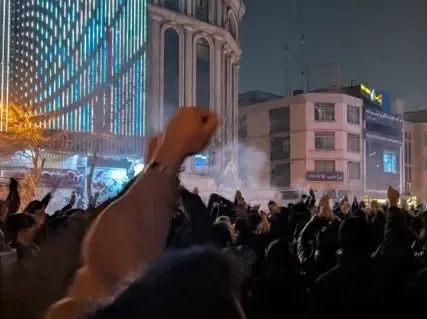
New York, Feb 24 (NationPress) The US-based advocacy organization, Human Rights Watch (HRW), has condemned the Iranian government for executing a harsh campaign designed to intimidate civilians through widespread arbitrary arrests, torture, and enforced disappearances. This campaign follows the tragic deaths of protesters and bystanders by security forces on January 8 and 9.
The unrest began on December 28, 2025, in two Tehran markets, driven by public discontent over escalating inflation and the plummeting value of the rial. This local outrage quickly escalated into a nationwide movement.
HRW has provided evidence that senior officials and various Iranian security and intelligence agencies—including the police (known as “FARAJA”), the Islamic Revolutionary Guards Corps (IRGC), its intelligence division, the Ministry of Intelligence, along with judicial and prosecutorial authorities—have orchestrated a coordinated, violent crackdown aimed at suppressing dissent and hiding their violations.
In addition to mass detentions, HRW reported that detainees are being held incommunicado, including in unrecognized facilities. The organization noted that officials have disseminated hundreds of coerced “confessions,” some involving minors, and enacted widespread enforced disappearances while imposing severe restrictions akin to martial law across various Iranian cities.
“As the nation grapples with shock, horror, and mourning, families continue to search for missing loved ones following the January 8 and 9 massacres. Authorities persist in terrorizing the populace, with ongoing arrests leading to torture, forced ‘confessions,’ and secretive, arbitrary executions. In light of the enormous risks faced by those detained or forcibly disappeared, it is imperative that international observers are granted immediate, unhindered access to all detention facilities and prisons,” stated Bahar Saba, a senior HRW researcher.
HRW has also raised alarms about the increasing fears surrounding potential death sentences and arbitrary executions, which have surged in recent times. Iranian officials have demonized protesters, labeling them as “criminals” and “mohareb,” a term equating to “waging war against God,” which constitutes a capital offense under Iranian law.
The organization urged the United Nations to pressure Iranian authorities to promptly release all those unlawfully detained, clarify the whereabouts of the forcibly disappeared, halt any impending executions, and allow independent international bodies, including the UN Fact-Finding Mission on Iran, unrestricted access to the nation, particularly to prisons, detention centers, hospitals, morgues, and cemeteries.
“The ongoing culture of impunity has allowed Iranian authorities to repeatedly violate international laws. Judicial authorities in other nations should initiate investigations into these international crimes based on the principle of universal jurisdiction and their national laws, aiming to prosecute those suspected of wrongdoing,” Saba emphasized.
Point of View
It is vital to acknowledge the severity of the situation in Iran. The systematic violations of human rights and the use of terror tactics against civilians highlight a concerning trend that requires immediate global attention and action. Upholding human rights must remain a priority in international discourse.
NationPress
20 Sept 2026
Frequently Asked Questions
What prompted the protests in Iran?
The protests in Iran began due to rising inflation and the significant devaluation of the rial, starting on December 28, 2025.
What actions have Iranian authorities taken against protesters?
Iranian authorities have executed mass arrests, enforced disappearances, and torture against protesters and their families.
What does Human Rights Watch recommend?
HRW recommends the immediate release of arbitrarily detained individuals and unrestricted access for international observers to detention facilities.
What are the risks faced by detainees in Iran?
Detainees face severe risks, including torture, coerced confessions, and the threat of arbitrary executions.
What is the international community's response?
HRW urges the United Nations to pressure Iran to uphold human rights and allow independent investigations into human rights abuses.