Iran's doubts over Pakistan's mediation role go public amid Mecca Pact fallout
Synopsis
Iran's parliament and state-aligned media have gone public with doubts about Pakistan's mediator credentials in the Iran-US negotiations — citing Islamabad's troops in Saudi Arabia, a command role in the Mecca Joint Defence Alliance, and a failed June truce. With the Strait of Hormuz in the background, the diplomatic architecture Pakistan spent a year building may already be crumbling.
Key Takeaways
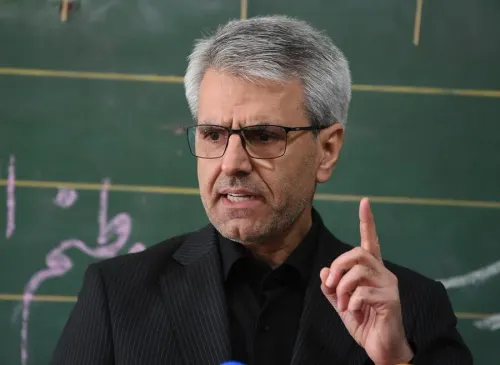
Iranian lawmaker Ahmad Naderi publicly argued that Pakistan's alignment with Saudi Arabia against Yemen disqualifies Islamabad as a neutral mediator.
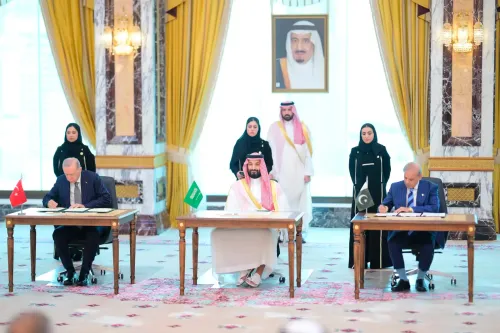
Saudi Arabia , Pakistan , and Turkey signed the Mecca Joint Defence Agreement on 7 August ; the pact entered its operational phase this month with a retired Pakistani Lieutenant General named as first Secretary-General.
Pakistan had deployed approximately 8,000 soldiers , fighter aircraft, and air defence systems to Saudi Arabia in April .
A provisional truce Pakistan and Qatar brokered in June collapsed almost immediately; the conflict ran for a further 200 days .
Analysts including Farzana Shaikh of Chatham House suggest Tehran's confidence in Islamabad may never have been as solid as assumed.
The European Times report recommends demoting Pakistan to a messaging courier and restoring Oman to a primary mediatory role.
Iran's misgivings about Pakistan's role as a mediator in the Iran-US nuclear and regional negotiations have moved beyond private diplomatic channels and entered the public record, with language from Tehran that analysts describe as sharper than anything yet published in Western policy circles. The shift, detailed in a report by the European Times, signals a potential collapse of the diplomatic architecture that Islamabad spent the past year constructing — one that displaced Oman and Qatar as preferred intermediaries.
What Iranian Officials and Lawmakers Have Said
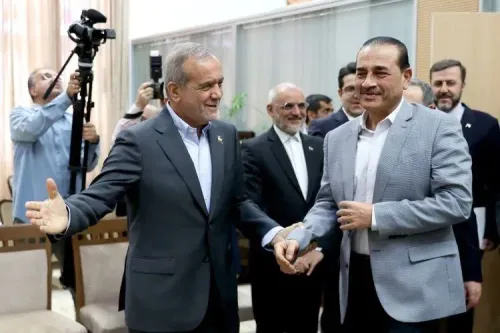
Iranian lawmaker Ahmad Naderi argued, according to the report, that Pakistan's alignment with Saudi Arabia in operations against the people of Yemen disqualifies Islamabad from being called a neutral mediator. Separately, Iranian Foreign Minister Abbas Araghchi, without explicitly naming the Mecca Joint Defence Agreement, reportedly called on neighbouring states to pursue 'self-reliance and genuine brotherhood' — a phrase that, in the Iranian diplomatic lexicon, is widely read as a withdrawal of confidence rather than a courtesy.
Conservative Iranian commentator Hassan Hanizadeh reportedly described an emergency meeting of the alliance's Strategic Political and Defence Committee in Riyadh as evidence of deliberate Shia-Sunni polarisation, engineered by Saudi Arabia with Pakistan's participation. Iranian lawmakers who had earlier dismissed the Mecca Pact as largely symbolic are said to have revised that assessment after Pakistani officials assumed command positions within the alliance.
The Mecca Joint Defence Agreement and Its Operational Phase
On 7 August, Saudi Arabia, Pakistan, and Turkey signed the Mecca Joint Defence Agreement, under which an attack on any one signatory would be treated as an attack on all three. A statement from Pakistan's Ministry of Foreign Affairs described the pact as reflecting a shared commitment 'to further strengthen their collective security and to promote peace, security, and stability in the region and beyond.'
The agreement entered its operational phase earlier this month, when the emergency Riyadh meeting agreed to deploy forces to Saudi Arabia and appointed a retired Pakistani Lieutenant General as the alliance's first Secretary-General. Pakistan had already deployed approximately 8,000 soldiers, fighter aircraft, and air defence systems to Saudi Arabia in April, according to the report.
The Mediation Track: Promises Made and a Truce That Failed
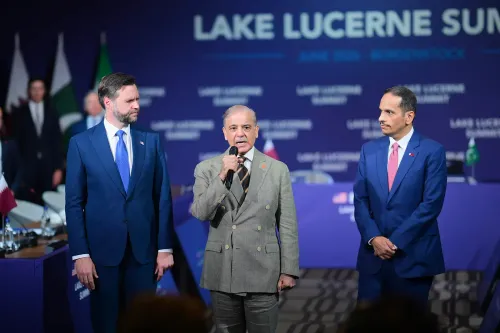
Also in April, Pakistan hosted direct talks between Iran and the United States, presenting itself as an indispensable channel to both parties. The arrangement appeared to sideline Oman and Qatar, the traditional interlocutors in Gulf diplomacy. However, a provisional truce that Pakistan reportedly brokered jointly with Qatar in June collapsed almost immediately, and the conflict continued for a further 200 days, according to the report.
Iranian analyst Seyed Mojtaba Jalalzadeh is cited in the European Times report as arguing that the repeated failures have already downgraded Pakistan from a conflict-resolution mediator to a mere 'facilitator with access to the parties,' warning that Islamabad's reputation would erode if it continued to promise more than it could deliver. Grace Wermenbol is noted as observing that recurring conflict has eroded the trust any durable ceasefire requires. Farzana Shaikh of Chatham House raised what the report calls 'the more uncomfortable possibility' — that Tehran's confidence in Islamabad was never as solid as outside observers assumed, meaning Pakistan may have traded on a diplomatic reputation it did not firmly hold.
Official Pushback and What the Diplomatic Signals Actually Mean
Defenders of Pakistan's mediation role point to remarks by Iranian Foreign Ministry spokesperson Esmaeil Baghaei, who stated that Pakistan remains the mediator, with Qatar available to assist if needed. The European Times report, however, cautions that governments rarely signal a loss of confidence through an official spokesperson while a negotiation is still active — and that parliamentary debate and media commentary are the spaces where Iran's positions are tested before hardening into formal policy.
What Analysts Say Should Happen Next
The European Times report argues that the pragmatic course would be to 'demote Pakistan rather than exclude it outright,' suggesting that Oman or another West Asian country with genuine standing in Tehran could assume the primary mediatory role. Pakistan, the argument goes, could continue passing messages — a function it is better placed to perform — but should be treated as a courier rather than a guarantor. The report describes this not as a punitive measure but as 'elementary risk management,' given that a mediator whose credibility is compromised by financial ties to one side and troops deployed against the other's closest regional partner represents a structural vulnerability at a moment when the Strait of Hormuz and global energy supply depend on the negotiations succeeding.
Point of View
And a mediator whose credibility collapses mid-negotiation is not just a diplomatic embarrassment but a potential energy-market shock. Iran's public signalling through parliament and media, rather than through a foreign ministry spokesperson, is the tell: this is Tehran testing a position before making it formal policy.
NationPress
19 Oct 2026
Frequently Asked Questions
Why is Iran questioning Pakistan's role as a mediator in the Iran-US talks?
Iran is questioning Pakistan's neutrality because Islamabad signed the Mecca Joint Defence Agreement with Saudi Arabia and Turkey in August, deployed roughly 8,000 troops and fighter aircraft to Saudi Arabia, and now holds a senior command position in an alliance whose primary adversary is the Houthis — Iran's closest regional partner. Iranian lawmakers and analysts argue this military alignment is incompatible with a credible mediator role.
What is the Mecca Joint Defence Agreement?
The Mecca Joint Defence Agreement, signed on 7 August by Saudi Arabia, Pakistan, and Turkey, is a collective defence pact under which an attack on one signatory is treated as an attack on all three. The agreement entered its operational phase earlier in October 2026, when a retired Pakistani Lieutenant General was named as its first Secretary-General.
What happened to the ceasefire Pakistan brokered?
A provisional truce that Pakistan reportedly co-brokered with Qatar in June collapsed almost immediately after it was announced, and the conflict continued for a further 200 days according to the European Times report. The failure has prompted analysts to downgrade Pakistan's status from a conflict-resolution mediator to a facilitator with access to the parties.
Has Iran officially withdrawn confidence in Pakistan as a mediator?
Not officially. Iranian Foreign Ministry spokesperson Esmaeil Baghaei has stated that Pakistan remains the mediator, with Qatar available to assist. However, analysts cited in the European Times report note that governments rarely signal a loss of confidence through official spokespeople during active negotiations; the sharper signals are coming from parliament and state-aligned media.
What do analysts recommend as an alternative to Pakistan's mediation?
The European Times report suggests Oman or another West Asian country with genuine standing in Tehran could assume the primary mediatory role, while Pakistan is demoted to a messaging function — passing communications rather than guaranteeing outcomes. Analysts describe this as risk management rather than punishment, given the stakes for global energy supply via the Strait of Hormuz.