IRGC claims strikes on US bases in Kuwait, Jordan and Iraq after Sirik wedding attack
Synopsis
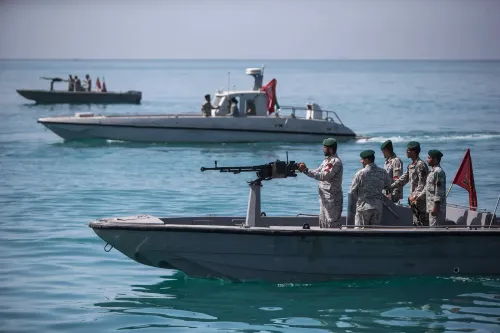
Iran's IRGC has simultaneously claimed strikes on US military bases in three countries — Kuwait, Jordan, and Iraq — in what it calls retaliation for a US strike on a wedding in Sirik that reportedly killed or wounded more than 50 civilians. It is the first time Tehran has publicly claimed coordinated multi-country attacks on US assets in a single operation, sharply raising the stakes in the Iran-US confrontation across the Middle East.
Key Takeaways
Iran's IRGC on 2 September claimed attacks on US military bases in Kuwait , Jordan , and Iraq .
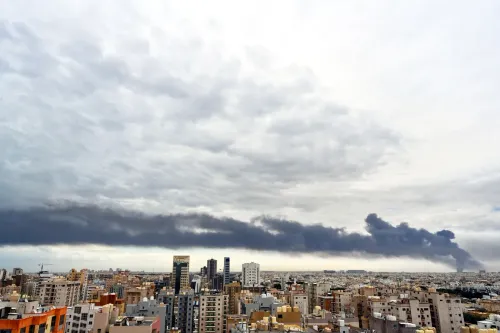
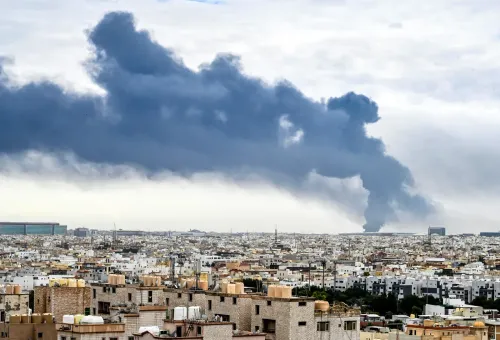
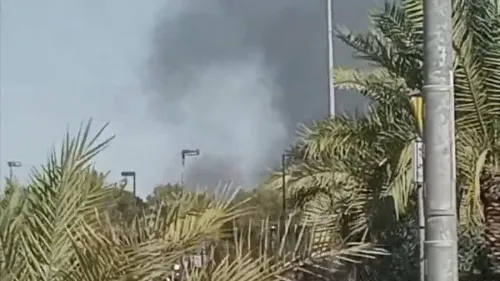
In Kuwait , the IRGC claimed it struck the living quarters and command post of the US Ali Al-Salem Air Base .
In Jordan , a ballistic missile was reportedly fired at Camp Tition on the Gulf of Aqaba , allegedly destroying facilities and helicopters.
In Iraq's Erbil , the IRGC claimed destruction of a US surveillance balloon control system and warehouses of technical equipment.
Iranian Foreign Ministry spokesperson Esmaeil Baqaei said more than 50 people were killed or wounded in a prior US strike on a wedding in Sirik .
All IRGC claims of casualties and damage remain unverified by independent sources; the US had not officially responded at the time of reporting.
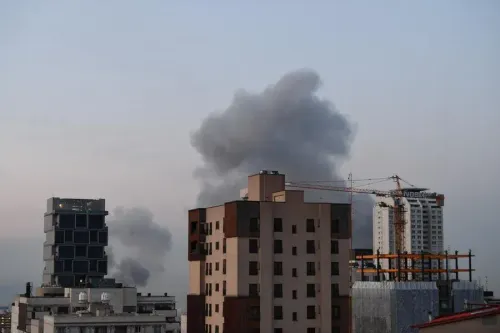
Iran's Islamic Revolutionary Guard Corps (IRGC) on Wednesday, 2 September claimed responsibility for a series of strikes targeting US military installations in Kuwait, Jordan, and Iraq, according to Iranian state and semi-official media. The attacks were described by Tehran as retaliatory action following a US strike on a residential home in Sirik, Iran, where a wedding ceremony was reportedly underway.
Attacks Claimed Across Three Countries
The IRGC claimed it struck the US Ali Al-Salem Air Base in Kuwait, targeting the living quarters and command post of the base's American commander. In a statement carried by Iran's semi-official Tasnim News Agency, the IRGC said the operation demonstrated that it holds 'complete intelligence information' regarding US movements across the region.
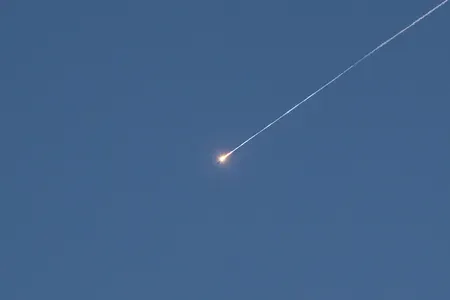
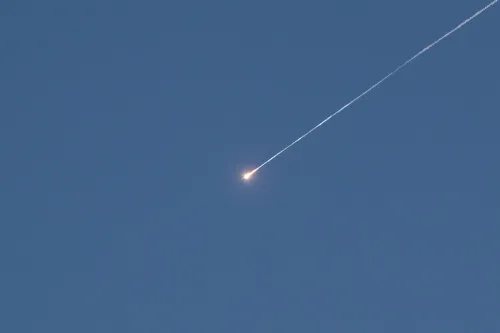
In Jordan, the IRGC claimed a ballistic missile attack on Camp Tition, a US Marines base on the Gulf of Aqaba. According to statements carried by Iran's official Islamic Republic News Agency (IRNA), the strike reportedly destroyed several facilities and helicopters, with American forces suffering what the IRGC described as 'heavy casualties.' These claims have not been independently verified.
In Iraq's Erbil, the IRGC claimed its Ground Forces destroyed a US surveillance balloon control system, along with a maintenance centre and warehouses housing technical equipment. The statement further alleged that fuel storage facilities were set ablaze and that several US personnel were killed.
The Sirik Strike That Triggered the Response
Iranian Foreign Ministry spokesperson Esmaeil Baqaei stated on Wednesday that more than 50 people were killed or wounded in a US strike on a home in Sirik, where a wedding was taking place. Baqaei linked the incident to a broader pattern of US military actions, also referencing earlier strikes in Minab, Lamerd, Qeshm, and other locations.
In posts on X, Baqaei wrote: 'The United States' catalogue of atrocities against the nation of Iran is now complete: a residential home in Kuhestak, Sirik, was brutally attacked tonight while families were celebrating a wedding. More than 50 innocent men, women and children were martyred or wounded.'
He added: 'This cruelty cannot be separated from the chain of atrocities that preceded it in Minab, Lamerd, Qeshm and elsewhere nor from the strikes on military targets that were dressed in deceptive justifications. More dangerous than the bomb itself is the normalisation of bombing; and more dangerous than silence is the conversion of silence into legitimacy.'
Iran Vows Firm Response, Criticises International Silence
Baqaei asserted that Iran will respond to the US attacks with firmness and questioned the international community's silence. In a second post on X, he warned: 'Those governments and international institutions that remain silent in the face of such barbarism, or seek to justify such acts, must understand that their silence is not neutrality... Turning a blind eye to injustice does not contain it; it only emboldens the perpetrators.'
Context and Regional Implications
The claimed strikes mark a significant escalation in the ongoing confrontation between Iran and the United States across the Middle East. This is the first time the IRGC has simultaneously claimed attacks on US military assets in three separate countries. The US government had not issued an official response to the IRGC's claims at the time of reporting. The veracity of casualty figures and damage assessments put forward by Iranian sources could not be independently confirmed.
Analysts note that the IRGC's framing — citing 'complete intelligence' on US movements — is as much a political signal as a military one, aimed at projecting deterrence capability ahead of any potential diplomatic or military escalation. How Washington responds, and whether allied governments in the region move to verify or contest the claims, will shape the next phase of this confrontation.
Point of View
But a political message. The emphasis on 'complete intelligence' regarding US movements is calibrated to unsettle Washington's operational confidence in the region. What is missing from the picture is any independent verification of the damage or casualty figures, which Iranian state media has historically overstated. The more consequential question is how the US responds: a measured denial risks looking weak, while a counter-strike risks the very cycle of escalation that the Sirik incident has already set in motion.
NationPress
18 Oct 2026
Frequently Asked Questions
What did Iran's IRGC claim to have attacked on 2 September?
The IRGC claimed it struck the US Ali Al-Salem Air Base in Kuwait, Camp Tition — a US Marines base in Jordan on the Gulf of Aqaba — and a US surveillance balloon control system at a base in Erbil, Iraq. The IRGC described these as retaliatory strikes following a US attack on a wedding ceremony in Sirik, Iran.
Why did Iran say it carried out these strikes?
Iran said the strikes were in retaliation for a US military attack on a residential home in Sirik where a wedding was taking place. Iranian Foreign Ministry spokesperson Esmaeil Baqaei said more than 50 people were killed or wounded in that strike, and linked it to earlier US actions in Minab, Lamerd, and Qeshm.
Have the IRGC's casualty and damage claims been verified?
No. The IRGC's claims — including 'heavy casualties' at Camp Tition and the killing of several US personnel in Erbil — have not been independently verified. The US government had not issued an official response to the claims at the time of reporting.
What did Iranian Foreign Ministry spokesperson Esmaeil Baqaei say?
Baqaei posted on X that more than 50 people were 'martyred or wounded' in the Sirik wedding strike and warned that Iran would 'respond to these savage crimes with firmness.' He also criticised international institutions for remaining silent, saying such silence amounts to normalising unlawful attacks.
What is the broader significance of these claimed strikes?
This is reportedly the first time the IRGC has publicly claimed coordinated attacks on US military assets in three separate countries in a single operation. The escalation raises the risk of a broader Iran-US military confrontation across the Middle East, with allied governments in the region now under pressure to respond or clarify their positions.