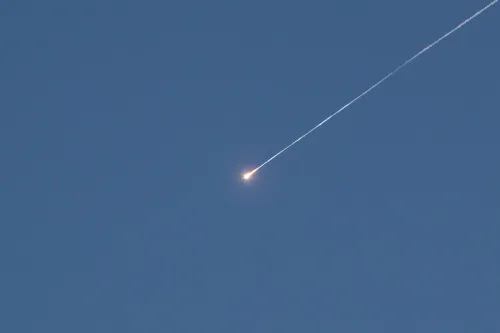
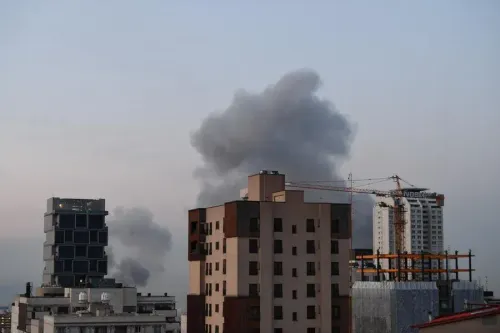
IRGC claims strikes on US bases in Syria, Kuwait and Oman in Operation Nasr-2
Synopsis
Iran's IRGC has escalated its declared military campaign against US forces across the Middle East, claiming strikes on American command centres, weapons depots, and radar sites in Syria, Kuwait, and Oman — the latest in a multi-wave operation that also reportedly targeted US bases in Bahrain and Jordan earlier this week. Kuwait's army confirmed its air defences were actively intercepting incoming fire.
Key Takeaways
Iran's IRGC claimed retaliatory strikes on a US special operations command centre in Syria's al-Tanf region on 17 July .
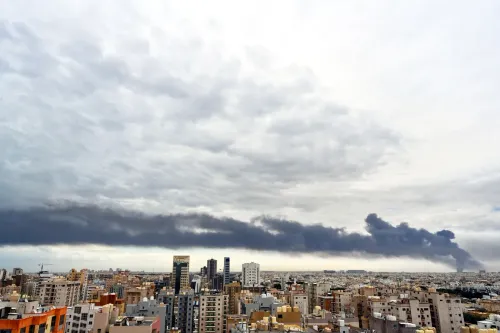
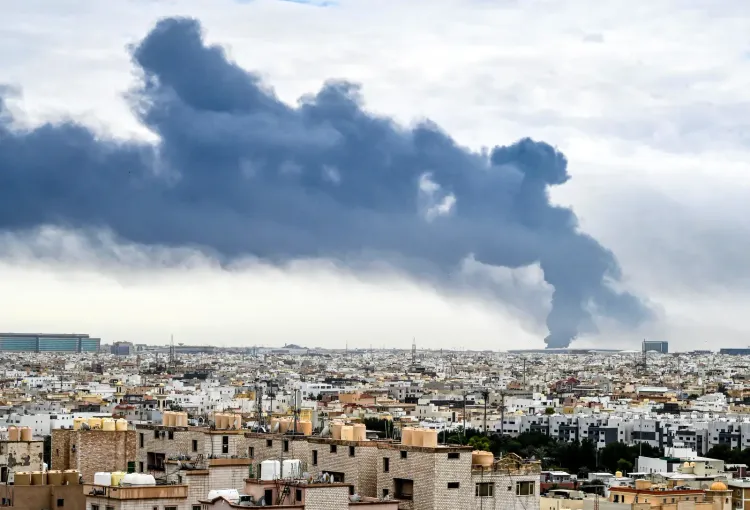
Strikes also reportedly hit US weapons depots , two HIMARS launchers , and a missile defence radar at a base in Kuwait , causing a large fire.
Naval and air surveillance radars in Oman were also claimed as targets, destroyed at the Salmah Plateau and Ghanam area .
The Kuwaiti Army confirmed its air defences were intercepting hostile missiles and drones and urged residents to follow safety instructions.
Earlier strikes this week reportedly targeted US facilities in Bahrain and Jordan , including aircraft shelters housing F-15, F-16, and F-35 jets and MQ-9 drones.
All damage claims are based on IRGC statements and have not been independently verified.
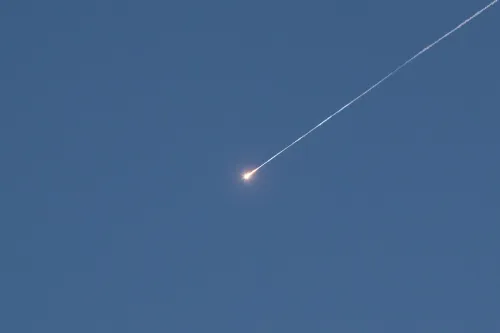
Iran's Islamic Revolutionary Guards Corps (IRGC) claimed on Friday, 17 July that it carried out retaliatory strikes targeting a US special operations command centre in Syria, American weapons depots and HIMARS launchers in Kuwait, and radar installations in Oman, according to Iranian state media. The strikes were described as part of the 11th, 12th, and 13th waves of what the IRGC has designated Operation Nasr-2.
Key Developments in Operation Nasr-2
According to the IRGC's statement, the 11th wave was dedicated to soldiers killed in Bampur in Iranshahr, and involved what the Corps described as a 'surprise strike' on the US special forces command centre in Syria's al-Tanf region, as reported by Iran's official Islamic Republic News Agency (IRNA).
A separate statement from the IRGC's Public Relations Department said Iranian forces struck a missile defence surveillance radar, several US weapons depots, two HIMARS launchers, and a number of missiles in Kuwait, reportedly causing a large fire at a base hosting US troops. The IRGC subsequently claimed its forces also attacked and destroyed a naval surveillance radar at the Salmah Plateau and a US air surveillance radar in the Ghanam area of Oman.
Kuwait's Air Defences Respond
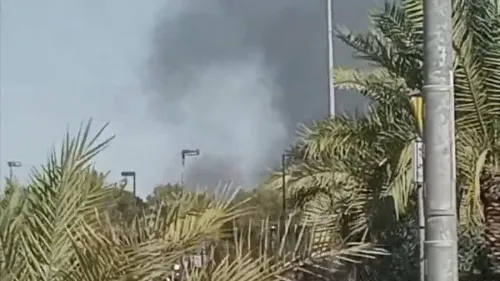
The Kuwaiti Army confirmed that its air defences were actively intercepting incoming missile and drone strikes following Iran's action. In a post on X, the Kuwaiti Army stated: 'Kuwaiti air defenses are currently confronting hostile missile and drone attacks following the sinful Iranian aggression. The General Staff of the Army notes that if explosion sounds are heard, they are the result of air defense systems intercepting the hostile attacks. Everyone is kindly requested to adhere to the security and safety instructions issued by the competent authorities.' Authorities urged residents to follow official safety instructions.
Earlier Strikes on Bahrain and Jordan
This latest wave follows strikes the IRGC claimed to have conducted on Wednesday against US military facilities in Bahrain and Jordan. The Corps said its Aerospace Force targeted the US military base at al-Azraq in Jordan, claiming to have destroyed aircraft shelters housing F-15, F-16, and F-35 fighter jets along with several MQ-9 strategic drones.
The IRGC alleged that a significant volume of US military strikes against Iran were launched from bases in Jordan, and called on Jordanians to end the presence of US forces in their country. Separately, the IRGC said its navy struck the US Fifth Fleet's facilities in Bahrain, targeting what it described as the NSI management centre, large military warehouses, a command and control centre, and fuel storage facilities, according to IRNA.
The Strait of Hormuz Context
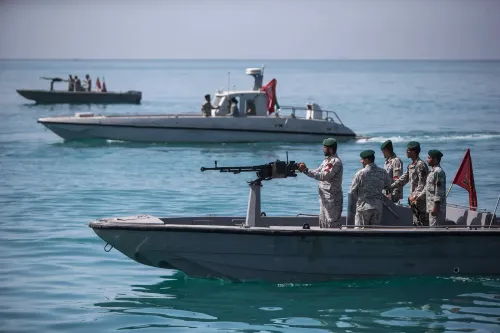
The IRGC said the Bahrain strikes were carried out in response to the US deploying naval forces in the Indian Ocean and blocking maritime routes under the pretext of controlling the Strait of Hormuz. The strait connects the Persian Gulf with the Gulf of Oman and the Arabian Sea, and is one of the world's most critical energy corridors, carrying oil and liquefied natural gas exports from major Gulf producers to global markets.
All claims of damage and destruction are based solely on IRGC statements and have not been independently verified. The situation remains fast-moving, with further escalation possible as the US and its Gulf partners assess the reported strikes.
Point of View
If even partially accurate, represent one of the most geographically dispersed Iranian military operations against US assets in recent memory — spanning Syria, Kuwait, Oman, Bahrain, and Jordan within days. Yet the pattern here matters as much as the specifics: Iran has a documented history of overstating battle damage in its official communiqués, and none of these claims have been independently verified. What is verifiable is that Kuwait activated its air defences and issued a public safety warning — a significant escalation signal in itself. The Strait of Hormuz framing is also deliberate; Tehran is signalling that energy corridor disruption remains a live instrument of pressure. The real question is how the US and its Gulf partners respond, and whether this marks a sustained campaign or a pressure-release before diplomacy resumes.
NationPress
15 Oct 2026
Frequently Asked Questions
What is Operation Nasr-2?
Operation Nasr-2 is the name the IRGC has given to its declared campaign of retaliatory strikes against US military assets across the Middle East. The 17 July strikes on Syria, Kuwait, and Oman were described as the 11th, 12th, and 13th waves of this operation.
What did the IRGC claim to have struck in Kuwait?
The IRGC claimed its forces hit a missile defence surveillance radar, several US weapons depots, two HIMARS launchers, and a number of missiles at a base hosting US troops in Kuwait, reportedly causing a large fire. Kuwait's army confirmed its air defences were actively intercepting incoming strikes.
What happened at the US base in al-Tanf, Syria?
The IRGC claimed to have carried out a surprise strike on the US special forces command centre in Syria's al-Tanf region as part of the 11th wave of Operation Nasr-2, dedicated to soldiers killed in Bampur, Iranshahr. The claim has not been independently verified.
Did Iran also strike US bases in Bahrain and Jordan?
Yes, according to IRGC statements from Wednesday, the Corps claimed strikes on the US military base at al-Azraq in Jordan — reportedly destroying shelters housing F-15, F-16, and F-35 jets and MQ-9 drones — and on the US Fifth Fleet's facilities in Bahrain, targeting its management centre, warehouses, and fuel storage. These claims are also unverified.
Why is the Strait of Hormuz significant in this context?
The IRGC cited US naval deployment in the Indian Ocean and alleged blocking of maritime routes via the Strait of Hormuz as justification for its Bahrain strikes. The strait is a critical global energy corridor connecting the Persian Gulf to the Arabian Sea, through which a significant share of the world's oil and LNG exports pass.