Jaishankar in Baku: India, Azerbaijan share goal of peace and prosperity
Synopsis
EAM Jaishankar's Baku visit wasn't routine diplomacy — it was a quiet but deliberate move to lock in India's strategic foothold in the South Caucasus. From the INSTC to the Azerbaijan-Armenia peace process and a public thank-you for evacuating Indian students from Iran, the visit signals that India is expanding its geopolitical bandwidth beyond the traditional neighbourhood.
Key Takeaways
EAM S Jaishankar visited Baku on 23 October , holding talks with Azerbaijan Foreign Minister Jeyhun Bayramov and President Ilham Aliyev .
Jaishankar described terrorism, conflict, and instability as 'common enemies' of India and Azerbaijan .
India welcomed the Azerbaijan-Armenia peace agreement of August last year and expressed hope for durable peace.
Both sides agreed to coordinate more closely on the International North South Transport Corridor (INSTC) .
Jaishankar thanked Azerbaijan for assisting in the evacuation of Indian nationals, particularly students from Iran , during the West Asia conflict.
Jaishankar invited Foreign Minister Bayramov to visit India soon, signalling intent to advance bilateral ties.
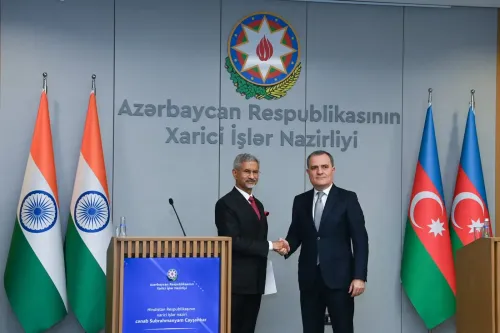
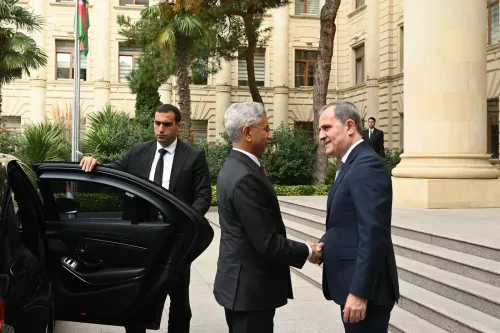
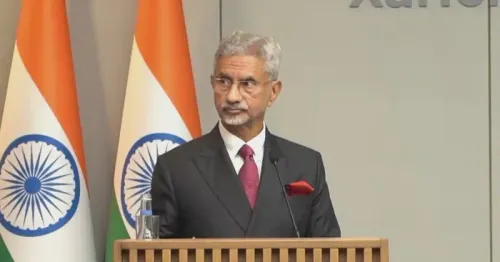
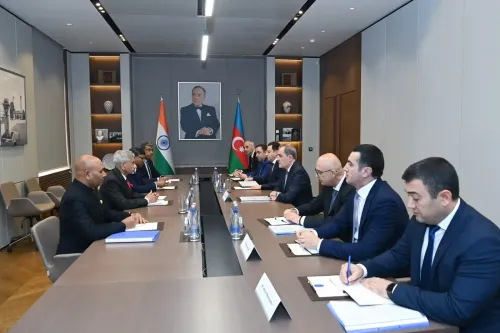
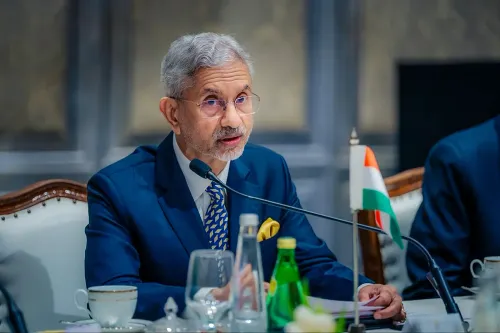
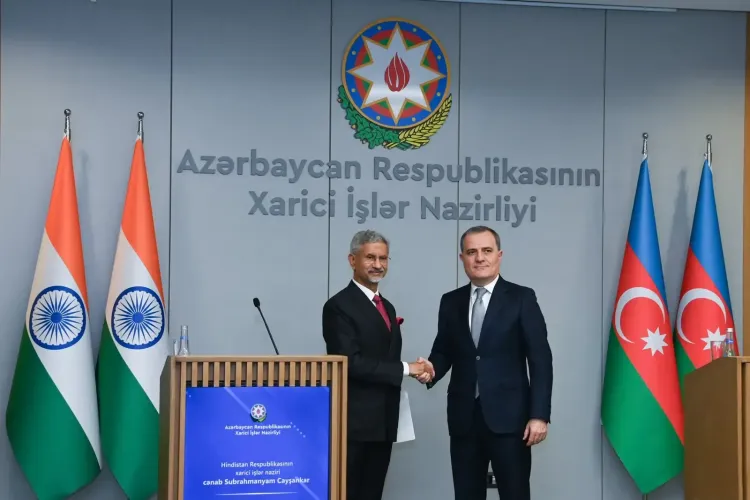
External Affairs Minister S Jaishankar on Friday, 23 October said that India and Azerbaijan share a common interest in promoting peace, progress, and prosperity, describing terrorism, conflict, and instability as 'common enemies' of both nations. Speaking alongside Azerbaijan Foreign Minister Jeyhun Bayramov at a joint press statement in Baku, Jaishankar outlined a wide-ranging agenda covering bilateral trade, regional security, connectivity, and the ongoing crises reshaping the Global South.
On the Azerbaijan-Armenia Peace Process
Jaishankar reaffirmed India's support for the peace agreement between Azerbaijan and Armenia reached in August last year, expressing hope that it would lead to 'the establishment of a durable peace.' He underscored India's consistent diplomatic position: 'disputes should be settled through dialogue and diplomacy.' The two ministers also reviewed developments across the Middle East, West Asia, Europe, and Eurasia, assessing what Jaishankar called the 'global implications of these conflicts' — particularly their cascading impact on Global South economies in 'food, fuel, fertiliser and finance.'
Bilateral Trade, Investment and Energy Cooperation
The two sides discussed expanding economic ties, with Jaishankar pointing to 'complementary economies' as a strong foundation for deeper trade and investment. Energy cooperation was also on the table, though specific terms were not disclosed. On air connectivity, he noted that while daily flights already operate between the two countries, both sides agreed to explore ways to grow that further. Jaishankar described the globalised economy as making connectivity 'so important' and called for deeper people-to-people and cultural exchanges to build a 'more contemporary partnership.'
INSTC: A Strategic Corridor Both Nations Prioritise
A significant portion of the talks focused on the International North South Transport Corridor (INSTC), a multimodal trade route linking India, Iran, Azerbaijan, and Russia. Jaishankar confirmed that both countries 'agreed today that we will coordinate more closely' on the corridor. The INSTC has gained renewed strategic urgency as global shipping routes face disruption from geopolitical tensions, and India views it as a vital alternative pathway to Central Asia and Europe.
Gratitude for Evacuation Support, Meeting with President Aliyev
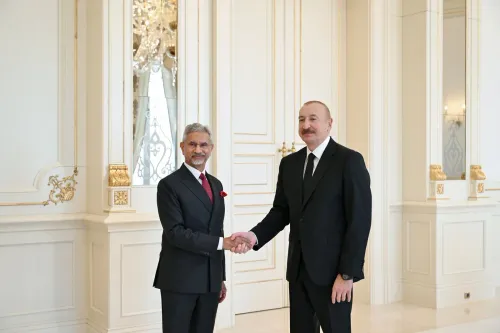
Jaishankar placed on record India's 'gratitude for your assistance in evacuating Indian nationals, particularly students from Iran earlier in this year during the conflict there' — a public acknowledgement of Azerbaijan's role in facilitating safe passage during the West Asia conflict. He also met Azerbaijan President Ilham Aliyev earlier in the day, conveying the greetings of President Droupadi Murmu and Prime Minister Narendra Modi. He described those talks as 'focussed' and 'forward-looking', covering 'the entire gamut of our ties.' Jaishankar extended an invitation to Foreign Minister Bayramov to visit India at his convenience, signalling intent to maintain momentum in the bilateral relationship.
What Comes Next
The Baku visit marks a notable step in India's deepening engagement with the South Caucasus region, which sits at the crossroads of competing geopolitical interests. With the INSTC, energy diversification, and the Global South agenda all converging, the India-Azerbaijan relationship is being calibrated well beyond its traditional low-key profile. A reciprocal visit by Foreign Minister Bayramov to New Delhi would be the next formal milestone to watch.
Point of View
Signalling that India sees Baku as a dependable operational partner, not just a bilateral talking point. The invitation extended to Bayramov suggests New Delhi wants to institutionalise this relationship before the geopolitical window narrows. What is less clear is whether the 'complementary economies' framing will translate into actual trade volume or remain diplomatic boilerplate, as has happened with several similar India-West Asia partnerships.
NationPress
23 Oct 2026
Frequently Asked Questions
What did EAM Jaishankar say about India and Azerbaijan's shared interests?
Jaishankar said India and Azerbaijan share a common interest in promoting peace, progress, and prosperity, and described terrorism, conflict, and instability as 'common enemies' of both nations. He made these remarks during a joint press statement with Foreign Minister Bayramov in Baku on 23 October.
What is India's position on the Azerbaijan-Armenia peace deal?
India has welcomed the peace agreement between Azerbaijan and Armenia reached in August last year and hopes it will lead to durable peace. Jaishankar reiterated India's standing position that disputes should be resolved through dialogue and diplomacy.
What is the International North South Transport Corridor (INSTC) and why does it matter?
The INSTC is a multimodal trade route connecting India, Iran, Azerbaijan, and Russia, offering an alternative to traditional shipping lanes. Jaishankar confirmed that India and Azerbaijan agreed to coordinate more closely on the corridor, which has gained strategic importance as global shipping faces disruption.
Why did Jaishankar thank Azerbaijan during his Baku visit?
Jaishankar publicly thanked Azerbaijan for assisting in the evacuation of Indian nationals, particularly students from Iran, during the West Asia conflict earlier this year. He called it a gesture of 'care and consideration' that India places on record.
What are the next steps in India-Azerbaijan relations?
Jaishankar has invited Foreign Minister Bayramov to visit India at his convenience, which would be the next formal milestone. Both sides also agreed to deepen trade, investment, energy cooperation, and expand air connectivity beyond existing daily flights.