Japan PM Takaichi visits Kumamoto after 7.1 earthquake kills 16
Synopsis
A 7.1-magnitude earthquake that struck Kumamoto on 28 July killed at least 16 people, triggered a tsunami warning, and left entire towns registering Japan's maximum seismic intensity. PM Takaichi's ground visit and the government's consideration of a 1-trillion-yen reserve fund draw signal this is far from over — and with temperatures hitting 40°C at evacuation sites, the humanitarian crisis is deepening by the hour.
Key Takeaways
PM Sanae Takaichi visited Kumamoto Prefecture on 4 August 2025 to assess earthquake damage.
A 7.1-magnitude earthquake struck Kumamoto at a depth of 10 km on 28 July 2025 at 4:27 pm local time .
At least 16 people were killed — seven in an explosion at the Aeon mall in Kashima and nine at the paper plant in Yatsushiro .
Cities of Uki and Hikawa recorded maximum seismic intensity of 7 ; a 1-metre tsunami warning was issued for the Ariake and Yatsushiro Seas.
The government is considering tapping fiscal 2026 reserve funds totalling approximately 1 trillion yen (~$6.4 billion) for relief.
Temperatures of 40°C at evacuation sites have raised fears of heatstroke and disaster-related deaths.
Japanese Prime Minister Sanae Takaichi on Monday, 4 August 2025, visited Kumamoto Prefecture in southwestern Japan to assess the scale of destruction left by a 7.1-magnitude earthquake that struck the region on 28 July, killing at least 16 people and triggering a tsunami warning. The visit signals Tokyo's intent to mobilise federal resources as the death toll and displacement figures continue to rise.
What Takaichi Saw on the Ground
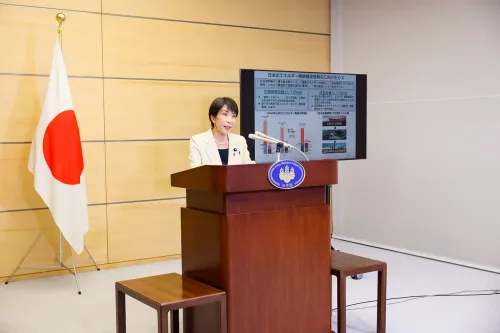
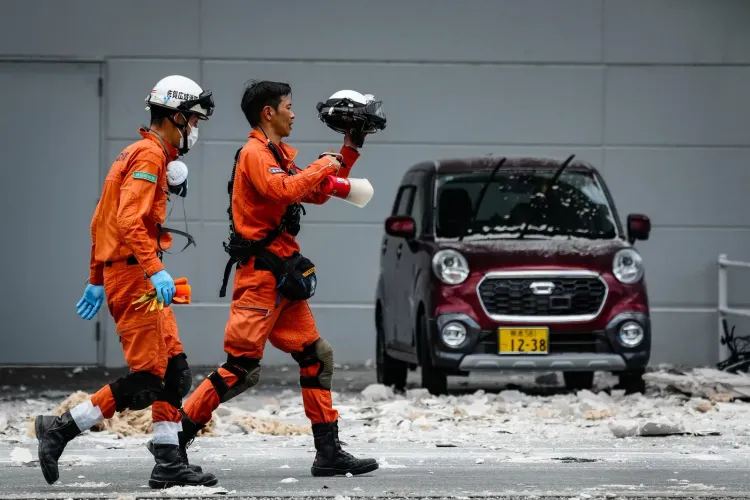
Takaichi visited an evacuation shelter in the town of Hikawa, wearing a disaster response uniform, and met residents displaced by the quake. 'The government will do everything that it can do,' she told those affected, according to local media reports.
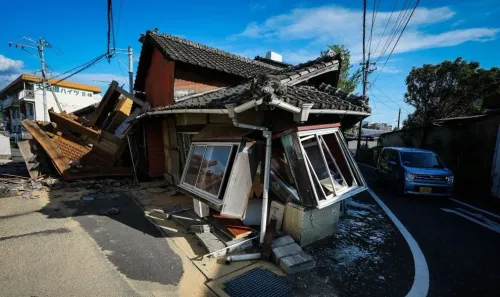
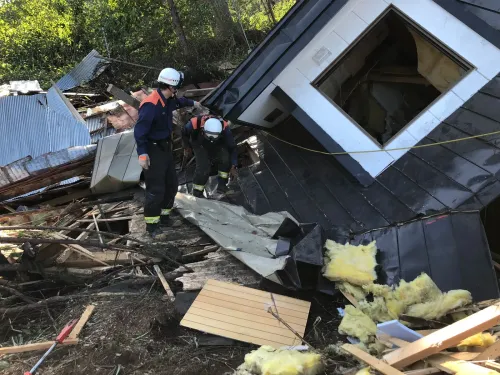
She also conducted an aerial survey by helicopter over the Aeon shopping mall in the town of Kashima, where an explosion following the quake killed seven people. She separately observed the paper plant in Yatsushiro, where nine people died. Aerial footage broadcast by public broadcaster NHK on 28 July showed severe structural damage — sections of the mall's exterior wall had peeled away exposing steel framework, part of the roof had collapsed, and a large hole was visible on the rooftop.
Scale and Severity of the Earthquake
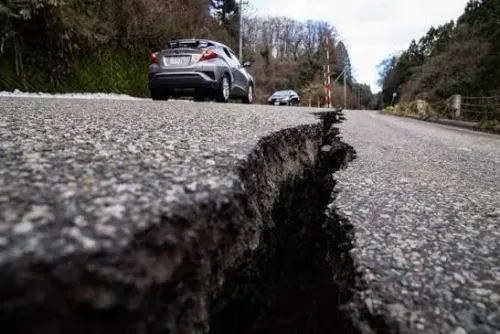
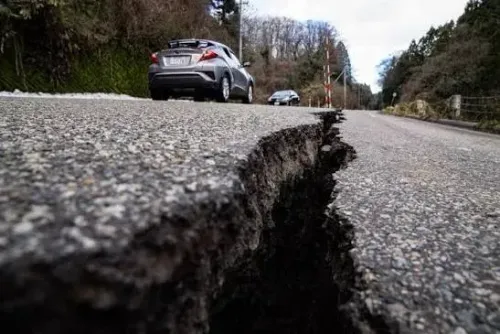
According to Japan's Meteorological Agency, the earthquake struck Kumamoto Prefecture at a depth of 10 kilometres at 4:27 pm local time on 28 July. The cities of Uki and Hikawa were the hardest hit, registering the maximum seismic intensity level of 7 on Japan's scale — a threshold at which, the agency notes, people cannot remain standing or move without crawling and may be thrown through the air.
A tsunami warning of one metre was also issued for the Ariake Sea and Yatsushiro Sea in southwestern Japan following the quake.
Government Response and Relief Measures
Takaichi's administration has been actively promoting secondary evacuations to lodging facilities and bolstering support for residents sleeping in cars or sheltering in their own homes, according to government officials. The government is also reportedly considering drawing on the fiscal 2026 budget's reserve funds, which total approximately 1 trillion yen (around $6.4 billion), to finance relief and reconstruction efforts.
During her visit, Takaichi discussed mounting concerns over heatstroke and disaster-related deaths at evacuation sites with local authorities, as temperatures in parts of the prefecture reached 40°C.
What Comes Next
The combination of extreme heat, ongoing aftershock risk, and inadequate shelter conditions at evacuation sites poses a compounding humanitarian challenge. With the government weighing a draw-down of reserve funds, the pace of secondary evacuations and the adequacy of cooling facilities at shelters will be closely watched in the days ahead.
Point of View
But the harder question is logistical — whether secondary evacuations can be scaled fast enough before heat-related deaths compound the earthquake toll. The government's consideration of reserve funds is the right signal, but Japan's post-disaster history shows that disbursement speed, not fund size, is usually the bottleneck. With Kumamoto still recovering from the devastating 2016 twin earthquakes, this region has been hit disproportionately hard twice in under a decade.
NationPress
3 Aug 2026
Frequently Asked Questions
What happened in the Kumamoto earthquake on 28 July 2025?
A 7.1-magnitude earthquake struck Kumamoto Prefecture in southwestern Japan on 28 July 2025 at 4:27 pm local time, at a depth of 10 kilometres. It caused widespread destruction, killed at least 16 people, and triggered a one-metre tsunami warning for the Ariake Sea and Yatsushiro Sea.
Why did PM Takaichi visit Kumamoto?
Prime Minister Sanae Takaichi visited Kumamoto on 4 August 2025 to assess earthquake damage on the ground, meet displaced residents at evacuation shelters, and discuss the government's relief strategy with local authorities. She also conducted an aerial survey of the most severely damaged sites.
How many people were killed in the Kumamoto earthquake?
At least 16 people were killed — seven in an explosion at the Aeon shopping mall in Kashima and nine at a paper plant in Yatsushiro, according to local media reports.
What relief measures is the Japanese government considering?
The government is promoting secondary evacuations to lodging facilities and supporting those sheltering in cars or homes. It is also reportedly considering drawing on fiscal 2026 budget reserve funds totalling approximately 1 trillion yen (around $6.4 billion) to finance relief and reconstruction.
What is seismic intensity level 7 in Japan?
Level 7 is the maximum rating on Japan's seismic intensity scale. According to the Meteorological Agency, at this intensity people cannot remain standing or move without crawling and may be thrown through the air. Both Uki and Hikawa registered this maximum level during the 28 July earthquake.