Japan's Takaichi raises UN Security Council reform with Guterres at UNGA 81
Synopsis
At UNGA 81's high-level week, Japan's PM Takaichi put Security Council reform on the table with Secretary-General Guterres — a pointed signal that the G4 bloc, which includes India, is pressing the issue at the highest diplomatic level. With Guterres himself calling the current system an eight-decade-old relic, momentum for structural change is building even as the Charter amendment threshold keeps meaningful reform politically fraught.
Key Takeaways
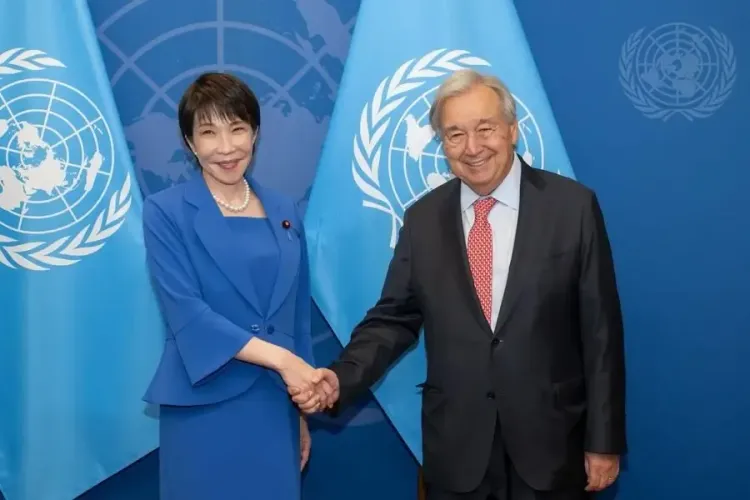
Japanese Prime Minister Sanae Takaichi raised UN Security Council reform with Secretary-General António Guterres at UN headquarters on 23 September 2026 .
The meeting took place during the high-level week of the 81st UN General Assembly session in New York .
India , Japan , Brazil , and Germany — the G4 — support each other's bids for permanent Security Council seats .
The UN readout gave no details on specific proposals, a timetable, or veto-power discussions.
Guterres told the General Assembly that global institutions still reflect power arrangements from eight decades ago , broadly endorsing the reform argument.
Changing the UN Charter requires approval by two-thirds of the General Assembly and ratification by all five existing permanent members — a threshold that has stalled reform for decades.
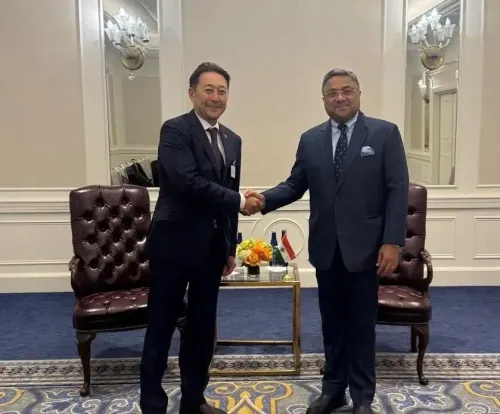
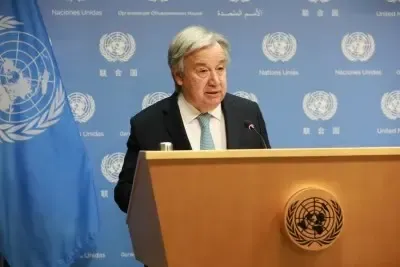
Japanese Prime Minister Sanae Takaichi raised the question of United Nations Security Council reform during a bilateral meeting with UN Secretary-General António Guterres at UN headquarters in New York, lending fresh momentum to a debate that carries direct consequence for India. The meeting took place during the high-level week of the 81st session of the UN General Assembly on 23 September 2026.
An official UN readout confirmed the exchange, stating: 'The Secretary-General and the Prime Minister also discussed Security Council reform, as well as regional and global issues.' The readout did not specify which reform proposals were tabled, nor did it indicate whether the conversation covered expansion of permanent or non-permanent membership, a veto-power review, or any proposed timetable for negotiations.
Why This Matters for India
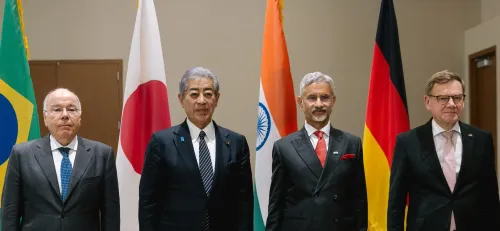
India and Japan are both members of the Group of Four (G4), a bloc that also includes Brazil and Germany. The four nations actively support each other's campaigns for permanent seats on an expanded Security Council and jointly advocate for greater representation for Africa and other underrepresented regions. For New Delhi, the Takaichi-Guterres meeting reinforces G4 solidarity at a critical diplomatic gathering and keeps reform pressure on the agenda at the highest levels of the UN system.
Guterres Backs Structural Change
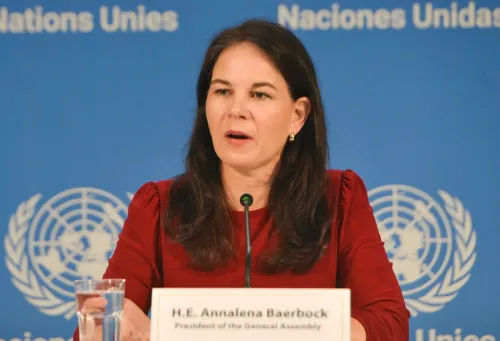
In his opening address to the General Assembly, Secretary-General Guterres said global institutions continue to reflect power arrangements from eight decades ago rather than current international realities. He called for a multilateral system centred on the United Nations that is 'more balanced and representative' — language that aligns closely with the G4's longstanding position. Guterres also expressed appreciation for Japan's longstanding contributions to the UN and its support for multilateralism, according to the official readout.
The Reform Deadlock Explained
The Security Council currently has 15 members. China, France, Russia, the United Kingdom, and the United States hold permanent seats with veto power; the General Assembly elects the remaining 10 members for two-year non-renewable terms. Structural reform has remained stalled for decades despite widespread acknowledgement that representation needs to be widened. Deep disagreements persist over the number of new seats, whether they should carry permanence or veto rights, and which countries or regions should fill them.
Amending the UN Charter — the legal prerequisite for any such change — requires approval by two-thirds of the General Assembly and ratification by two-thirds of all UN member states, including all five existing permanent members. That threshold has made structural reform politically difficult despite decades of negotiations.
India's Case for a Permanent Seat
India argues that its population, economic scale, contribution to UN peacekeeping missions, and expanding role in global affairs together form a compelling case for permanent membership. New Delhi has also maintained that the absence of permanent representation for Africa, Latin America, and large parts of Asia weakens the Council's legitimacy and erodes its capacity to address contemporary security challenges. The Takaichi-Guterres exchange, while brief and without disclosed specifics, adds a bilateral diplomatic dimension to the broader push for reform during one of the UN calendar's most consequential weeks.
Point of View
Every such high-level affirmation from a G4 partner at UNGA raises the political cost for the P5 of indefinite inaction. Yet the structural obstacle remains unchanged: any reform must clear a supermajority threshold that gives the existing veto powers an effective veto over their own dilution. Guterres's rhetoric on 'eight-decade-old' power arrangements is pointed, but the Secretary-General has no power to compel Charter amendment. The real test is whether the G4 can translate diplomatic solidarity into a concrete negotiating text — something the bloc has so far failed to produce.
NationPress
23 Sept 2026
Frequently Asked Questions
What did Japan's PM Takaichi discuss with UN Secretary-General Guterres?
Japanese Prime Minister Sanae Takaichi discussed UN Security Council reform and other regional and global issues with Secretary-General António Guterres during a bilateral meeting at UN headquarters on 23 September 2026, on the sidelines of the 81st UN General Assembly's high-level week. The official UN readout did not specify which reform proposals were raised.
Why does UN Security Council reform matter for India?
India is a member of the G4 — alongside Japan, Brazil, and Germany — and the four countries formally coordinate campaigns for permanent seats on an expanded Security Council. India argues that its population, economic weight, and peacekeeping contributions justify a permanent seat, and that the Council lacks legitimacy without permanent representation for Africa, Latin America, and large parts of Asia.
What is the G4 and what does it want?
The Group of Four (G4) comprises India, Japan, Brazil, and Germany. The bloc supports each other's bids for permanent Security Council membership and advocates for greater representation for Africa and other underrepresented regions, arguing that the current Council composition no longer reflects contemporary global realities.
Why has UN Security Council reform stalled for so long?
Amending the UN Charter — the legal prerequisite for restructuring the Security Council — requires a two-thirds majority in the General Assembly and ratification by two-thirds of all UN member states, including all five existing permanent members. Because the P5 would effectively be consenting to dilute their own privileges, the threshold has blocked structural reform despite decades of negotiations.
What is the current composition of the UN Security Council?
The Security Council has 15 members. China, France, Russia, the United Kingdom, and the United States hold permanent seats with veto power. The remaining 10 non-permanent members are elected by the General Assembly for two-year terms.