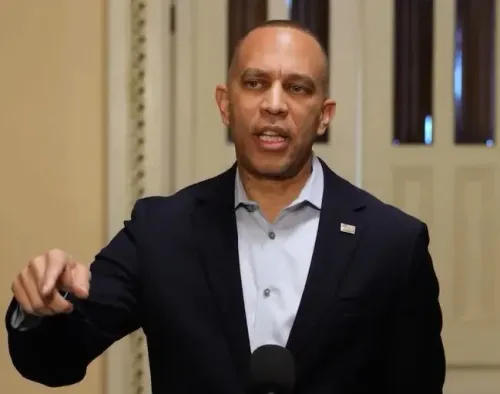
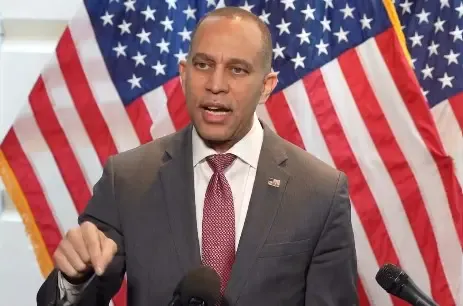
Hakeem Jeffries nominated as first African American Speaker of US House
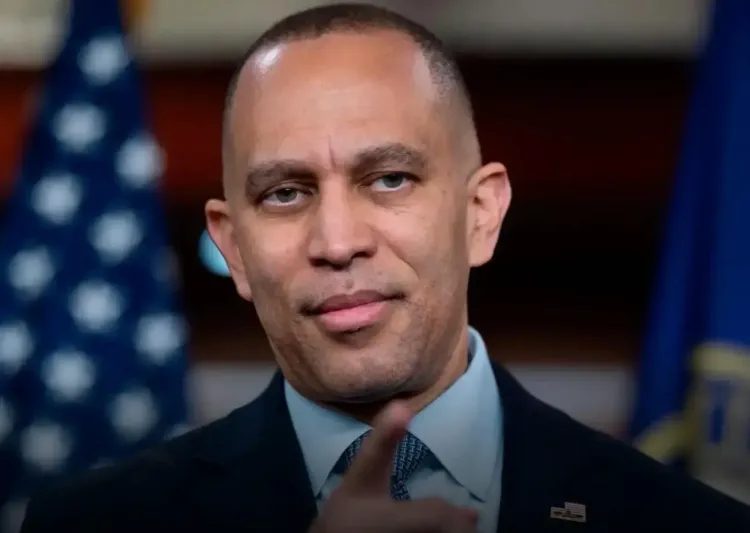
Synopsis
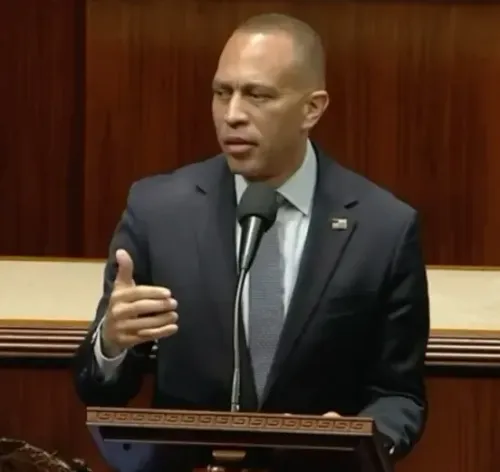
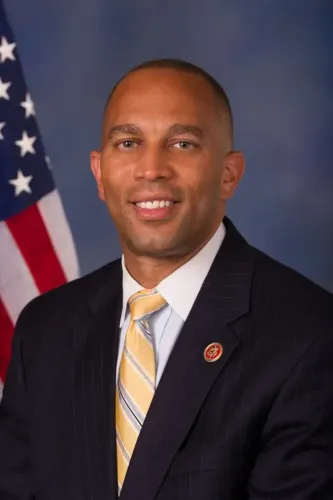
History is about to be made in Washington. Hakeem Jeffries, nominated with 251 votes by House Democrats, is set to become the first African American Speaker of the US House — a role second only to the vice president in the line of succession. His election, virtually certain in January, will put him directly across the negotiating table from President Donald Trump on spending and key legislation.
Key Takeaways
Hakeem Jeffries was nominated by House Democrats on 18 November 2026 to be the next US House Speaker .
He secured 251 votes against 11 in a closed-door secret ballot, with no direct challenger.
Jeffries will be the first African American to serve as House Speaker, standing second in the presidential line of succession .
Democrats hold 257 of 436 House seats and 56 of 100 Senate seats, making his floor election in January virtually assured.
His top legislative priority is addressing the affordability crisis ; sharp tensions already exist with White House Chief of Staff Stephen Miller .
Senate Democratic leadership remains unsettled, with Chuck Schumer facing a challenge from Senator Chris Van Hollen .
Hakeem Jeffries was nominated by House Democrats on Wednesday, 18 November 2026 to serve as the next Speaker of the US House of Representatives, positioning him to become the first African American to hold the chamber's top leadership post when the new Congress convenes in January. The nomination marks a historic milestone in American political history, following Democrats' decisive midterm victory.
Nomination Vote and Margin
According to party tallies from the closed-door secret ballot, Jeffries secured 251 votes against only 11 votes cast in opposition, facing no direct challenger. Limited resistance came from the party's progressive wing over policy disagreements, including the administration's stance on Palestine. With Democrats having won 257 seats in the 436-member House following their midterm victory, Jeffries is virtually assured of election on the House floor in January.
A Historic First
While African Americans have previously served as president — Barack Obama — and vice president — Kamala Harris — Jeffries will be the first to hold the role of House Speaker, a position that stands second in the presidential line of succession after the vice president. The 56-year-old lawyer and lawmaker represents a constituency in New York City's Brooklyn borough, where he was raised.
Powers and Legislative Priorities
As Speaker, Jeffries will hold primary authority over setting the House legislative agenda, budget negotiations, and any potential impeachment proceedings. He has identified tackling the affordability crisis — driven by rising consumer prices — as his foremost legislative priority. Earlier this month, he stated that Democrats 'are ready, willing and able to find bipartisan common ground with the other side of the aisle as long as we can bring about meaningful change on the issues that matter, and that begins with decisively addressing the affordability crisis.'
Friction with the White House
With Democrats holding a decisive House majority and 56 seats in the 100-member Senate, President Donald Trump and administration officials will be required to negotiate with Jeffries on federal spending and key legislation. Sharp friction has already emerged: Jeffries has strongly criticised White House Chief of Staff Stephen Miller, his primary administration liaison, calling him a 'malignant tumour' and a 'dangerous xenophobe and reckless extremist.' Jeffries has also voiced opposition to the conflict in Iran.
Senate Democratic Leadership Still Unsettled
Meanwhile, Senate Democrats have yet to finalise their own leadership for the incoming Congress. Current Senate Democratic Leader Chuck Schumer faces an open challenge for the post of Senate Majority Leader from Senator Chris Van Hollen, adding a layer of internal uncertainty to the party's broader transition. Outgoing Republican Speaker Mike Johnson announced he will not seek a leadership role after his party's defeat. The incoming Congress is expected to convene in January, when Jeffries' election as Speaker will be confirmed on the House floor.
Point of View
But the more consequential story is structural: Democrats now control both chambers and can constrain a sitting Republican president on spending and legislation. The real friction point will not be symbolism but the affordability mandate — a terrain where Jeffries' voter base and Trump's base overlap in grievance, even if they diverge sharply on remedy. The sharp rhetoric toward Stephen Miller signals that this Congress will not be a period of quiet negotiation. Meanwhile, the unresolved Senate leadership contest between Schumer and Van Hollen suggests Democratic unity, though broad, still has fault lines that the White House will seek to exploit.
NationPress
18 Nov 2026
Frequently Asked Questions
Who is Hakeem Jeffries and why is his nomination historic?
Hakeem Jeffries is a 56-year-old lawyer and Democratic congressman representing a Brooklyn, New York constituency. He is set to become the first African American Speaker of the US House of Representatives, a role that places him second in the presidential line of succession after the vice president.
How many votes did Jeffries receive in the Speaker nomination?
Jeffries received 251 votes in the closed-door secret ballot, with only 11 votes cast against him. He faced no direct challenger, though limited opposition came from the party's progressive wing over issues including Palestine.
When will Jeffries officially become House Speaker?
Jeffries will be formally elected Speaker on the House floor when the new Congress convenes in January. With Democrats holding 257 of 436 House seats, his election is considered virtually assured.
What is Jeffries' top legislative priority?
Jeffries has identified tackling the affordability crisis — driven by rising consumer prices — as his foremost legislative priority. He has stated Democrats are ready to seek bipartisan common ground to deliver meaningful change on this issue.
What is the state of Democratic leadership in the Senate?
Senate Democrats have not yet finalised their leadership for the incoming Congress. Current Senate Democratic Leader Chuck Schumer faces an open challenge for the post of Senate Majority Leader from Senator Chris Van Hollen.