Bangladesh LGBTQI+ violence rising since 2024, France-based rights group warns
Synopsis
A France-based rights group documented 260 LGBTQI+ violations affecting 426 individuals in Bangladesh in 2025 alone — and warned at a Paris forum that conditions have sharply worsened since the Hasina government fell in August 2024, with extremist groups increasingly targeting queer and transgender people.
Key Takeaways
Justice Makers Bangladesh in France (JMBF) raised alarm over escalating LGBTQI+ violence in Bangladesh at a Paris human rights forum on 30 June 2026 .
The JMBF 2025 Report documented 260 human rights violations affecting at least 426 LGBTQI+ individuals in Bangladesh during 2025.
Conditions have reportedly deteriorated significantly since the fall of the Sheikh Hasina -led government in August 2024 , with extremist Islamist groups becoming more active.
Section 377 of the Bangladesh Penal Code — a colonial-era law — continues to criminalise consensual same-sex relations; JMBF is calling for its repeal.
JMBF demands accountability for attacks, protection of LGBTQI+ students, and stronger international support for rights defenders in Bangladesh.
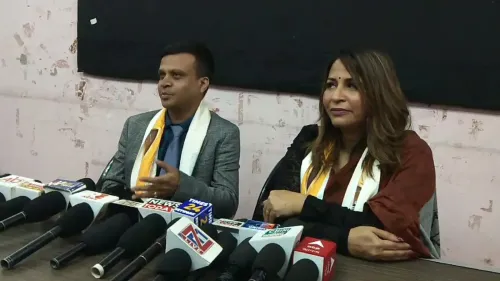
Justice Makers Bangladesh in France (JMBF), a France-based international human rights organisation, has raised serious alarm over a marked deterioration in the safety and rights of LGBTQI+ individuals in Bangladesh, warning that attacks, threats, and institutional exclusion have intensified since August 2024. The concerns were voiced at a high-profile international dialogue in Paris on 30 June 2026, marking the close of Pride Month.
The Paris Event
The international forum, titled 'Apero-debat: Les droits LGBTQI+ dans le monde (LGBTQI+ Rights Around the World)', was organised by Solidarite International LGBTQI+ in collaboration with Agir ensemble pour les droits humains and the LGBTQI+ Centre of Paris and Ile-de-France. The event brought together LGBTQI+ activists, human rights defenders, diplomats, civil society leaders, and international allies for dialogue and solidarity.
Three roundtable discussions examined the challenges confronting LGBTQI+ communities globally and explored strategies to advance equality, human rights, and international cooperation. Shahanur Islam, Founder President of JMBF, participated in the session titled 'Criminalisation and Colonisation: Deconstructing and Responding', which scrutinised the colonial roots of anti-LGBTQI+ legislation and strategies to dismantle criminalisation.
Colonial Law at the Centre of Concern
Shahanur drew particular attention to Section 377 of the Bangladesh Penal Code — a colonial-era statute inherited from British rule — which continues to criminalise consensual same-sex relations. 'Section 377 is a colonial law that should have no place in a democratic society. It creates fear and legitimises discrimination against LGBTQI+ people. It must be repealed,' he stated.
Notably, while neighbouring India struck down its own version of Section 377 in 2018, Bangladesh has retained the provision. Rights advocates argue its continued existence emboldens social and institutional discrimination.
Sharp Rise in Violations Since August 2024
Shahanur warned that conditions for LGBTQI+ individuals in Bangladesh have worsened considerably following the fall of the Sheikh Hasina-led Awami League government in August 2024. He cited the growing assertiveness of extremist Islamist groups as a key driver of violence, resulting in attacks on queer and transgender individuals, threats against LGBTQI+ activists, forced exclusion of LGBTQI+ students from educational institutions, and a sharp uptick in hate speech on social media platforms.
The JMBF Annual State of LGBTQI+ Rights in Bangladesh 2025 Report documented 260 human rights violations affecting at least 426 LGBTQI+ individuals during 2025 alone. 'These are not just statistics. They represent students forced to leave school, young people rejected by their families, activists living under constant threats, and many individuals who must hide their identity simply to survive,' Shahanur said.
Key Demands from JMBF
Shahanur called for a multi-pronged international and domestic response, including the repeal of Section 377; accountability mechanisms for attacks against LGBTQI+ people; protection of LGBTQI+ students within educational institutions; measures to combat hate speech and extremist violence; and strengthened international support for LGBTQI+ human rights defenders in Bangladesh.
Broader Context
Bangladesh's political transition since August 2024 has created a more volatile environment for minority communities, according to rights observers. This is the second consecutive year that JMBF has formally presented Bangladesh-specific findings at an international human rights forum, reflecting growing global scrutiny of the country's treatment of its LGBTQI+ population. The international community's response — and whether Bangladesh's interim administration engages with these concerns — will be closely watched in the months ahead.
Point of View
And its findings point to a troubling pattern: rights protections for marginalised communities often erode fastest in post-transition power vacuums. The retention of Section 377 — already repealed in India and decriminalised across much of the Commonwealth — is increasingly difficult to defend on any legal or democratic basis. What is missing from the international conversation is direct engagement with Bangladesh's interim administration: condemnation from diaspora forums in Paris, however well-documented, carries limited weight without diplomatic follow-through. The 426 individuals named in the JMBF report represent a floor, not a ceiling — undercounting is endemic in contexts where victims fear further persecution for reporting.
NationPress
29 Sept 2026
Frequently Asked Questions
What did the JMBF report on LGBTQI+ rights in Bangladesh find?
The JMBF Annual State of LGBTQI+ Rights in Bangladesh 2025 Report documented 260 human rights violations affecting at least 426 LGBTQI+ individuals during 2025. The report covers attacks, threats against activists, forced exclusions from educational institutions, and a rise in hate speech.
Why has the situation for LGBTQI+ people in Bangladesh worsened?
According to JMBF Founder President Shahanur Islam, conditions deteriorated sharply after the fall of the Sheikh Hasina-led Awami League government in August 2024. Extremist Islamist groups have reportedly become more active, leading to increased attacks on queer and transgender individuals and threats against rights defenders.
What is Section 377 and why is it significant?
Section 377 is a colonial-era provision in the Bangladesh Penal Code, inherited from British rule, that criminalises consensual same-sex relations. JMBF argues it creates fear and legitimises discrimination, and is calling for its repeal — a step India took in 2018 for its own equivalent law.
Where were these concerns raised and by whom?
The concerns were raised at the 'Apero-debat: Les droits LGBTQI+ dans le monde' forum in Paris on 30 June 2026, organised by Solidarite International LGBTQI+ to mark the close of Pride Month 2026. Shahanur Islam, Founder President of JMBF, presented the findings during a roundtable discussion.
What actions is JMBF calling for?
JMBF is calling for the repeal of Section 377, accountability for attacks on LGBTQI+ individuals, protection of LGBTQI+ students in educational institutions, measures to combat hate speech and extremist violence, and stronger international support for LGBTQI+ human rights defenders in Bangladesh.