Pakistan's Kohat mosque attack: How its own militant networks struck back
Synopsis
A suicide car bomb that killed dozens of Pakistani police officers at prayer inside a Kohat police compound is not an aberration — it is the logical endpoint of a decades-long policy of distinguishing 'good' militants from 'bad' ones. The networks Pakistan once cultivated against India and Afghanistan have turned their capabilities inward, and Islamabad's rhetorical responses are increasingly inadequate to explain why a car bomb reached the heart of a supposedly secured police installation.
Key Takeaways
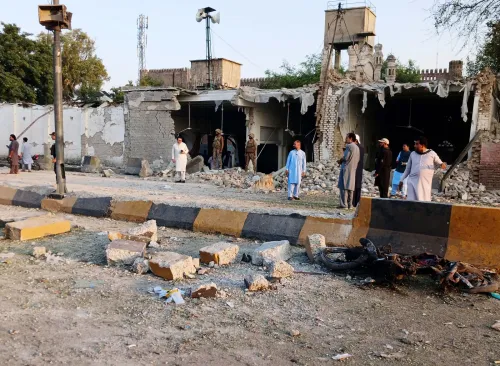
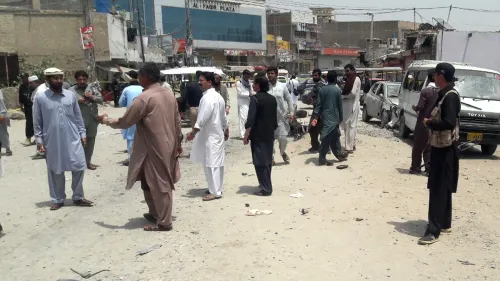
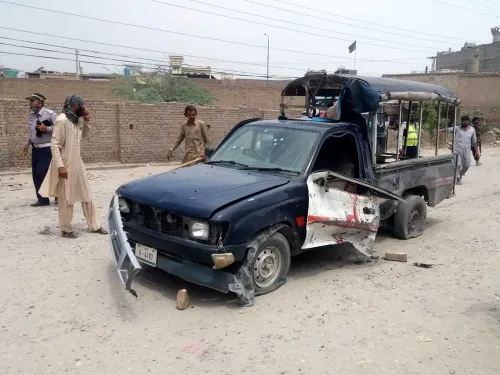
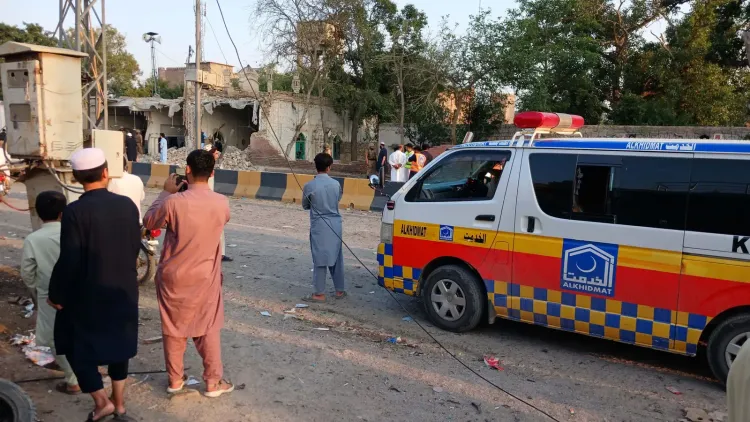
An explosives-laden vehicle struck a mosque inside Old Police Lines , Kohat district , Khyber Pakhtunkhwa , killing dozens of police officers and civilians and injuring more than 100 others.
An analysis by Khalsa Vox argues the attack is a direct consequence of Pakistan's long-standing policy of treating certain jihadist groups as strategic assets.
After the Afghan Taliban's 2021 takeover, the TTP and commanders such as Hafiz Gul Bahadur reportedly reconstituted themselves with expanded sanctuary and resources on Afghan soil.
Militant attacks in Khyber Pakhtunkhwa have surged since 2021 , now targeting police and military installations rather than remote checkpoints.
The analysis argues that cross-border factors do not explain the intelligence and security failures that allowed a vehicle bomb to reach a police compound interior.
Pakistan's use of the 'Fitna al-Khawarij' designation for the TTP is criticised as a framing that avoids accountability for cultivating the broader militant ecosystem.
A suicide vehicle bomb that tore through a mosque inside the Old Police Lines compound in Kohat district, Khyber Pakhtunkhwa, killing dozens of police officers and civilians and injuring more than 100 others, is the foreseeable outcome of decades of Pakistani security policy that treated jihadist networks as strategic assets rather than existential threats, according to a detailed analysis published by Khalsa Vox.
A Policy of Strategic Tolerance, Turned Inward
For decades, according to the report, Pakistan's security establishment drew a distinction between so-called 'good' and 'bad' militants — sheltering, funding, or at minimum tolerating groups that could be weaponised against India or deployed in Afghanistan. The networks that trained fighters, moved them across the Durand Line, and sustained jihadist logistics were never fully dismantled. When the Afghan Taliban completed its takeover in 2021, those same networks gained expanded operational space — sanctuary, weapons, and ideological reinforcement on Afghan soil.
The consequence, the analysis argues, is that Tehrik-e-Taliban Pakistan (TTP) and allied commanders — including Hafiz Gul Bahadur — reconstituted themselves under that cover. Islamabad, the report notes, now publicly decries cross-border sanctuary while continuing to favour factions it once actively cultivated.
What the Kohat Attack Reveals
'The target was not an Indian consulate or a Western embassy. It was Pakistani policemen at prayer, inside a police compound, in a city that is supposed to be under state control,' the Khalsa Vox analysis stated. The method — an explosives-laden vehicle followed by a further assault — demands planning, reconnaissance, explosives procurement, and local facilitation. 'Those capabilities do not appear overnight. They are the residue of an ecosystem Pakistan allowed to persist because it was useful against someone else,' it added.
Militant violence in Khyber Pakhtunkhwa has surged since 2021, with attacks increasingly directed at police and military installations rather than being limited to remote frontier checkpoints, the report noted. Responsibility is being claimed by coalitions of former TTP commanders, remnants of Lashkar-e-Islam, and other groups that once benefited from varying degrees of state tolerance.
The 'Fitna al-Khawarij' Framing and Its Limits
Official Pakistani rhetoric has leaned on the designation 'Fitna al-Khawarij' — the term Islamabad applies to the TTP — rather than confronting a deeper structural reality: that the state helped nurture a militant ecosystem it can no longer fully control, the analysis argued. Critics say the framing is a rhetorical device that sidesteps accountability for the tolerance that enabled the ecosystem to grow.
Blame Kabul — But Only So Far
'Blaming Kabul is convenient and only partly true,' the report stated. Cross-border movement and Afghan-origin attackers are real factors. 'They do not explain why a mosque inside a police line in Kohat could be reached by a car bomb in the first place. That is a failure of intelligence, perimeter security, and political will inside Pakistan,' it argued. The analysis concluded that a state which spent years treating some jihadists as assets cannot credibly demand that every jihadist treat it as off-limits.
A Pattern, Not an Aberration
The Kohat attack is not an isolated event but a data point in a worsening trend, the report emphasised. Security analysts have for years warned that selective counter-terrorism — targeting only those groups that turn their guns inward — creates a permissive environment in which militant infrastructure inevitably regenerates. With attacks on police and military targets rising across Khyber Pakhtunkhwa, Pakistan faces a reckoning over whether it can sustain a security doctrine built on distinguishing between friend and foe within the jihadist ecosystem. How Islamabad responds — rhetorically and operationally — will define the trajectory of internal security in the country's northwest for years to come.
Point of View
Financial, and ideological infrastructure that was tolerated — and in some cases actively supported — because it could be pointed at external adversaries has proven impossible to surgically decommission. Pakistan's invocation of 'Fitna al-Khawarij' is a theological rebranding, not a strategic rethink. The harder question mainstream coverage often skirts is one of accountability: if the ecosystem was knowingly cultivated, the casualties at Kohat are not merely a security failure — they are a policy consequence.
NationPress
22 Sept 2026
Frequently Asked Questions
What happened in the Kohat mosque attack in Khyber Pakhtunkhwa?
An explosives-laden vehicle was driven into a mosque inside the Old Police Lines compound in Kohat district, Khyber Pakhtunkhwa, killing dozens of police officers and civilians and injuring more than 100 others. The attack involved a vehicle bomb followed by a further assault, indicating significant operational planning and local facilitation.
Who is responsible for the Kohat attack?
Responsibility has been claimed by alliances involving former TTP commanders, Lashkar-e-Islam remnants, and other groups that previously benefited from varying degrees of official tolerance, according to the Khalsa Vox analysis. Pakistan officially designates the TTP using the term 'Fitna al-Khawarij'.
Why does the report argue Pakistan is partly to blame for attacks like Kohat?
The analysis argues that Pakistan's security establishment spent decades treating certain jihadist groups as strategic assets against India and in Afghanistan, allowing the networks to persist and grow. After the Afghan Taliban's 2021 takeover, these networks reconstituted with greater resources, and the capabilities now being used against Pakistani security forces are a direct residue of that tolerance.
How has militant violence in Khyber Pakhtunkhwa changed since 2021?
Militant attacks in Khyber Pakhtunkhwa have surged since 2021, increasingly targeting police and military installations rather than being confined to remote checkpoints, according to the report. The shift reflects the reconstitution and emboldening of TTP-aligned networks following the Afghan Taliban takeover.
Is Pakistan's government blaming Afghanistan for the attacks?
Pakistani officials have pointed to cross-border movement and Afghan-origin attackers as contributing factors. However, the Khalsa Vox analysis argues this explanation is only 'partly true' and does not account for the intelligence, perimeter security, and political failures within Pakistan that allowed a vehicle bomb to penetrate a secured police compound in Kohat.